skip to main |
skip to sidebar
Events of Wednesday, 16th November
Around 7.30 a.m. we dropped anchor in a broad estuary with the town of Corral to our right and Niebla hidden round a bend to our left. Wooded hills reached down to the water on both sides, reminding me of some of the Cornish estuaries. A large bulk carrier ship was moored to buoys on the shore to the right, suggesting mining activity I couldn’t identify, but the left shore appeared undeveloped.
The ninety-odd passengers on the ship had been allocated to one of four groups for going ashore by Zodiac inflatable boat. I was in Group 1 which would be the first group to go ashore to Niebla but on the next landing Group 2 would land first and the order of Groups would rotate throughout the trip. Landing was planned to start at 8.00 a.m. but there was a slight delay waiting for the coaches to arrive at the landing site.
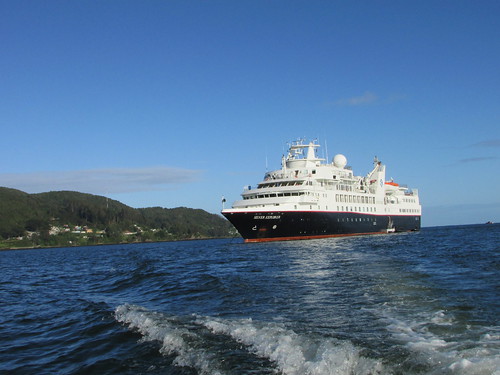
'Silver Explorer' anchored off Niebla, viewed from the 'Zodiac' taking me ashore.
Our anchorage was at the confluence of a number of rivers so the Zodiacs navigated by channel markers for the Valdivia River, the river on our left, and carried on for a few hundred yards to reach the public jetties at Niebla, provided with a concrete ramp for the vehicle ferries and two floating landing stages for small passenger ferries. We overtook one of the vehicle ferries ‘Cullamo’ which was heading for Niebla, I think from Corral. We landed at one of the passenger landing stages, stepping directly onto the landing stage (a ‘dry landing’). By the time I’d walked up the gangway from the landing stage, a passenger ferry had arrived at the adjacent landing stage and ‘Cullamo’ was preparing to unload vehicles. Niebla town may be small, but Niebla Terminal is a busy place.
Three modern tourist buses were waiting in the car park for the arrival of the ‘Silver Explorer’ passengers for the ‘Highlights of Valdivia Tour’. We had a local guide plus members of the ship’s Expedition Crew. The journey to Valdivia, we were told, would take about half an hour. The road continually curved this way and that, following the left bank of the Valdivia River upstream. The setting was very beautiful, again reminiscent of Cornwall.
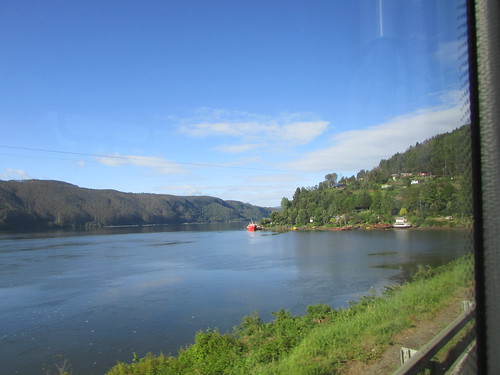
The river between Valdivia and Niebla, looking downstream.
At first, the houses were spread apart. They appeared to be mainly wooden framed, clad with chipboard and then with a clapboard or other outer layer. But as we came nearer to Valdivia, there were four-storey apartment blocks and gated communities of detached houses generally in an ‘Alpine’ style.
A little background
The Spanish conquistador Pedro de Valvidia founded the city in 1552, making it an important location in Spain’s South American colony. But the takeover was not accepted by the indigenous Mapuche Indian population and in 1598 it was abandoned by the Spanish, to be occupied in 1643 by the Dutch as a base for attacks on the Spanish Empire. The Dutch, too, left Valvidia following conflicts with the Mapuche. Later, the Spanish re-occupied Valvidia, this time protecting the area by the construction of a number of fortifications, holding the area until 1820 when, during the fight for Chilean Independence, the Englishman Lord Thomas Cochrane (admiral of the Chilean navy at the time) overwhelmed the Spanish by a stealth attack.
More recently, in 1960 this area of Chile was the epicentre of the strongest earthquake recorded to date and much of Valvidia was destroyed. The movement of the sub-sea floor created a tsunami which spread across the Pacific. As a result, most of Valvidia now comprises fairly new building.
In 2007, Valvidia was made the administrative capital of the newly-created Los Rios Region. The population is now around 155,000 and it is home to three major universities (plus smaller private foundations).
My Visit
Our tour bus first parked in the grounds of the Historical and Anthropological Museum, situated on the Cultural Campus of the University. During the 19th century, Germany developed industry and influence in the area and the present museum building dates from that period. Although it suffered some damage during the 1960 earthquake, the building represents a time capsule of that period, crammed with artefacts of gracious living in the downstairs rooms whilst Mapuche artefacts and jewellery can be seen in the upstairs displays. Steps at the front of the house lead down to the west bank of the Valdivia River, with the modern city on the east bank.
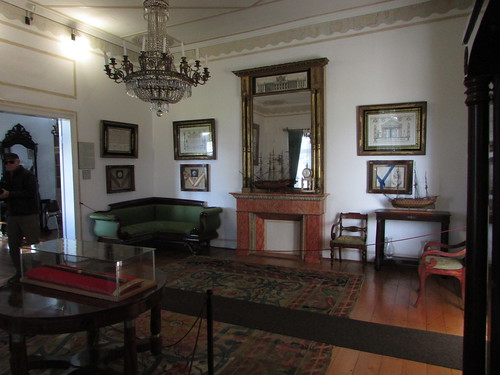
Valdivia Historical & Archaeological Museum.
We rejoined the tour bus to explore a little of the city, crossing the river using the Puente Pedro de Valdivia bridge (a 1940s concrete and steel affair) which survived the earthquake. The Plaza de la Republica is regarded as the centre of the city, with trees, flower beds, broad walkways and a magnificent bandstand. Nearby, a man operating a shoe-shine business was patiently waiting for trade. We walked past the post-earthquake cathedral to reach the river bank, made into a wide promenade and serving as the loading point for the numerous trip boats which offer river cruises to tourists.
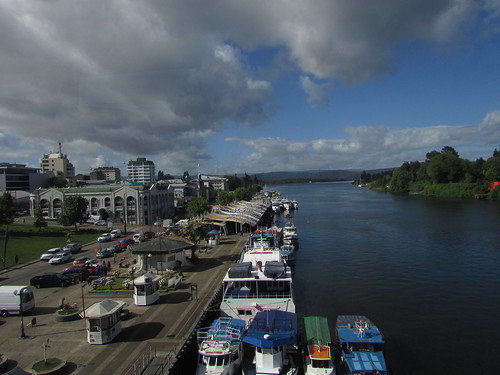
Valdivia, Chile.
Towards one end of the promenade, a modern, tall tower provided by the Centre for Scientific Studies at the University featured a Foucault’s Pendulum, topped with a navigation light. Nearby signage gave brief information on the pendulum and the Fresnel Lens used in most navigation lights, together with a map showing the location of ‘Chilean Glaciers in Antarctica’.
A little further along the river, a rather abandoned-looking submarine was moored, but I didn’t discover more at the time. Intrigued at finding a submarine in what seemed, to me, an unlikely spot on my return Wikipedia informed me that the vessel was the Chilean Navy 'Oberon' class submarine S22 O'Brien, built by Scott-Lithgow, commissioned in 1976 and de-commissioned sometime between 2000 and 20010. Then I was further intrigued by the Irish-sounding name. John Thomond O'Brien (1786–1861) fought in the Army of the Andes, helping Chile obtain its independence from Spain, gaining fame as did the Chilean hero Bernardo O'Higgins.
Along the promenade near the bridge we’d crossed, I visited the fish and vegetable market. Here, fish are gutted on concrete preparation benches next to the river, encouraging birds to perch on the railings awaiting discarded pieces of fish. Numerous bird species were represented, including pelicans. Even more improbable was the group of South American sealions, either relaxing in the sun on a nearby floating pontoon or actually on the concrete floor of the fish market, squeezed between the railings and unused gutting benches.
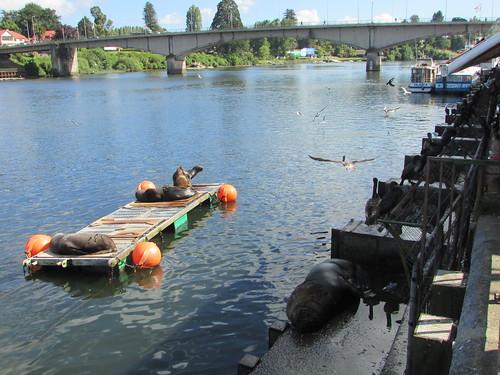
Valdivia, Chile: South American Sea lions and birds awaiting scraps at the fish market.
On the recommendation of our Chilean guide, a group of us crossed the road to look inside the modern municipal market, which seemed to house two or three cafes and numerous stalls selling tourist souvenirs.
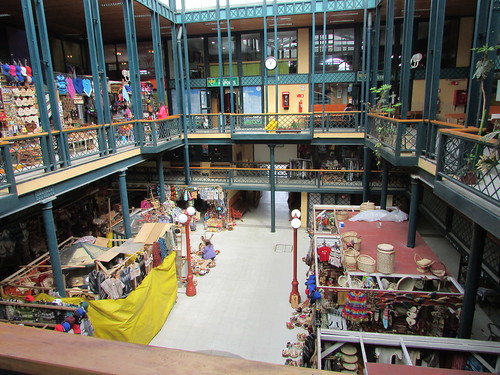
Valdivia Municipal Market.
Meeting up with our guide, we walked along the river bank, under the road bridge and past a modern floating restaurant under restoration. Next to the restaurant, an attractive steam launch was moored. A little further along the river bank, what appeared to be an abandoned wooden landing stage was occupied by around eight sealions, basking in the sun, watched attentively from the bank by two dogs. We then crossed the road to reach a sea food restaurant where we enjoyed a buffet lunch.
After our meal, our tour bus picked us up and returned us to Niebla Terminal. As I walked to the landing stage, vehicle ferry ‘Pitipulla’ was loading the last vehicle, which reversed up the loading ramp and reached the main deck with a loud ‘clang’. Within minutes, the ferry departed, as yet another vehicle approached the concrete ramp with another full load of vehicles including a huge lorry with the load space sheeted-over.
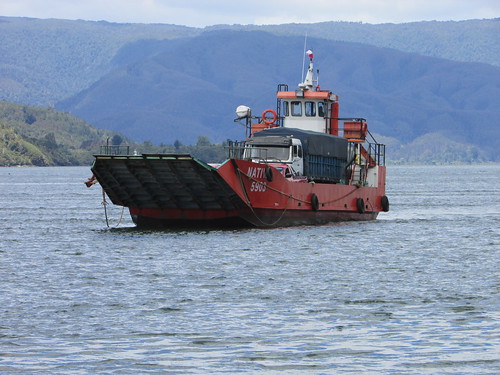
Niebla, Chile: Vehicle ferry approaching the busy public jetty.
Once aboard the Zodiac, I enjoyed a high speed ride of about one mile back to ‘Silver Explorer’. As soon as everyone was back on board and the Zodiacs had been lifted aboard, we got under way for our next destination, Chiloe Island.
Related Posts
Next post describing this trip: Achao and Castro.
All posts describing this trip: Chilean Fjords.
My pictures
Where necessary, clicking on an image above will display an 'uncropped' view or, alternately, my pictures from this (and earlier) trips may be selected, viewed or downloaded, in various sizes, from the albums listed:-
Pictures of Niebla and Valdivia are here.
Pictures of Valdivia Historical & Archaeological Museum are here.
Pictures aboard 'Silver Explorer' are here.
All my pictures of Chile can be found in the collection Chile.
[Pictures added, notes on submarine added 10-Jan-2017]
Events of Tuesday, 15th November
Our first port-of-call was to be at Niebla, almost 500 miles south of Valparaiso so Tuesday was a day at sea. Three lectures were on offer during the day in the well-equipped theatre.
Weather conditions were good with some sea swell. I was unaffected by the movement of the ship but a surprising number of guests felt unwell.
I spent some time wrestling with an unco-operative laptop computer. My Hewlett-Packard had performed well in Santiago but it had apparently performed an automatic Windows 10 Update during the session and when I tried to connect to the ship’s satellite internet system, I discovered that those nice people at Microsoft had made all sorts of changes to the operation of my computer including swopping my default browser from Chrome to Microsoft Edge. I finally managed to collect my e-mail but then Google complained that I was using an ‘unsupported browser’. Because of the other Microsoft ‘improvements’ I couldn’t find how to change my default browser back to what I wanted and had to enlist the support of the ship’s resident I.T. expert who, after a bit of experimenting managed to get things back (almost) as I wanted.
I did a blog update but didn’t manage to attend any of the lectures. Then, at 5.00 p.m., there was a Mandatory Zodiac Briefing and Destination Briefing in the theatre. It was back to the theatre at 7.00 p.m. to meet the Captain at her ‘Welcome Cocktail Party’. This was followed by dinner in the restaurant and interesting conversations with other guests at my table which went on quite late. We were almost the last table to finish!
The following morning, we were due to anchor off Niebla where we would go ashore.
My connection to the internet on the voyage is by satellite which is relatively slow so, at present, my pictures are being stored on the hard disk of my laptop (with a backup on a plug-in hard drive). I’ll upload them to ‘Flickr’ when I can and provide illustrations on the blog, but it may be a while.
Related Posts
Next post describing this trip: Niebla and Valdivia.
All posts describing this trip: Chilean Fjords.
My pictures
Where necessary, clicking on an image above will display an 'uncropped' view or, alternately, pictures may be selected, viewed or downloaded, in various sizes, as below:-
Pictures aboard 'Silver Explorer' are here.
All my pictures of Chile, taken on this and earlier trips, can be found in the collection Chile.
More events of Monday, 14th November
I boarded ‘Silver Explorer’ a little after two in the afternoon and boarding formalities were quickly completed. I was told that lunch was still being served in the Restaurant so, peckish after the morning’s exertions, I enjoyed an excellent chicken soup before finding my cabin – 314 on the port side. By about 3.30 p.m. all passengers had boarded and at four there was a mandatory lifeboat drill.
At five o’clock, I watched our departure from deck 6. The initial movement away from the quay was controlled by our lady Captain, Maggi Ettlin, from the starboard wing bridge using the remote control panel.
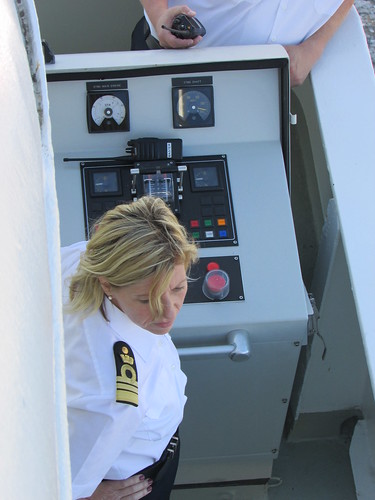
'Silver Explorer' Captain, Maggi Ettlin.
The ship and the various shore parties managing the mooring lines remained in touch using hand portable radios. The Harbour Pilot was also on our bridge and the Valparaiso pilot boat ‘Zeus 1’ remained close by monitoring our progress, as did the powerful-looking ocean-going tug ‘Huairavo’, equipped with two fire-fighting monitors. We slowly manoeuvred out into the channel and, once we were clear of the stern of the massive Hapag-Lloyd container ship ‘Santa Teresa’ loading at the container terminal, the pilot boat came alongside on our port side towards the stern and we ‘dropped the pilot’.
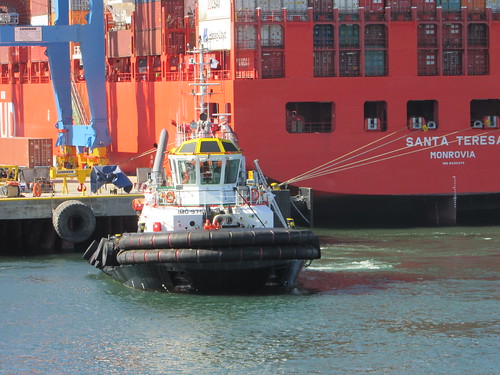
Valparaiso: Ocean-going tug ‘Huairavo’ observes our departure as we pass the stern of the Hapag-Lloyd container ship ‘Santa Teresa’.
We made our way outside the protection of the harbour mole and past a number of moored ships giving us wonderful views of Valparaiso as the sun set. The appearance of the cascades of buildings set on the hills facing the sea made me think of a child who’d just emptied all his building blocks onto the floor.
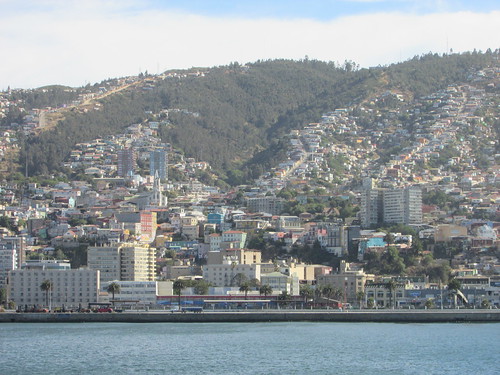
Valparaiso, viewed from the sea at sunset.
Having watched our departure, I briefly joined the ‘Sail Away’ cocktail party on deck 6 aft. At 6.30 p.m. passengers gathered in the Theatre where Kara Weller, the Expedition Leader, carried out ‘Staff Introductions’ covering the managers who look after the ‘hotel’ side of the ship and the 9-strong Expedition Team.
Immediately after the introductions, it was time for the first of our evening meals on board. Seating is unallocated but the staff are always happy to suggest a table so I stayed in the dining room quite late talking with new friends from the United States, Australia, Spain and the U.K. (a young man working in Dubai whose family home was just 12 miles from where I live!
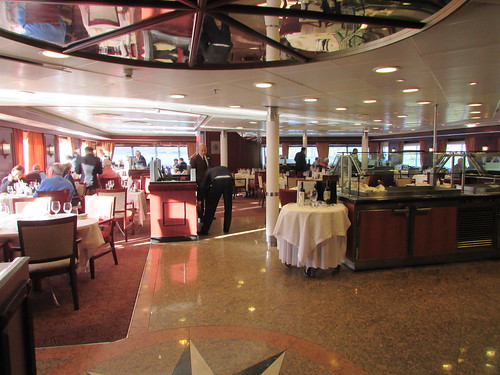
Aboard 'Silver Explorer': Entrance to the Restaurant.
I slept soundly as the ship made its way south along the Chilean coast.
Related Posts
Next post describing this trip: 'Day at Sea'.
All posts describing this trip: Chilean Fjords.
My pictures
Where necessary, clicking on an image above will display an 'uncropped' view or, alternately, pictures may be selected, viewed or downloaded, in various sizes, as below:-
Pictures of Embarcation and leaving Valparaiso are here.
Pictures aboard 'Silver Explorer' are here.
All my pictures of Chile, taken on this and earlier trips, can be found in the collection Chile.
[Pictures added: 5-Jan-2017]
Events of Monday, 14th November
I took breakfast in the pleasant restaurant at my hotel before rushing around completing my packing ready for an eight o’clock pick-up. My guide and driver arrived on time and were soon threading our way through the narrow streets of Barrio Lastarria to reach the main road west. Being a working day, the traffic was much heavier than the previous day and our progress was slow. Eventually, we passed Estacion Central, where a huge stylised Christmas Tree (basically a decorated cone) had already been erected. We then traversed Alameda, a rather down-at-heel area which gave way to a series of huge multi-storey modern apartment blocks still under construction. Finally, we left the city behind and climbed into the hills, heading for Valparaiso.
The hills were arid and sandy, covered with trees and shrubs, rising to frequent peaks, each peak topped with a cluster of red and white painted radio masts. In one area, palls of smoke were rising where a hillside was burning but no flames were visible as we sped by on the dual carriageway. In a number of places on downhill sections emergency lanes were provided, terminated in a steep upwards ramp to slow vehicles having difficulty braking. Periodically, we passed broad toll stations which manually collected tolls although a few automatic lanes had been added to one side. Our route took us through two 2-bore road tunnels which allow easier gradients.
After passing through the first mountain section, we emerged into a broad, fertile valley, filled with fruit farms. We stopped at a roadside café which specialises in selling the local sweet pastries so that my guide could take breakfast then continued into the area specialising in olives and grapes. Chile has developed a successful and well-regarded wine making industry and we passed a number of wineries.
Another mountain section led to a modern industrialised area before we entered Valparaiso. I was told the population was around 400,000 and the city certainly appeared larger than I remembered from my earlier visit some years ago. There was plenty of nondescript property but also attractive buildings in classical style dating from the late nineteenth and early twentieth century. Until the Panama Canal opened, Valparaiso was an important port on the sea route from the east to the west coasts of the United States, helping to bring prosperity to Chile’s main port.
Although Valparaiso provided a safe harbour, the location was less than ideal for a city, as numerous steep hills tumble onto a narrow foreshore. Once the foreshore was colonised, further development extended into the hills, resulting in a complex pattern of winding, narrow streets with houses perched on improbable sites, linked together by a series of daunting pedestrian stairways.
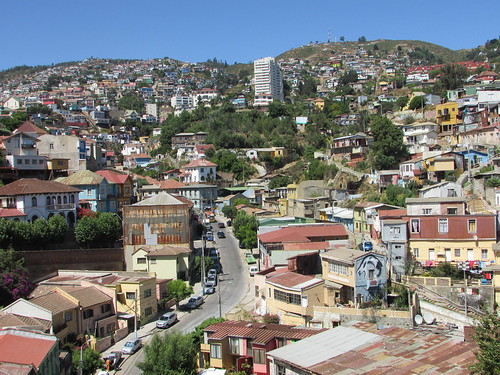
Valparaiso, Chile.
This topography resulted in a number of funicular railways (‘Ascensor’) being constructed around the town, linking the foreshore area with the summits of the various hills. At one time, I believe there were around 16 separate funicular railways in the city but a number have fallen into disuse. On my last visit, I found a number of the Ascensor to be in a poor state of maintenance and now, I was told, they are operated by the Government. Unforunately, my present visit coincided with the third week of a strike of Government workers affecting Valparaiso. One consequence of this strike was the piles of uncollected rubbish dumped on every street corner: another was that the Ascensors were not operating so my activities were confined to taking a few photographs. I’m sure I’ll return to this topic in the future.
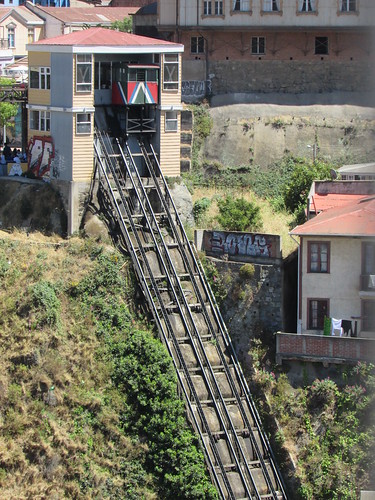
The Ascensors of Valparaiso.
It was a warm, sunny day in Valparaiso. By car and by walking, my guide showed me more of the city. The older area is now a World Heritage Site and there is a thriving artistic community. Tourism has developed and the good port facilities encourage large cruise ships to call but (as I was able to confirm from one of the viewpoints we stopped at high above the harbour) ‘Silver Explorer’ was the only passenger ship visiting at the time. Some of the old buildings on the hillsides have been converted into hotels to cater for tourists but, of course, Valparaiso can be readily reached by day trip from Santiago. We passed a number of well-patronised walking tours as we made our way around the old town.
With land at a premium, gardens are virtually unknown but every spare space is filled with trees, bushes and planters. The top of one hill is occupied by two Catholic cemeteries (called, prosaically, ‘Cementerio 1’ and ‘Cementerio 2’). Freedom of worship arrived relatively late so the third, non-Catholic cemetery is called, rather uncharitably I thought, the Dissidents’ Cemetery (‘Cementerio Disidente’). The entrance to each of the Catholic cemeteries is graced by a tall, columned arch in classical style, still imposing but now showing signs of age.

Cemeterio No. 1, Valparaiso.
In contrast, the Dissidents’ Cemetery makes do with a simple iron gate set in a white-painted wall. The actual monuments in the various graveyards are of a similar range of styles.
Although there are conventionally-built properties in the old town, a common technique was to use timber framing with corrugated iron sheets for the exterior walls and roof. Occasionally, walls were clapboard. With walls painted in various muted (or, perhaps, faded) colours, the overall effect is pleasing and rather English-looking. This is not accidental as a number of the early settlers in Valparaiso we of English origin. In general, the narrow streets were cobbled, sometimes with two parallel rows of larger stone flags, presumably to aid the movement of wagons and carts.

Valparaiso, Chile.
After a fascinating morning in Valparaiso, the car descended to the foreshore and took the road around the bay as far as the area known as Baron (offering fleeting glimpses of the Baron Ascensor) before entering the Dock Estate Gates. After a cursory, friendly security check, we headed back in the direction we’d arrived from, but now inside the dock walls. A second brief security check allowed us past the Valparaiso Cruise Terminal, a modern steel-framed warehouse, to a parking area near a small building which appeared to contain baggage X-ray equipment. A desk had been set up in the sun where joining passengers’ names were being checked against a series of lists and baggage separated for separate transfer to the ship by lorry. I said ‘good bye’ to my guide and driver and, within moments, I was being walked through the empty barn of the Cruise Terminal (intended for handling two or three thousand passengers at a time off the cruise ships) back outside. Here, I waited with a small group of passengers for a couple of minutes whilst a modern tour bus marked ‘Shuttle’ was prepared by the driver before being driven further into the docks to stop on the quay alongside ‘Silver Explorer’, my home for the next few days.

'Silver Explorer' at Valparaiso.
Related Posts
Next post describing this trip: 'Silver Explorer'.
All posts describing this trip: Chilean Fjords.
My pictures
Where necessary, clicking on an image above will display an 'uncropped' view or, alternately, pictures may be selected, viewed or downloaded, in various sizes, as below:-
Pictures of Valparaiso are here.
Pictures embarking at Valparaiso are here.
All my pictures of Chile, taken on this and earlier trips, can be found in the collection Chile.
Pictures of the railways in Chile including the Metros in Santiago and Valparaiso, taken on this and earlier trips, are here.
[Pictures added: 28-Dec-2016]
I've commenced another travel adventure and will, as possible, write about the trip. I set off from home on a rainy Saturday in November.
Events of Saturday, 12th November 2016
It rained and was fairly cold first thing but by the time John J. picked me up to take me to Birmingham Airport, the rain had stopped although it remained very overcast. The first leg of my journey was an Air France flight to Paris, Charles de Gaulle. I understood that the flight was actually to be operated by Flybe under a 'Code Share' arrangement but the departure board directed me to Air France check-in desks in the remotest part of the terminal from the entrance. By the time I'd manoeuvred my luggage through the aimless crowds in the terminal, my mood had dropped a couple of notches. It was partly restored by the prompt and friendly attention of the English lady at the quiet check-in desk. She gave me directions to the 'Aspire' business lounge but first I had to run the gauntlet of Security. This now seems to comprise the major part of passing through airports and it is normally carried out apparently as a form of ritual humiliation for passengers. Each airport appears to have slightly differing procedures which passengers have to grapple to understand. I emerged from the process duly approved but (once again) wondering if foreign travel was now a mistake.
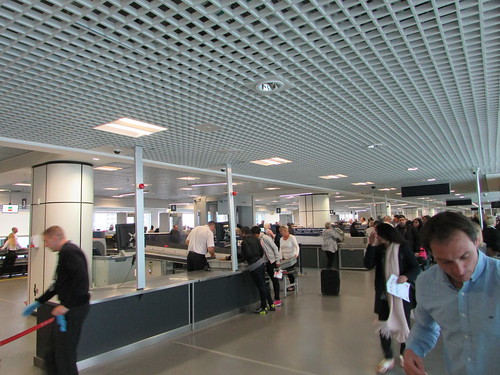
Birmingham Airport: Security
This pessimistic thought was compounded by having to pass through the brightly-lit and noisy 'Duty Free' area where the only way through zig-zags back and forth to maximise the distance walked from entrance to exit. Only then could I search for signs to the lounge area.
I've visited some excellent business lounges around the world. The 'Aspire' lounge at Birmingham is not one of them. I guess the name is intended to suggest its suitability for 'aspirational' people but I grumpily thought "this aspires to be a relaxing experience and fails". I was quite happy to leave the lounge early and report to the gate for boarding.
Again, the staff at the gate were efficient and welcoming and on boarding the aircraft was surprised to find that not only was it an (admittedly elderly) Air France A320 but it had an Air France crew. But it was a 'Code Share' with Flybe and at least one other airline.
I'd not been able to book a window seat but, as I took my assigned place, the friendly Purser invited me to move to an empty group of three seats on the port side, so I ended up with a window seat after all. With passengers loaded, the air bridge was moved away and the pushback tug propelled us onto the taxiway and pulled us some distance forward before the tug was disconnected and moved away, showing the Captain that the 'Pin' had been removed, meaning that the aircraft had regained control of the nosewheel steering.
We taxied to the threshold of Runway 33 and accelerated to take-off speed, climbing steeply into the low cloud and making a right turn as rain trickled across the windows. In the hour it took to reach Paris, the attentive crew served quite a reasonable meal so we touched down at Charles de Gaulle Airport (on runway 08 Right which I noticed was equipped for Category I and II landings) with my humour much improved.
It's some time since I'd last been to Paris by air so either I'd forgotten how big it was or it had grown (probably both). It was not very crowded so the only immediate problem was the long distances walking with hand luggage. The facilities seemed modern without offending me and when I stopped at the Air France Transfer Desk to confirm the gate for my onward flight, the French lady was charming, explaining that I had to go down one floor and pass through security to reach a lounge where (because of my insistence that I'd didn't wish to go via Heathrow) I had some hours to wait before my Air France connection to Santiago, Chile.
On the way to security, a very presentable young French man with excellent English gave me a lovely smile as he directed me to the security, where the usual rigmarole prevailed, not helped by the school mistress style of the security officer who gave instructions in accented English I had some trouble following.
However, having negotiated that hurdle, it was all smiles again, from the girl in the currency exchange who sold me Chilean Pesos to the business lounge staff who were delightful. From earlier visits, I had remembered the French as rather reluctant to converse in a foreign language and certainly not given to beaming at English speakers. With a shock, I realised that the most likely reason for this change was due to me, not them. What people now see is an old, sometimes baffled, woman and allowance is very likely being accorded to my age. Well, kindness is kindness but I don't always find it easy coming to terms with people's changed perceptions.
I'd at least seven hours to wait but I'd plenty of reading material so I found a fairly quiet spot with a view over some of the major access roads through the airport and settled in. Usually, I would have been attempting to blog at this stage but, after a tiring week, I decided I'd stick to a less demanding task. Finally, at 10:45 p.m. a rather bleary-eyed Jan proceeded to Gate L53 and boarded Air France Flight AF0406 for Santiago - this time 'Code Shared' with six other airlines! The aircraft was a Boeing 757-300 (I think). Business class was laid out 2-3-2. I had seat 2A but the seat next to me was already occupied. We were due to depart at 23:40 but we were at least half an hour into Sunday before we pushed-back.

Paris: Terminal 2, Charles de Gaulle airport: Boarding Santiago flight.
Events of Sunday, 13th November 2016
Our delay was largely because, at a late stage, we boarded what appeared to be a small family group of economy passengers then, a little later, de-planed them. No explanation was given but, having de-planed them, we then had to wait whilst the baggage loaders located and abstracted their luggage. You may appreciate that, by the time we took off, I was not the most acute of observers. It's over 7,000 miles from Paris to Santiago and that was set to take over 13 hours. They offered dinner after take-off. I slept a little but not well and watched a couple of films and three NCIS episodes. Eventually, after a reasonable breakfast, we landed at Santiago, only to suffer the indignity of having to wait on a taxiway until our 'stand' was ready. Apologies for the amount of 'whinging' in this post - I try to report honestly but hopefully I will have a more positive view of the world from here on.
It must have been after 11:00 local time by the time I'd passed through immigration, retrieved my checked bag, passed through customs, had all my baggage X-rayed again and met up with my lady guide and male driver for the journey into Santiago and my hotel for one night, the Lastarria Boutique Hotel in the area near the centre of Santiago known as Barrio Lastarria.

Lastarria Boutique Hotel, Santiago.
Although check-in was officially not until 3.00 pm, they gave me a room immediately, allowing me to take a shower, which revived me significantly, encouraging me to take a walk in the sunshine north-west through Parque Forestal, past the Belles Artes Museum as far as Plaza de Armas.
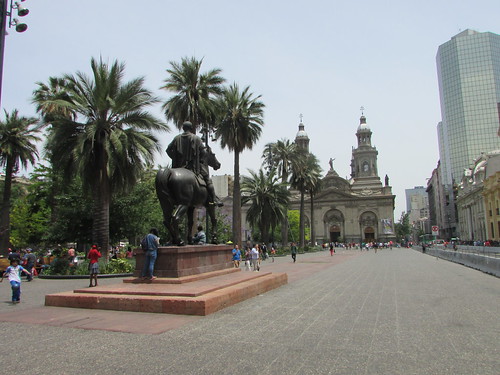
Santiago: Plaza de Armas.
There, I bought a Metro ticket to travel two stations south-east on Line 5 to the interchange station of Baquedano. I'd liked Santiago on my first two visits and I'm happy to report that it still works its magic on me. I resisted the temptation to travel further on the Metro, for instance, by changing to Line 1 but instead walked back to my hotel, ready for a late lunch. After a fairly tiring couple of days, I decided to remain in the hotel for the rest of the day.
Previous visits to Santiago
My first visit was part of my Round the World Three trip described here (one post describes the whole trip!). My second visit was part of my Round the World Four trip. This time, there's a separate post on Santiago here.
Related Posts
Next post describing this trip: Valparaiso.
All posts describing this trip: Chilean Fjords.
My pictures
Where necessary, clicking on an image above will display an 'uncropped' view or, alternately, my pictures from this (and earlier) trips may be selected, viewed or downloaded, in various sizes, from the albums listed:-
Pictures of Birmingham Airport, taken on this and earlier trips, are here.
Pictures of Paris CDG Airport are here.
Pictures of Lastarria Boutique Hotel are here.
Pictures of Chile, taken on this and earlier trips, are in the collection Chile.
Pictures of the railways in Chile including the Metros in Santiago and Valparaiso are here.
[Pictures added: 27-Dec-2016]
Introduction
The use of 'Labels to select a blog topic' allows particular groups of posts in the blog to be located. But, as the blog has expanded, labels like 'railways' or 'railway signalling' produce a large number of posts to be sifted. Alternately, you can look for a specific topic using the Blogger search box and entering a word or phrase that might be included in the post, for instance 'all electric system'.
To try to make specific information easier to find, I've started to produce Index information. They're really 'Link Lists' but I've incorrectly called them an 'Index' in a few places and that will probably stick, sorry.
There's a separate Index here covering Railway Signalling in Britain in a non-localised manner.
The sections below cover geographical areas where I've written about signal boxes. The post Visiting Signalboxes, first published in 2008, described how I became unofficially involved with mechanical signal boxes in the West Midlands. Interest from a group of friends prompted me to locate what remained of my early notes and attempt to turn them into intelligible (if rather specialised) reports. In each section, Posts are listed in reverse date of original posting order, as they appear in the blog.
Stour Valley Signal Boxes
Wolverhampton High Level Station in Steam Days 11-Nov-2015
Catchem's Corner Signal Box 19-Sep-2013
Albion 18-May-2012
The 'Breakdown' at Bloomfield 8-May-2012
Railway Signalling: Tipton (Part 2) 10-Jan-2012
Tipton Station Shunting Frame 8-Jan-2012
Traffic Movements at Tipton Station Box (1965?) 6-Jan-2012
Traffic Movements at Tipton Station box, 1965 5-Jan-2012
Deepfields Electrical Controls 4-Jan-2012
Heaviest Single Load carried by British Railways 30-Dec-2011
Traffic Movements at Tipton Curve, 1965 13-Dec-2011
Jan's Train Register Book 13-Dec-2011
List of Traffic Movement Posts 6-Dec-2011
Traffic Movements at Tipton Curve, 1965 23-Nov-2011
Traffic Movements at Deepfields, 1964 (Part 2) 21-Nov-2011
Traffic Movements at Deepfields, 1964 (Part 1) 21-Nov-2011
Traffic Movements at Tipton Station box, 1964 29-Jun-2011
Traffic Movements on the Stour Valley, 1964 29-Jun-2011
Traffic Movements at Bloomfield Jn, 1962 (Part 2) 29-Jun-2011
Traffic Movements at Dudley Port, 1962 23-Jun-2011
Traffic Movements at Watery Lane, 1962 (Part 1) 23-Jun-2011
Traffic Movements at Bloomfield Jn, 1962 (Part 1) 22-Jun-2011
Traffic Movements on the Stour Valley, 1961-1962 (Part 3) 20-Jun-2011
Traffic Movements on the Stour Valley, 1961-1962 (Part 2) 18-Jun-2011
Traffic Movements on the Stour Valley, 1961-1962 (Part 1) 18-Jun-2011
Princes End Electrical Controls (Part 5) 8-Feb-2010
Princes End Electrical Controls (Part 4) 2-Feb-2010
Princes End Electrical Controls (Part 3) 1-Feb-2010
Spring Vale Electrical Controls (Part 2) 31-Jan-2010
Princes End Electrical Controls (Part 2) 31-Jan-2010
Spring Vale Electrical Controls (Part 1) 28-Jan-2010
Princes End Electrical Controls (Part 1) 23-Jan-2010
Railway Signalling: Spring Vale Sidings Box 19-Jun-2009
Prince's End 22-Feb-2009
Tipton Curve Junction. 11-Jan-2009
Visiting Signalboxes 5-Jul-2008
Deepfields in Detail 17-Jun-2008
Mond Gas Company's Sidings 3-Jan-2008
Holiday Time at Bloomfield 19-Jun-2007
Deepfields 19-Jan-2007
Bloomfield Junction 19-Jan-2007
Watery Lane 19-Jan-2007
Dudley Port 17-Jan-2007
Tipton 15-Jan-2007
The above list includes a number of posts describing Traffic Movements at some of the above signal boxes. These posts are listed, in date order of the events described, here. Alternately, you can select all the posts labelled 'Traffic Movements' by clicking here.
South Stafford Signal Boxes
Sedgeley Junction - Early History 2-Jan-2012
Sedgeley Junction - Signalling Alterations 1964 25-Dec-2011
Sedgeley Junction (again) 25-Dec-2011
More from Sedgeley Jn. 20-Jun-2011
Traffic Movements at Sedgeley Junction 1962-1963 (Part 18) 9-Jan-2011
Traffic Movements at Sedgeley Junction 1962-1963 (Part 17) 7-Jan-2011
Traffic Movements at Sedgeley Junction 1962-1963 (Part 16) 5-Jan-2011
Traffic Movements at Sedgeley Junction 1962-1963 (Part 15) 5-Jan-2011
Traffic Movements at Sedgeley Junction 1962-1963 (Part 14) 4-Jan-2011
Traffic Movements at Sedgeley Junction 1962-1963 (Part 13) 3-Jan-2011
Traffic Movements at Sedgeley Junction 1962-1963 (Part 12) 6-Oct-2010
Traffic Movements at Sedgeley Junction 1962-1963 (Part 11) 6-Oct-2010
Traffic Movements at Sedgeley Junction 1962-1963 (Part 10) 30-Sep-2010
Traffic Movements at Sedgeley Junction 1962-1963 (Part 9) 22-Sep-2010
Traffic Movements at Sedgeley Junction 1962-1963 (Part 8) 22-Sep-2010
Traffic Movements at Sedgeley Junction 1962-1963 (Part 7) 19-Jul-2010
Traffic Movements at Sedgeley Junction 1962-1963 (Part 6) 28-Jun-2010
Traffic Movements at Sedgeley Junction 1962-1963 (Part 5) 1-Mar-2010
Traffic Movements at Sedgeley Junction 1962-1963 (Part 4) 1-Mar-2010
Traffic Movements at Sedgeley Junction 1962-1963 (Part 3) 20-Feb-2010
Traffic Movements at Sedgeley Junction 1962-1963 (Part 2) 19-Feb-2010
Traffic Movements at Sedgeley Junction 1962-1963 (Part 1) 14-Feb-2010
Excursions at Sedgeley Junction 5-Aug-2009
Sedgeley Junction remembered 19-Jun-2009
Sedgeley Junction 14-Feb-2008
Horsley Fields Junction 13-Jun-2008
The above list includes a number of posts describing Traffic Movements at some of the above signal boxes. These posts are listed, in date order of the events described, here. Alternately, you can select all the posts labelled 'Traffic Movements' by clicking here.
Crewe Area Signal Boxes
Crewe Salop Goods Junction Signal Box 3-Jan-2015
Crewe North Junction ('Crewe' All Electric System) 8-Oct-2013
Crewe South Junction Signal Box ('Crewe' All Electric System) 2-Oct-2013
Crewe South Junction (1940) Signal Box 19-Apr-2013
Crewe North Junction (1940) Signal Box 10-Jan-2013
Crewe Station Signal Boxes 31-Dec-2008
Crewe North Junction History 24-Jul-2008
Railways at Crewe in the '50s 22-Jul-2008
'Crewe' All Electric System, LNWR 14-Jul-2008
Crewe was at the centre of the L&NWR empire and there's some background on L&NWR signalling in these signalling posts:-
L. & N.W.R. Signal box architecture and features 16-Oct-2016
Life in the Signal Box 20-Sep-2013
Single-stroke Bells 16-Dec-2011
L&NWR Block Signalling Instruments 18-Jun-2008
L&NWR Signalling and the 'Bedstead' 4-Jun-2008
Of course, reference to 'Crewe' appears in other of my posts labelled 'Railways' You can find these with the 'Blogger' search box, as mentioned above. I've not been into the present Crewe Signalling Centre, but there is a report on examining it from the outside included in the post Return to Blackpool and Fleetwood (part 1).
As this blog (like Topsy) 'just growed' the use of the 'Labels' to select a group of posts becomes less useful. The label 'railway signalling' currently produces almost 200 'hits' so I've started to add a few Index Posts to try to make life easier. It remains to be seen how effective this will be, particular since updates is done manually, when I get around to it.
I've always been interesting in railway signalling so, back in 2013, I started a series of articles on Railway Signalling in Britain. The emphasis on historical systems, rather than modern practice. Progress is slow and erratic, I'm afraid, but a number of parts are available, as listed below:-
Part 1: Introduction 28-Apr-2013
Part 2 - Semaphore Signals 3-May-2013
Part 3 - Slotting 3-May-2013
Part 4 - Semaphore Signal Aspects by Night 13-May-2013
Part 5 - Signal Arm, Slot and Lamp Repeaters 23-May-2013
Part 6 - Mechanical Operation of Points 18-Sep-2014
Part 7 - Train Detection In preparation
Part 8: Colour Light Signals 2-Apr-2018
Part 9 - Power Operation of Points In preparation
Part 10 - Absolute Block Working In preparation
Part 11 - Single Line Railways 8-Dec-2018
Part 12 - Automatic Train Control In preparation
There are also a number of articles about British signalling which don't form part of a series - more of a 'pot-pourri'. The one on Double Wire working is included because, although this is principally associated with overseas railways, Double Wire working is not unknown in Britain.
L. & N.W.R. Signal box architecture and features 16-Oct-2016
Double Wire Working of Points and Signals 29-Oct-2015
The use of Electricity in Railway Signalling 8-Oct-2015
Life in the Signal Box 20-Sep-2013
Manchester Piccadilly Station - Behind the Scenes 19-Mar-2013
The End of an Era 16-Jan-2013
A. F. Bound 3-Jan-2013
Sealed Release for Signal Boxes 24-Dec-2011
Single-stroke Bells 16-Dec-2011
Reading the Runes: Decoding Train Register Books 5-Dec-2011
The Train Register Book 29-Nov-2011
L&NWR Block Signalling Instruments 18-Jun-2008
In general (but there are no fixed rules in this blog), the above list excludes posts applying to a specific area or signal box, but there's a separate post Signal Box Posts (Index) which lists posts relating to specific locations.
Alternately, a lot of my early experiences working mechanical boxes in the West Midlands in the steam era can be traced through the introductory post Visiting Signalboxes.
Of course, an alternative way of looking for a specific topic is to use the Blogger search box and enter a word or phrase that might be included in the post, for instance 'block control'.
[Posts added 31-Oct-2016: Link to Signal Box Posts added 1-Nov-2016: Updated 8-Apr-2018: Part 11 added 8-Dec-2018]
In preparing the post A Personal History of the Museum of Science and Industry recently, I discovered that, whilst my pictures of the 'Riot of Steam' event appear on the internet here, there was no report in this blog. Back in 2005, I wrote a short article about the event which appeared in 'Lionsheart', the newsletter of the Old Locomotive Committee, when I served as the editor. That article appears below.
On the 15th September 1830, the Liverpool and Manchester Railway commenced passenger operation. 175 years later, the original Manchester terminus in Liverpool Road forms part of the Museum of Science and Industry. To celebrate, the museum staged a four day gala on 15th, 16th, 17th and 18th September 2005.
If you missed it, you missed an excellent event. Well, maybe you can catch the 200th anniversary?
The working replicas of ‘Rocket’, ‘Sans Pareil’ and ‘Novelty’ were on hand, supported by the mainstay of museum steam operations, the ‘Planet’ replica. Twice a day, a cavalcade of these four locomotives was held, with an excellent and informative commentary given by Michael Bailey. For the rest of each day, ‘Rocket’, ‘Sans Pareil’ and ‘Planet’ alternated in giving passenger rides, each with its own reproduction coach (or, in the case of ‘Planet’, two coaches).
It’s hard to comprehend just how much organisation was needed to bring the whole gala together. Everybody at the museum is to be congratulated for their imagination is making it happen, providing the finance, and then providing the staff (paid and volunteer) to run the event over four days.
Particularly noteworthy was the appearance of ‘Novelty’, which lives in Sweden (Ericsson, the designer, was a Swede). Although the museum in Manchester has a non-working replica of ‘Novelty’, there is no substitute for a working locomotive (as we have commented regarding ‘Lion’ a few times). Interestingly, just as occurred at the original Rainhill trials, ‘Novelty’ was a firm favourite with the crowds. Something to do with her diminutive size and the way she dashed about. The first day of the gala was also rather wet, again, like the original Rainhill trials, I believe. ‘Novelty’ has now gone back to Sweden so who knows when there will be such a special meeting of replicas again?
Your Editor was present on each of the four days, along with OLCO member John Archer. Jan managed to drive and fire all the locomotives.
‘Lion’ was the only ‘original’ locomotive present representing the 1830s and, when not wet, Liverpool Museum allowed her to be positioned outside to provide better photographic opportunities. Charles Taylor Nobbs and John Brandrick shared the task of telling the visitors a little of the background of this remarkable survivor.
 High-level view of the main 'Riot of Steam' site with (L-R) 'Lion', 'Sans Parel', 'Planet', 'Rocket' and 'Novelty'.
From time-to-time, I travel by train, sometimes for meetings, sometimes to see what remains of our railway system. There are reports of some of these trips, listed below in reverse date order, as they appear in the blog. Note that dates in the list below are original posting dates, not dates of events described.
There's no fixed format for these reports: sometimes they cover both the journey and what I did when I arrived, sometimes the journey features in a separate report. In general, posts on the railway history of geographical areas which don't involve a specific journey I've made are not included in this list (but some are, particularly when they were prompted by recent journeys). The content varies according to what caught my eye at the time, although railway operation and signalling often make an appearance.
An alternative way of looking for a specific journey or topic is to use the Blogger search box and enter a word that might be included in the post, for instance 'guildford'.
More Train Travel posted 21-Dec-2023
By Train to Newport posted 28-Aug-2023
Trade Show at the NEC (Railtex 2023) posted 21-May-2023
Merseyside in March posted 13-May-2023
Book-buying in Morecambe by Train posted 30-Aug-2022
Blackpool by rail, Fleetwood and Knott End posted 26-Aug-2022
Old Locomotive Committee Annual General Meeting, 2022 posted 7-Aug-2022
Manchester by rail posted 6-Aug-2022
Retrieving my Camera posted 27-Jun-2022
Llandudno in April posted 9-Jun-2022
Return to Croydon posted 9-May-2022
New Brighton, again posted 18-Apr-2022
Rail Travel in January 2022 posted 12-Feb-2022
To Stockport by Rail 14-Nov-2021
Trade Show at the National Exhibition Centre 19-Sep-2021
By Train to Croydon 12-Sep-2021
Blackpool by Electric Train 28-Aug-2021
A day trip to Liverpool 21-Aug-2021
The Cambrian Line in 2021 25-Jul-2021
A Trip to Birmingham 3-Dec-2019
The West London Line 17-Nov-2019
Bath by Train 23-Sep-2019
East Croydon to London Bridge 23-Sep-2019
Bournemouth by Train 7-Sep-2019
Buxton by Rail 23-Jul-2019
Caldicot by Train 7-Jul-2019
Glasgow by Rail 23-Apr-2019
Whitehaven by Rail 6-Apr-2019
New Brighton by Rail 30-Mar-2019
Morecambe by Rail 26-Mar-2019
Llandudno by Train 28-Feb-2019
Blackpool by Train 17-Feb-2019
Another Trip to Merseyside 23-Nov-2018
To Altrincham via the former C.L.C. 27-Aug-2018
Returning from Hereford by Rail 11-Aug-2018
To Hereford by rail 6-Aug-2018
Another Day Trip to Ely 14-Jul-2018
A Trip to Merseyside 10-Jan-2018
High Speed One 8-Dec-2017
Class 373 Test Train to Paris 3-Apr-2017
Class 373 Test Train to Grantham 8-Mar-2017
Channel Tunnel Rail Link 5-Mar-2017
Interlude in London 25-Feb-2017
By Bus to Brighton 10-Jan-2017
Return to Merseyside (Part 3) 5-Jan-2017
Return to Merseyside (Part 2) 2-Jan-2017
Return to Merseyside (Part 1) 30-Dec-2016
Return to Manchester 24-Oct-16
Return to Blackpool and Fleetwood (part 2) 15-Oct-2016
By Rail to Nottingham 2-Sep-2016
Return to Blackpool and Fleetwood (part 1) 19-Feb-2016
Return to Llandudno 17-Feb-2016
Grand Central and Birmingham New Street Station 4-Feb-2016
By Train to Surrey 31-Jan-2016
Merseyside in December 9-Jan-2016
Wolverhampton to Preston by rail 19-Oct-2015
Preston to Liverpool by Rail 20-Oct-2015
Visiting former 'Southern' stations in London 26-Aug-2015
By Rail to Guildford 14-Aug-2015
By Train to Irlam 7-Apr-2015
Railways around Shrewsbury 31-Dec-2014
Llandudno Railway Station 31-Dec-2014
Ellesmere Port - Helsby line 27-Oct-2014
More Merseyrail 21-Oct-2014
The Cheshire Lines Committee Routes Today 7-Oct-2014
The Great Eastern in the London Area 15-Sep-2014
Day Trip to Shipley 10-Sep-2014
Day Trip to Southport and Liverpool (Part 2) 4-Sep-2014
Day Trip to Southport and Liverpool (Part 1) 30-Aug-2014
A Trip to South Wales (Part 2) 15-Aug-2014
A Trip to South Wales (Part 1) 1-Aug-2014
Furness and the Cumbrian Coast (Part 2) 1-Jul-2014
Furness and the Cumbrian Coast (Part 1) 26-Jun-2016
By rail to Liverpool (Part 2) 24-Mar-2014
By rail to Liverpool (Part 1) 14-Mar-2014
By Rail to Chirk 12-Mar-2014
Railways around Birkenhead 28-Feb-2014
Birkenhead and New Brighton by train (Part 3) 25-Feb-2014
Birkenhead and New Brighton by train (Part 2) 20-Feb-2014
Birkenhead and New Brighton by train (Part 1) 19-Feb-2014
The Holyhead to Crewe Railway Line 14-Feb-2014
Trip to Holyhead (Part 2: Llandudno to Holyhead) 10-Feb-2014
Trip to Holyhead (Part 1: Crewe to Llandudno) 30-Jan-2014
Walsall by Rail 19-Jan-2014
Railways around Blackpool 18-Jan-2014
Railways around Morecambe 30-Dec-2013
Return to Heysham 20-Dec-2013
The Buxton Branch 26-Nov-2013
Another Saturday in Manchester 10-Oct-2013
Railways around Edge Hill in 2013 30-Aug-2013
A Busy Week 5-Aug-2013
A Saturday in Manchester 11-Jun-2013
Day Trip to Ely 5-Jun-2013
'Black 5' to Birmingham 4-Jun-2013
Liverpool Lime Street Station 28-May-2013
Clapham Junction Station, London 20-May-2013
By Rail to Manchester 19-Mar-2013
London & Birmingham in 2012 29-May-2012
Liverpool by Train 25-May-2012
A Trip to the Seaside (Part 2) 27-Nov-2011
East London Line 24-Jun-2010
Day Trip to Liverpool 24-May-2010
Redevelopment at King's Cross Station 8-Dec-2009
Brave New Railway (again) 5-Aug-2009
Crewe Station 22-Jul-2008
Halfex to Blackpool 5-Jul-2008
Stafford Station in the 'Fifties 25-Jun-2008
Birmingham Moor Street Station 1-Jul-2008
9:17 a.m. to Birmingham 9-Jun-2008
London's Terminal Stations 26-Feb-2008
My First Steam Special 17-Jul-2007
A Sunday Stroll to Stafford 19-Jun-2007
['Return to Merseyside' added 9-Jan-2017: Updated to January 2018, labelled as 'Index' 4-Jun-2018: Updated 24 and 28-Feb-2019: Updated 24-Apr-2019: Updated 23-Sep-2019: Updated 19-Dec-2019: Updated 31-Oct-2021: Updated 26-Nov-2021: Updated 22-Jan-2022: Updated 31-Dec-2023]
The Liverpool Road Station Site
The first main-line railway in the world was the Liverpool and Manchester Railway, opened in 1830. The Manchester terminus was situated in Liverpool Road and the immediate success of the Liverpool & Manchester Railway resulted in passenger traffic outgrowing the site by 1844, moving to a larger station at Manchester Victoria which offered interchange facilities with other railways which were springing up. The original Liverpool Road site was retained as a Goods Depot which remained in use until 1975. There's a brief history of the site on the excellent 'Disused Stations' site here. The group of buildings and structures which survive offer a remarkable insight into the start of the Railway Age. The term "World Heritage Site" has often been used in describing the area but, tragically, it was not formally so designated and relied on the protection offered, latterly, by the Planning (Listed Buildings and Conservation Areas) Act 1990.
A Science Museum for Manchester
In the 1960s, there was widespread support or the idea of creating a science and technology museum in Manchester and Dr. Richard Hills M.B.E. was involved in the creation of the North Western Museum of Science and Industry, becoming a Curator/Director in 1965. The museum found temporary accommodation in 1967 at 97 Grosvenor Street which had been purchased for redevelopment by the University of Manchester Institute of Science and Technology (UMIST) but the larger objects being acquired by Dr. Hills for the museum had to be dismantled and placed in store until a permanent home could be found.
The Liverpool Road Station Society
A group of mainly local people formed the Liverpool Road Station Society and adopted these aims in 1979:-
The preservation and restoration to its original condition of Liverpool Road Railway Station in the City of Manchester as a place of historical interest with the outbuildings and appurtenances thereto belonging in such manner as shall be thought fit and in furtherance of these objects but not further or otherwise the Society shall have the following powers: To promote public interest in the Society's celebration of the 150th anniversary of the inauguration in 1830 of of the Liverpool and Manchester Railway and for celebrating of the anniversary in succeeding years.
Two aims converge
Greater Manchester Council eventually purchased the Liverpool Road site to provide a permanent home for the Science Museum and this allowed the Liverpool Road Station Society to organise a gala at the site in 1980, the same year that a locomotive cavalcade, 'Rocket 150', was held at Rainhill to celebrate the 150th anniversary of "Rocket's" success at the Rainhill Trials. There's an interesting piece on the acquisition of the Liverpool Road site in the blog of the Centre for the History of Science, Technology & Medicine here.
The Museum of Science and Industry
The Greater Manchester Museum of Science and Industry opened to the public on 15th September 1983. In 1985 the 'Friends of the Greater Manchester Museum of Science and Industry' charity replaced the 'Liverpool Road Station Society' to both continue its work in preserving the railway aspects of the site and also provide volunteers to assist the professional staff in the various museum galleries. Also in 1985, the museum took over the museum established in the former Lower Campfield Market which became the Air and Space Hall.
A short demonstration railway line was created through the museum yard and the Friends operated steam trains on Saturdays, Sundays and Bank Holidays, giving the public round trips from a station near Lower Byrom Street to the museum railway gates adjacent to Water Street. From here, the original connection to the main line was retained, allowing occasional visiting locomotives. The site had two resident locomotives - 'Agecroft No. 3', an RSH 0-4-0ST and 'Lord Ashfield', a Barclay six-coupled Fireless Steam. Passengers were carried in a pair of 4-wheel vehicles built to resemble typical 1830 coaches which were roofed but open-sided. A modest charge was collected by the Friends with the ambitious aim of funding a working replica of an 1830-era locomotive.
At that time, the museum itself operated as a charitable trust under the name 'The Greater Manchester Museum of Science and industry' (sometimes referred to simply as 'GMMSI') which was also its 'working name'. However, the Greater Manchester County Council was abolished on 31st March 1986 so, later, the 'working name' was changed to the 'Museum of Science and Industry in Manchester' ('MSIM') and, similarly, the Friends Organisation became known as 'Friends of the Museum of Science and Industry in Manchester' with the aim of "supporting the Museum of Science and Industry in Manchester by providing volunteers and financial donations". At that time, all working volunteers were required to be members of the Friends organisation. At some point, I think the museum became known as 'Manchester Museum of Science & Industry' ('MMSI')
The visit of 'Lion'
In the post Lion I described how I became involved with the locomotive 'Lion' during her tour in 1988. As a result, I accompanied 'Lion' to Manchester for a series of very successful steamings in 1988.
Jan and the Museum of Science and History
I found the volunteers at Manchester very welcoming. I shared their affection for the unique location and became a member of the Friends, beginning a long career as a working volunteer on the museum's steam railway. I've been a witness to the various changes at the museum since 1988 but not, I'm afraid, an assiduous chronicler. I didn't become a 'blogger' until the end of 2006 (with a tentative initial post titled In the beginning .... There are a number of posts describing my involvement with the museum both before and after that date but it is a very patchy record I'm afraid. You can find them all by selecting the label 'MOSI', clicking here or select individual posts from the list in the section Related posts on this website below.
As a working volunteer at the museum, I was involved with the operation of the steam train rides, progressing through the ranks of guard, shunter, fireman, driver and operating officer. At first, we used the locomotives 'Agecroft No. 3' and 'Lord Ashfield'. From time-to-time there were other visiting industrial locomotives. I was involved in arranging the visit of the 0-6-0 well tank 'Bellerophon' dating from 1874 and was appointed "owner's representative" during the visit. Because of my involvement with 'Lion', I'd also become a working volunteer at Birmingham Railway Museum (there's a brief description here) so I was gaining practical experience at two, albeit short, railways. I'm uncertain about the chronology, but I was delighted when Manchester obtained permission to run the regular trains beyond the museum railway gates. The extended running line took passengers across the Water Street bridge, the listed Irwell Bridge built by the Stephensons in 1830 and into Salford, stopping at a second set of gates beyond which we had a tantalising view of the connection to the parallel main line. On the extension, we could watch the passing trains and they could watch us. Waving and whistling was usual. Further changes to the railway were to follow.
The museum and the 'Planet' replica
As early as 1984, Doctor Richard Hills, talking about the replica 1830 coaches, said "One day, if finances allow, the dream might be realised of building a replica locomotive of the same period to go with the coaches". Led by Michael Bailey, and with additional sponsorship from British Engine Insurance, the Friends organisation succeeded in designing and building a working replica of the 1830 'Planet' locomotive. The replica was inaugurated in 1992. I participated in 'trials' carried out by 'Planet' at two preserved railways - the Great Central Railway and the East Lancashire Railway. After the excitement of the 'trials', 'Planet' settled into the role of bearing the brunt of operating the regular passenger rides. There's a short review of the history of the replica in the post from 2013 here.
Changing times
The museum continued to develop. The regular use of 'Planet' and the extension of the running line over the Irwell Bridge brought increased interest in the railway but, sadly, when heavy repairs to both 'Agecroft No. 3' and 'Lord Ashfield' were required, funds could not be found for either. I regretted this: 'Agecroft No. 3' was the first locomotive I drove on a regular basis and the use of a fireless steam locomotive on a passenger service was unusual, if not unique.
During the 1990s, the museum seemed to lose its pride in its local connections and a re-branding exercise replaced the old-fashioned 'MSIM' (or was it 'MMSI'?) with the inelegant 'MOSI' - 'Museum Of Science & Industry'. Ostensibly to improve site car parking arrangements, some time in the 1990s, the original platform near Lower Byrom Street was abandoned and a new rather inconvenient platform substituted further down the site. At some stage, the shorter run was more than compensated by the laying of a new line across the top of the Colonnade which joined the original line at the Irwell Bridge, forming a 'Y' shaped route and adding interest for the public in being able to watch the fireman operate the ground frame which controlled the junction points.
'Riot of Steam'
In 2005, the Museum improved the railway facilities by constructing a loop and siding in the vicinity of the 1830 Warehouse, in time to mount a major event called 'Riot of Steam' to commemorate the 175th anniversary of the opening of the Liverpool and Manchester Railway. I enjoyed this event, managing to get brief periods driving on the visiting 'Rocket', 'Sans Pareil' and 'Novelty' replicas, in addition to a 'turn' on 'Planet'. The locomotive 'Lion' was in store in the Power Hall at the time (in non-steamable condition) and, with special permission from the owners Liverpool Museums, was dragged into the sunlight. Unfortunately, the event was not a financial success. Remarkably, 'Riot of Steam' has failed to provoke its own blog post here (as yet) but there is a collection of my pictures called Liverpool & Manchester 175th.
Transport Festival, August 2009
The museum re-instated the running line to its original length by using the remaining siding adjacent to the Power Hall (with the all-important inspection pit) as the new running line and providing a new single platform, ready for a nine-day Transport Festival hosted by the museum in August 2009, the last three days of which carried the sub-title the 'Great Garratt Gathering'. My report is here.
Liverpool & Manchester 180th Celebrations
In September 2010 the 180th anniversary of the opening of the Liverpool and Manchester Railway was celebrated at various locations. At the museum, the 'Planet' replica was joined by the 'Rocket' replica (with its own train). As well as working on 'Planet', I was able to renew my acquaintance with 'Rocket'.
More changing times
Although 'Agecroft No. 3' had been transferred to Swindon Museum, with renewed optimism sister engine 'Agecroft No. 1' was acquired (in kit form) and, with support from the Friends, was restored and returned to service in 2011. The museum ran 'Thomas the Tank' events in 2011 and 2012.
MOSI and the Science Museum Group
Amidst increasing austerity, MOSI became part of the Science Museum Group in February 2012. This did not end the financial problems and, in 2013 the Director of Science Museum Group Ian Blatchford said that the further cut in funding proposed by the government would result in one of the northern museums closing, as I reported here. My report also discussed the threat to the museum's extended demonstration line posed by Network Rail's Ordsall Chord scheme. In my later report here in October 2013, I reported that the threat of museum closure had abated, but that a number of paid staff had lost their jobs and that, although the Museum had formally registered objections to the Network Rail proposals, that threat was undiminished.
Happy Birthday 'Planet'
In 2013, the 'Planet' replica was 21 years old and, amid the gathering gloom, a party was held at the museum on 27th November 2013 (report here). When I later heard that the museum had withdrawn their formal objections to the Network Rail plans in return for financial compensation, I think I despaired and subsequently stopped volunteering in circumstances that I would not have chosen.
Spot the difference
Clearly, a little more rebranding was called for. The unloved 'Museum Of Science & Industry' was swept away.
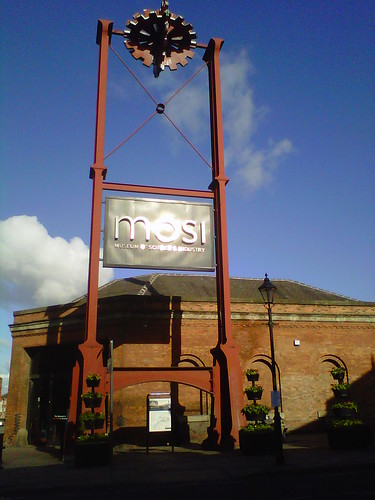
Museum of Science & Industry: The 'Ferranti Tower' in 2012.
The altogether more accessible form 'Museum of Science + Industry' came into use. The '+' sign presumably represents the 'science' part of the brief. Visible on the picture (but not available on a simple 'QWERTY' keyboard, I'm afraid) is the hexagon and circle placed co-axially with the '+' sign. I assume the hexagon and circle form a 'nut' representing the 'industry' side of the brief.
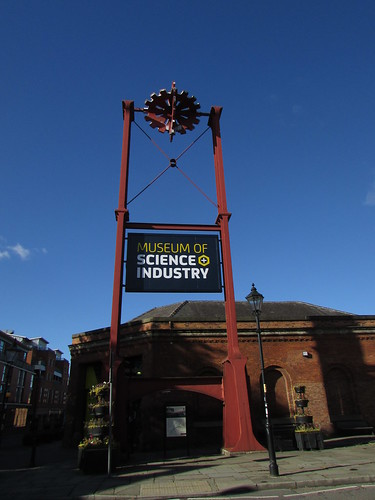
Museum of Science + Industry: The 'Ferranti Tower' in 2016.
Demise of the Friends
The 'Museum of Science + Industry', of course, carries on as part of the Science Museum Group but the museum which the Friends organisation was set up to help no longer exists so the Friends organisation is now disbanded after some 31 years and has disbursed its remaining funds to the 'Museum of Science + Industry' to be used on a number of nominated projects, after which it will be removed from the charities register and will cease to exist. Although the 'Friends' are no more, the Museum is seeking 'Volunteers' - more information here. As far as the railway operation is concerned, there is a role 'Trainee Railway Fireman', described here although I believe paid staff are also used on the operation which still intends to offer passenger rides. The railway 'extension' and the line over the colonnade are no more. The demonsration line is now truncated at the Water Street Railway gate, exactly as it was back in 1988 when I became a Friend.
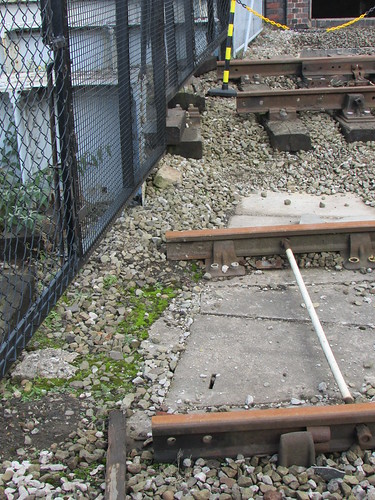
Museum of Science + Industry: Disconnected tracks at the gates of the Museum.
Commemorating the contribution of the Friends
I received an invitation to attend the unveiling of a commemorative plaque in honour of the Friends of the Museum on 19th October 2016. I attended the well-patronised event, specifically hoping to see some of the many railway operating volunteers I'd enjoyed working with over more than a quarter of a century. I think I counted four. The plaque reads:-
Friends of the Museum of Science and Industry in Manchester 1983-2015
The museum gratefully acknowledges the time, work and fundraising of the many members of the Friends organisation. Their tireless support and dedication helped us achieve our high reputation for learning and enjoyment.
My pictures of the event are here.
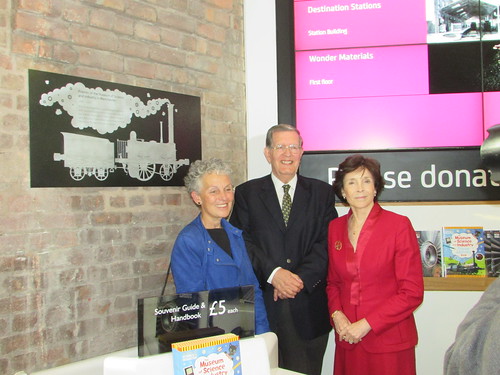
Museum of Science + Industry: Commemorate plaque and (L-R) Sally MacDonald (Museum Director), Michael Bailey, Dame Mary Archer DBE (Chairman of the Board of Trustees).
Related posts on other websites
Liverpool Road (Transport Heritage site)
Liverpool Road (Wikipedia)
Related posts on this website
Dates are original posting dates, not dates of events described.
'Single-Wheeler' locomotives 10-Nov-2015
Driving the 'Planet' replica 11-Sep-2015
Happy Birthday 'Planet'! 29-Nov-2013
'Planet' in Perspective 12-Nov-2013
'Planet' at MOSI - The First 21 Years 21-Oct-2013
Another Saturday in Manchester 12-Oct-2013
The Planet Replica 10-Oct-2013
Manchester Mini Maker Faire 2013 13-Aug-2013
A Busy Week 5-Aug-2013
A Saturday in Manchester 11-Jun-2013
Easter Week at the Museum of Science and Industry 9-Apr-2013
Saturday Steam 4-Mar-2013
Santa Specials - 2012 17-Dec-2012
Day out with Thomas at MOSI 31-Aug-2012
MOSI Mini Maker Faire 15-Aug-2012
Agecroft at MOSI 3-Jan-2012
'Thomas' visits MOSI 4-Sep-2011
Agecroft No. 1 2-Jun-2011
Liverpool & Manchester 180th Celebrations 30-Sep-2010
Beyer Peacock, Gorton 28-Sep-2010
Transport Festival, August 2009 16-Aug-2009
New Platform at MOSI 30-Jun-2009
Dalek Invasion in Manchester 26-Aug-2007
Museum of Science and Industry in Manchester 26-Aug-2007
'Planet' locomotive in Operation 14-Apr-2007
My pictures
All my albums around the museum are here.
[L&M 180th Celebrations added 29-Oct-2016]