skip to main |
skip to sidebar
On Friday 12th January 2018, I attended the annual RSSB Rail Industry Information Day which was held (outside London for the first time, I think) at the University of Birmingham.
Getting there
I took the first bus from Brewood to Wolverhampton and caught the busy 08:11 Arriva Trains Wales to Birmingham International, getting off at Birmingham New Street. Having some time in hand, I toured the Grand Central shopping area, amazed at the range of food outlets well-patronised by people taking breakfast - coffee shops, juice bars, pizza places, sushi bars, Mexican food, even Korean Street Food! I talked about my reaction to Birmingam's Grand Central in the earlier post here.

Grand Central, Birmingham New Street: Atrium showing retail outlets at both Concourse Level and around the Gallery.
I exited to Stephenson Place to see the temporary terminus of the 'Midland Metro' now that the extension from the original terminus at Snow Hill along Corporation Street to New Street station is, belatedly, in use. A further extension, due to open in 2019, will pass the Town Hall and reach Centenary Square. The rolling stock comprises 21 units of the 'Urbos 3' five-section articulated design built by CAF in Spain. See the Wikipedia article here.
Returning to the station, I was just in time to catch the next Class 323 Electric Multiple Unit on the Cross-City service. The service was taken over by 'West Midlands Trains' on 10-Dec-2017 (as I mentioned in the earlier post A Trip to Merseyside) but, externally, the former 'London Midland' livery is still carried. The Class 323 were built by Hunslet between 1992 and 1995 and, under our crazy arrangements for privatising railways, the trainsets are now owned by Porterbrook which is a 'ROSCO' (rolling stock company). There's a Porterbrook data sheet on the Class 323 here.
The journey only took a few minutes and the University of Birmingham has its own station called, with admirable clarity, 'University' (although the station is equally handy for the huge Queen Elizabeth Hospital). Since I walk slowly these days, it took me 15 or 20 minutes to walk across the large university campus to the venue. The focal point of the university remains the original D-plan grouping of red brick buildings designed by Sir Aston Webb and Ingress Bell built between 1900 and 1909 with its campanile clock tower of tapering square section with a corbelled top stage and lantern, called the 'Joseph Chamberlain Memorial Clock Tower', the 'Chamberlain Clock' or simply 'Old Joe' in honour of the university's first chancellor. There's more on the clock tower in the Wikipedia article here.
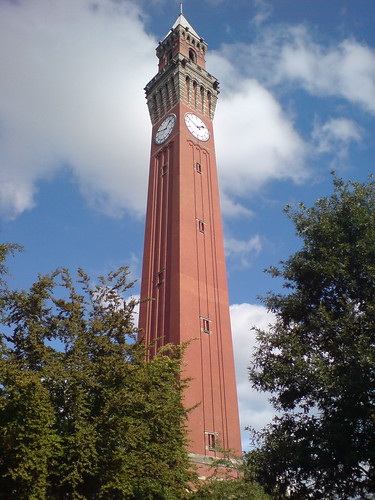
Joseph Chamberlain Memorial Clock, University of Birmingham (Photo: Tomsega, Public Domain).
The initial, unified group of buildings is now surrounded by numerous more modern structures, each of a completely different design reflecting tastes at the time of building.
The venue

Rail Industry Information Day, 2018: Gisbert Kapp Building, University of Birmingham.
The venue was the School of Electronic, Electrical and Control Engineering located in the Gisbert Kapp Building. I had to look up Gisbert Kapp, an Austrian/English electrical engineer born 1852 who held the first Chair of Electrical Engineering at the University of Birmingham from 1904 until his death in 1922. There's a detailed profile in Grace's Guide here.

Gisbert Kapp in 1922 (Photo: Grace's Guide).
The Sponsor
The event was sponsored by the Rail Safety and Standards Board (RSSB), created in 2003 following Railtrack's demise as an independent not-for-profit company limited by guarantee, with a remit to encourage rail research and innovation and creating better links between universities and the rail industry. The University of Birmingham is home to the Birmingham Centre for Railway Research and Education (BCRRE), described here.
The railway industry is now littered with a bewildering array of initiatives and acronyms whose initials were freely used throughout the proceedings. Here are a few:-
RSG (Rail Supply Group)
RDG (Rail Delivery Group)
TLG (Technical Leadership Group)
UKRRIN (UK Rail Research and Innovation Network)
The event
Registration took place on the first floor where refreshments were available in 'The Link', a student Open Learning area closed to students for the day.
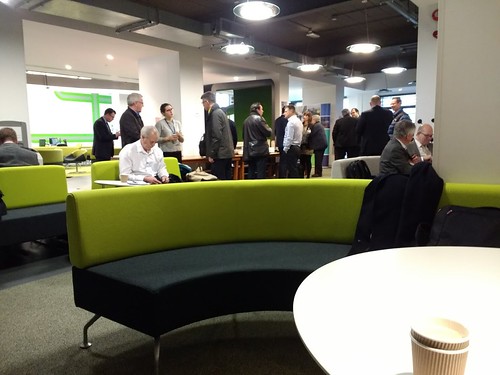 Rail Industry Information Day, 2018: Refreshments in 'The Link'.
At 10:15 we were invited to troop to a large, modern lecture theatre on the ground floor. There were almost 100 attendees, over half from the rail industry. Martin Brennan, Head of European Programmes at RSSB, said that the day would review the Horizon 2020 and Shift2Rail Work Programmes and Collaboration funding opportunities available within 80 billion Euros of funding being provided by the European Union (EU) between 2014 and 2020. More information is available here. Within Horizon 2020, Shift2Rail (S2R) is dedicated to railway research, with more information here.
Professor Clive Roberts [Professor of Railway Systems at the University of Birmingham and Director of the Birmingham Centre for Railway Research and Education (BCRRE)] then gave a "virtual tour" of the Railway Centre of BCRRE, one of three centres in the United Kingdom supporting new innovation in rail transport and part of UKRRIN.
Next, Carlo Borghini who is Executive Director of the Shift2Rail Joint Undertaking updated the meeting on the current programme status and future opportunities.
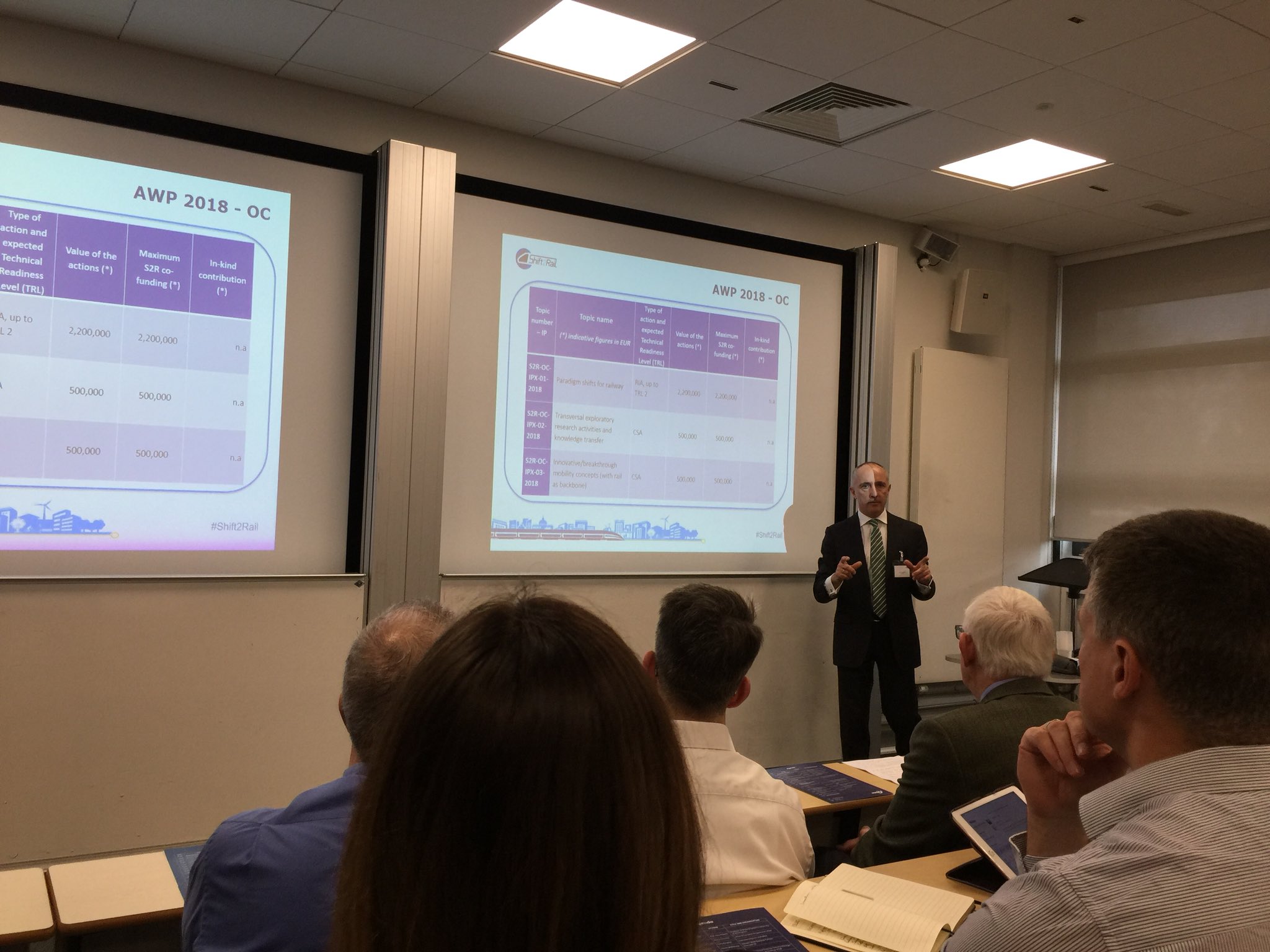
Carlo Borghini addressing Rail Industry Information Day (Photo: Professor Clive Roberts via Twitter).
Louise Mothersole (Horizon 2020 UK National Contact Point for Transport at Innovate UK) explained that the decision of the United Kingdom to leave the European Union did not affect the eligibility of United Kingdom firms seeking to participate in Horizon 2020.
After a coffee break held in The Link, James Hardy talked about RSSB's Rail Technical Strategy. This was followed by a series of 2-minute 'Elevator Pitches' from 12 speakers, after which a buffet lunch was served in 'The Link'.
At 13:45, Martin Brennan described the European Rail Research Advisory Council (ERRAC) which was set up in 2001 to "promote an holistic vision of the European Rail system with all stakeholders" before introducing Professor Simon Iwnicki (Professor of Railway Engineering and Director of the Institute of Railway Research - Huddersfield University) who spoke about participation in Shift2Rail 'Open Call' projects.
Next, Professor Clive Roberts spoke about the S-CODE Project which aims to investigate radically different technology concepts that can be integrated to achieve significantly improved performance for railway Switches and Crossings emphasising successful techniques used in planning this type of project.
A concise explanation of the various funding opportunities under Horizon 2020 and Shift2Rail was given by Louise Mothersole, with an invitation for applicants to contact the National Contact Point for support.
RSSB, in conjunction with Rail Research UK Association, has completed its Rail Technical Strategy Capability Development Plan (RTS CDP). The plan is divided into 12 'Work Packages' to which 'Work Package Owners' have been allocated.

A graphic representing the 12 Work Packages.
Finally, two of the Work Package Owners made short presentations:-
Janine Fountain spoke about Package 02 - Minimal disruption to train service
Karl Butler-Garnham spoke about Package 04 - More value from data
This concluded an interesting day which had given many useful suggestions to prospective applicants.
Railway Centre
As originally planned, the day was to have started with a physical tour of the Railway Centre laboratories but the large number of attendees precluded this, hence the "virtual tour" mentioned above. However, a small group of attendees stayed behind for a tour offered by Doctor Edd Stewart (Lecturer in digital logic and microprocessor systems who also leads on various research projects). An idea of the Research Capability offered by BCRRE can be gained from the website here. Some of the highlights of the tour are outlined below.
A room containing a 14-foot diameter horizontal wheel with a circle of rail on top can be rotated by a 30 kW electric motor to give the effect of a train travelling at 80 km/hour. Chillers can produce freezing conditions in the room, allowing research into railhead de-icing for railways.
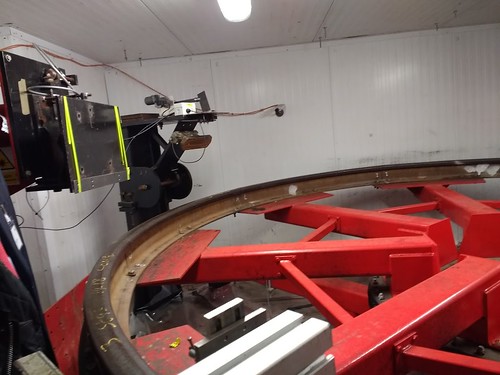
Rail Industry Information Day, 2018: Railhead testing rig.
A well-equipped Railway Control and Operations Simulation room allows research into the next generation of railway traffic management systems.
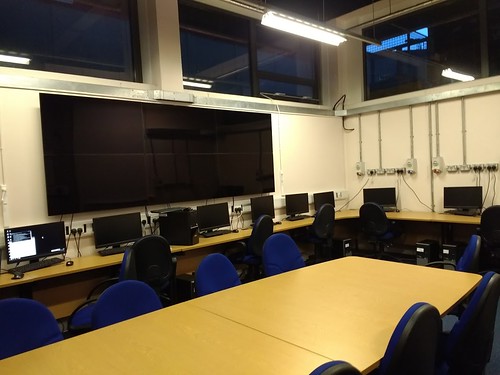
Railway Control and Operations Simulation Room.
In another area, we saw various types of prototype condition monitoring equipment for rolling stock.
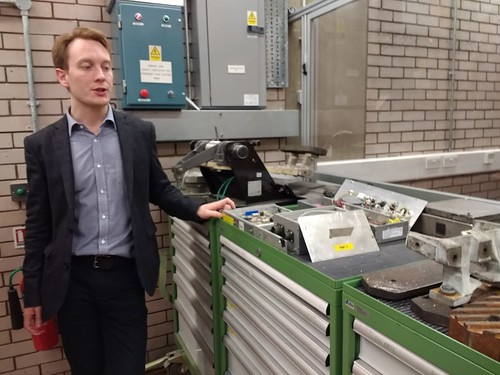
Rail Industry Information Day, 2018: Dr. Edd Stewart with prototype condition monitoring equipment.
We saw the laboratory-based test facility for evaluating and characterising pantograph dynamic loading performance.
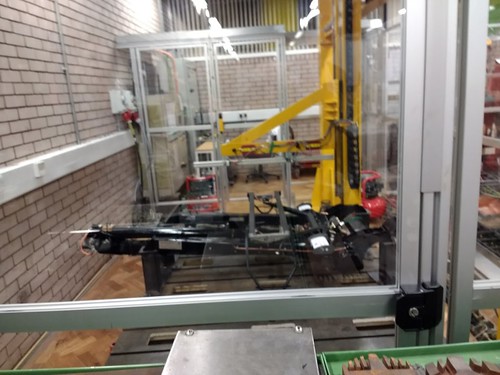
Rail Industry Information Day, 2018: Pantograph test rig.
Nearby, there was a robotic inspection cell for use with railway vehicle wheelsets.
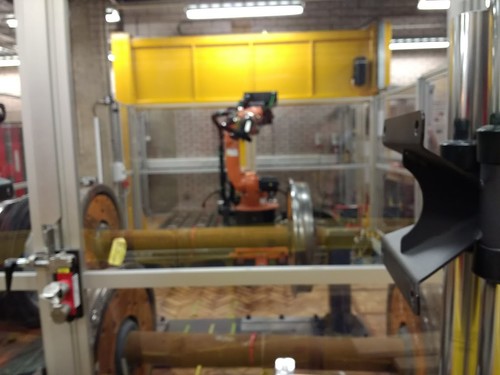
Robotic inspection cell for use with railway vehicle wheelsets.
Another climate chamber held the 'sharp end' of a set of points, allowing the evaluation of point machine performance under varying weather conditions. There was also a small 4-wheel inspection trolley in this chamber, fitted with a robotic arm which can examine the rail head.
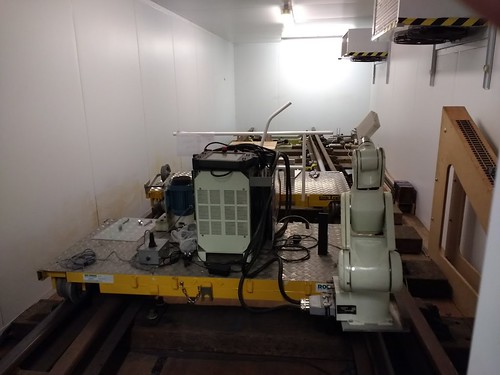
Rail Industry Information Day, 2018: Rail switch test chamber.
A large Motor Generator Set with a programmable load is available for Power Systems and Energy Use research.

Rail Industry Information Day, 2018: Motor Generator Set with a programmable load for Power Systems research.
On our way out, we passed a full-sized cab, which I decided was a Class 717 cab. The Class 700 'Desiro City' are already in use on British Rail. The Class 717 is a variant with end doors for use on the Northern City Line which allows passengers to be evacuated via the Moorgate Tunnel, as is possible with the existing 40-year old Class 313.
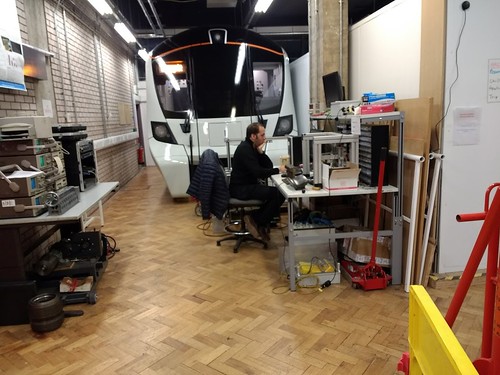
Rail Industry Information Day, 2018: Class 717 cab.
Getting back
It only remained to return home by walking back across the darkening Campus, catching a busy Cross-City service to Birmingham New Street, changing to a standing room only Arriva Trains Wales service as far as Wolverhampton and then getting a taxi home (our last bus from Wolverhampton is 17:10!)
Related posts on this website
Rail Research UK Association Annual Conference 2017.
Grand Central and Birmingham New Street Station.
My photograph albums
Where necessary, clicking on an image above will display an 'uncropped' view or, alternately, pictures may be selected, viewed or downloaded, in various sizes, from the albums listed:-
Rail Industry Information Day.
Not exactly 'hot' news, but this report mentions a little hiccup in the history of Liverpool's historic 'Lion Tavern' back in 2016.
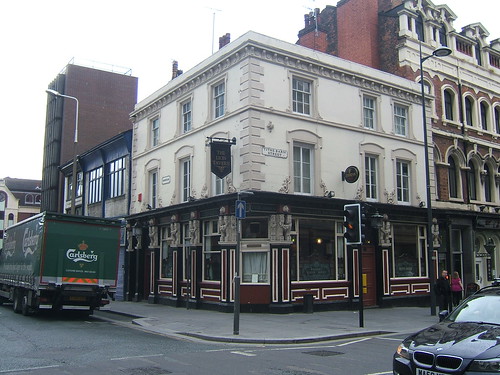
The 'Lion Tavern' has a commanding corner location opposite the former Exchange station.
Because of my involvement with the Old Locomotive Committee (OLCO), I knew of the 'Lion Tavern, located at the junction of Moorfields and Tithebarn Street but I'd never been there until OLCO provided assistance to the Museum of Liverpool in the making of a video about Lion's history. That visit is described in the short post here.
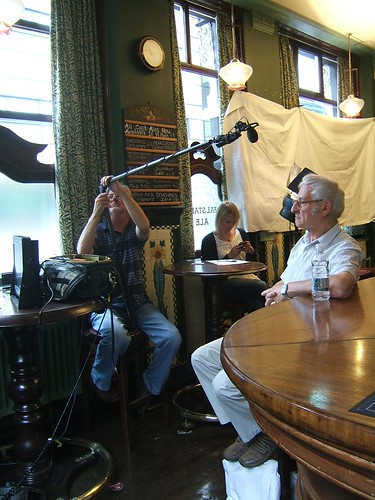
John Hawley does his 'piece to camera'. Sound Recordist Malcolm and Producer Fiona in the background.
Some years after, I came across the Liverpool Echo article from 15th June 2016 "Last orders called at two Liverpool city centre pubs - including the historic Lion Tavern" here.
Later, I found another Liverpool Echo report dated 16th November 2016 proclaiming "The historic Lion Tavern re-opens today" here.
Although I've not been back to the Lion Tavern yet, it seems to be thriving: there's a website here. And the Ale? I'm sorry, during my visit I only took tea.
Regular readers may be aware that the Liverpool area has fascinated me since my early visits as a child. Periodically, I make a day trip there.
In the post Liverpool (again) I updated matters to 2014 but there have been more trips and posts since.
On 29th December, 2015, I made a day trip to Liverpool which is described in the post Merseyside in December.
On 29th December, 2016, I made a day trip to Liverpool which spawned a three-part post:-
Return to Merseyside (Part 1)
Return to Merseyside (Part 2)
Return to Merseyside (Part 3)
With my surveys incomplete, I returned on 4th February 2017, resulting in the post Exploring Liverpool's former South Docks.
At the beginning of January, 2018 I travelled to Liverpool again and that trip is described in this post.
Our weather had been cold and often windy, frosty or wet. I consulted the forecasts but eventually plumped for the first Saturday in 2018 and left my home at eight o'clock to catch our first bus of the day which goes to Penkridge, where I hoped to catch a train. The main roads from Brewood to Penkridge aren't usually too bad but the bus takes a circuitous route through Bishop's Wood, Wheaton Aston, Lapley and Whiston, involving narrow lanes and sharp, unsighted bends. Despite offering a transport service to all these communities, I was the only passenger from Brewood and just one young man joined us at Wheaton Aston. To keep anywhere near time, the bus had to be driven quite hard so I found it quite an exciting journey. The young passenger and I got off at Penkridge Medical Centre and I showed him the footpath under the railway and through the churchyard to the station.
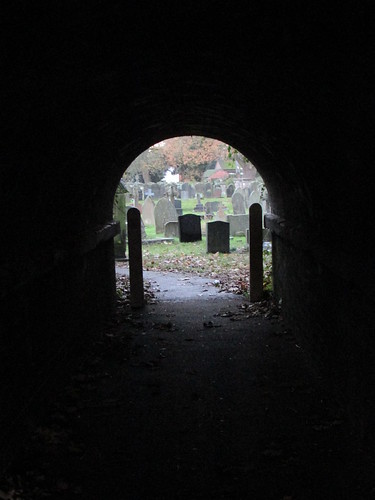
South Staffordshire: Penkridge, pedestrian tunnel under railway with churchyard in the background.
My new friend was travelling to Birmingham and, by dashing up the stairs to platform 1, he just caught a train which arrived as we approached. I had time to negotiate with the touch-screen ticket machine which was running new software, presumably because the Train Operating Company at Penkridge has recently changed.
The previous 'London Midland' franchise was taken over by West Midlands Trains on 10th December 2017. There's a useful Wikipedia article here. The new company is operating two 'brands'. Trains within the West Midlands form the 'West Midlands Trains' brand whilst 'long-distance' trains to London and Liverpool form the 'London Northwestern Railway' brand. Although I'd seen a picture of a West Midlands Trains trainset in their new livery, the trains I saw during the day all retained their old 'London Midland' livery.
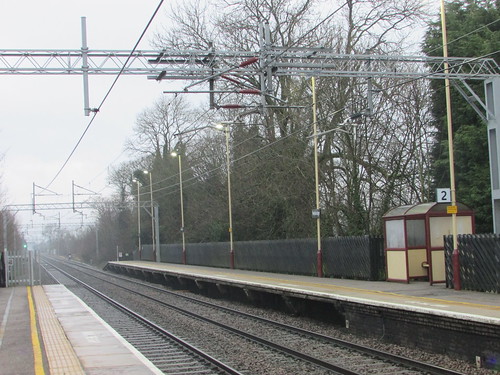
Trip to Merseyside 6-Jan-2018: A gloomy Penkridge Station, looking towards Stafford.
The journey to Liverpool Lime Street was on-time. When I saw that our arrival was into one of the low-numbered platforms usually reserved for local trains, I remembered that Liverpool Lime Street is in the throes of an Upgrade Programme which will create one new platform and lengthen two others. There's a little more about this in the section 'Liverpool Lime Street Upgrade'. I purchased an 'All-Zones 1-day Saveaway' giving unlimited bus, train and ferry use in Merseyside and descended to Liverpool Lime Street Low Level to catch a Merseyrail service two stops to James Street.
A few minutes later, I was emerging into sunshine at James Street and, although it wasn't exactly warm, the walk to the Museum of Liverpool was pleasant enough. I'm secretary of the Old Locomotive Committee (there are lots of posts about the 'Old Locomotive' in question - 'Lion' here) so, when in Liverpool, I like to check-up on the Museum's 'star exhibit'. All was normal (although I'm never very happy to see a steam locomotive 'stuffed and mounted').
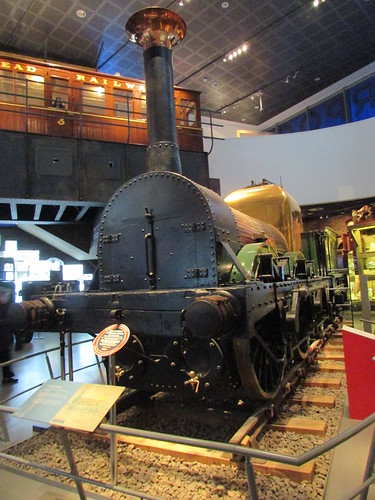
'Lion' Exhibit, Museum of Liverpool.
A display case in the foyer now covers the Liverpool tram system. I was impressed by the detailed model of a 1936 tram as that's the design of tram I remember seeing on my early trips to Liverpool.
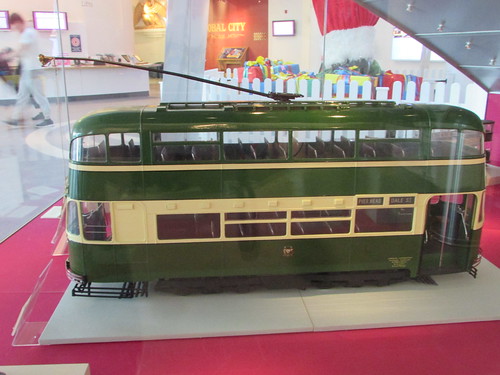
Tramways Exhibit, Museum of Liverpool with model of 1936 'Green Goddess' tram.
This year, I was surprised to find the waterfront between the Museum and the Ferry Landing Stage hosting a Fun Fair, with a few hardy ride operators open for business - the wind was noticeably keener near the water.
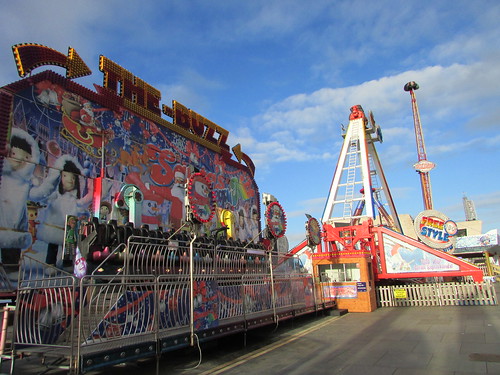
Liverpool Waterfront with Fun Fair.
I was probably even more surprised by the appearance of the iconic Liver Building and its clock. The clock face facing the museum was missing both hands: that facing the river was working but 20 minutes fast!
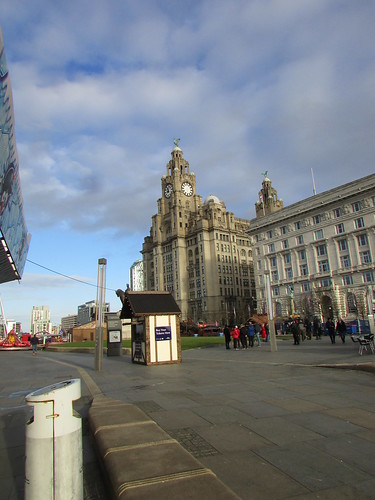
Trip to Merseyside 6-Jan-2018: Liverpool Waterfront.
It's become a tradition for me to take the 'Ferry cross the Mersey', so I boarded 'Snowdrop' on the 11 o'clock sailing still, I'm afraid, in her 'Dazzle' livery. I've complained before about Sir Peter Blake's interpretation of 'Dazzle Painting' which bears only a slight relationship to the actual livery applied to many ships in World War I (see the post here).
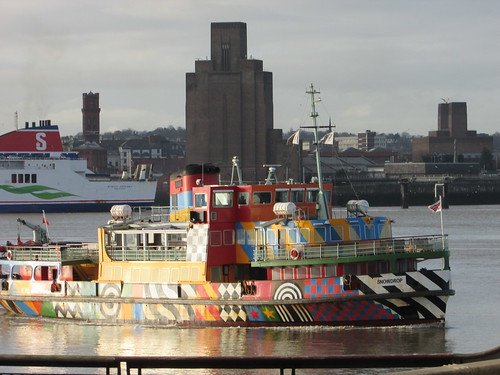
Trip to Merseyside 6-Jan-2018: Mersey Ferry 'Snowdrop' approaching Pierhead in bright sunshine.
Of course, I positioned myself on the open promenade deck near the bow, despite the sharp wind. I never tire of the views of the the old docks and modern shipping. As we slipped away from Pierhead, we were preceded by 'Ro-Ro' (Roll-on, Roll-off) ferry 'Stena Mersey' heading for Belfast which joined a procession of departing ships.
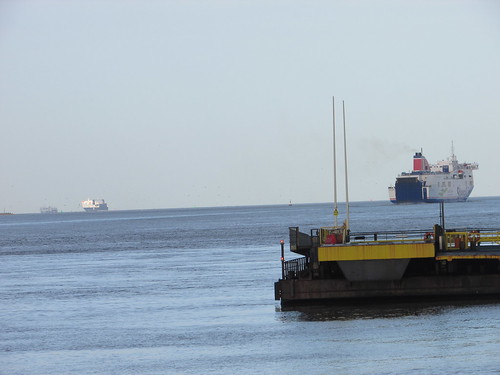
Trip to Merseyside 6-Jan-2018: Three ships leaving Liverpool just after 11.00 a.m. (L-R) Unidentified, 'Seatruck' 'Ro-Ro' ferry to Dublin, 'Stena Mersey' 'Ro-Ro' ferry to Belfast.
Whereas the gangway at Pierhead is now hydraulically operated, at Seacombe (and Woodside) gangways remain counterbalanced and manually operated. The 'shore party' at each location is now one man to handle the bow mooring line, the gangway and the gate on the landing stage which allows passengers onto the ferry. On the ferry, two deckhands appear to handle all activities. In the tricky waters of the Mersey, safe ferry docking depends upon good co-ordination between the Captain, the deckhands and the shore man. According to the state of the tide, the ferry docks either facing upstream or facing downstream.
We docked at Seacombe Landing stage, landed a handful of passengers and boarded others.
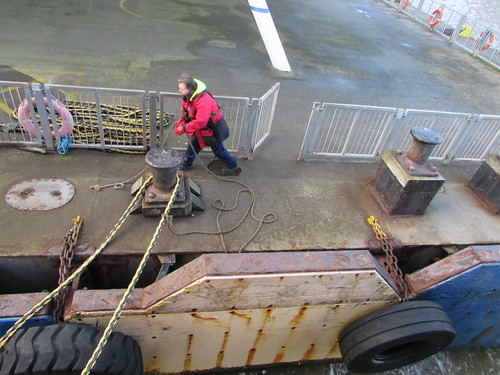
Trip to Merseyside 6-Jan-2018: Docking at Seacombe Landing Stage.
'Snowdrop' then headed upstream, passing 'Ro-Ro' ferry 'Stena Precision' moored at Twelve Quays Ferry Terminal and made a loop to starboard so as to dock with the ferry facing downstream.
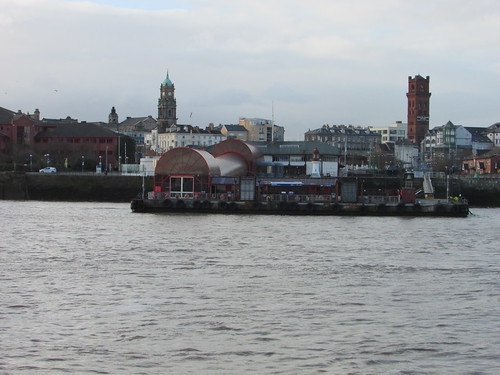
Trip to Merseyside 6-Jan-2018: Birkenhead Woodside Landing Stage.
A section of gunwhale on either side of the ship, fore and aft has a sliding section which, when pushed open, allows the gangway to drop onto the main deck. A sign warns passengers 'In the interest of safety please stand behind the brass line until gangway is lowered' and a (rather tarnished) brass strip is set in the decking. I found this a delightful survivor from more innocent, less Health and Safety obsessed times.
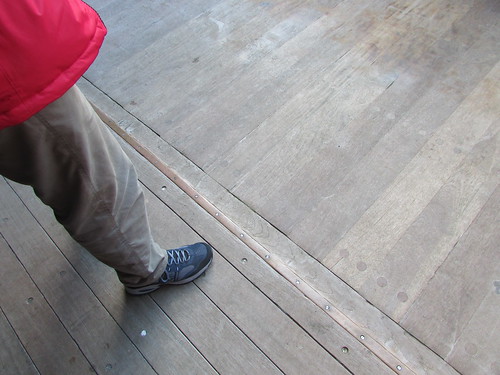
Trip to Merseyside 6-Jan-2018: Passengers obediently stand behind the brass line, waiting to disembark.
I made my way ashore and walked to Hamilton Square station, with its impressive tower, listed Grade II. Pevsner comments:-
Station. c1886. By G.E.Grayson. Brick and terracotta. Italianate style. Hamilton Street elevation has hydraulic tower on angle, and pedimented central block of booking hall, with triple round-arched windows in apex and inserted lower openings. Deep cornice band of terracotta panels. Glazed roof to booking hall. Glazed canopy projects from this block and from the tower. 3-bay range to left with louvred windows to right and doorway to left, possibly generator house. 3 paired round-headed windows above, and a row of oculi over. Terracotta cornice and mouldings to openings. Prominent 4-stage tower with round arched windows in lower stage with clusterd shafts. Triple round-arched windows above, then single round-arched windows and ribbed panelled band with paired segmentally arched windows, some now blocked. Cornice above, then giant segmentally-arched recesses housing 2 tiers of mullioned and transomed windows with enriched terracotta detail. Machicolated embattled parapet then high round arched recesses with paired windows and oculi. Clustered shafts at angles form pinnacles. Balustraded parapet and small lead fleche. 3 bay 3-storeyed return elevation to Bridge Street with continuous arcading at each level. Interior of booking hall has glazed tiled walls and queen post and collar roof with wrought iron ties. The station was built as part of the Mersey railway and Mersey rail tunnel, which opened in 1886. The engineers were James Brunlees and Charles Douglas Fox.
(The Buildings of England: Pevsner N and Hubbard E: Cheshire: Harmondsworth: 1971-).
The underground platforms have always been accessed by lifts which were originally hydraulically-operated (the tower housed the hydraulic accumulator) but are now electric. The station was refurbished in 2014-2015.
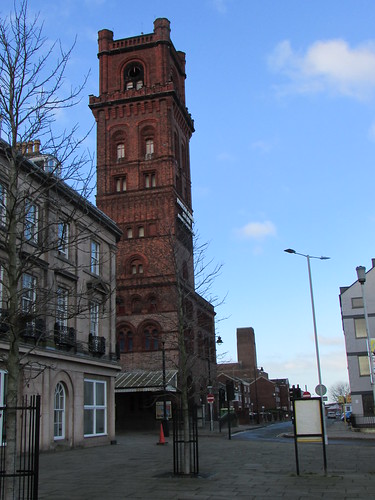
Trip to Merseyside 6-Jan-2018: Hamilton Square Station.
I took a New Brighton Train from Platform 3. The current trains are Class 507 and 508/1 3-car units built between 1978 and 1980. Although these trainsets are elderly, an Alstom refurbishment programme between 2002 and 2005 has improved the "passenger experience". However, in 2016, Merseytravel placed an order with Swiss train builder Stadler which will replace the entire fleet with Class 777 METRO 4-car sets by 2021.
Passing through Birkenhead, I noticed the top of the superstructure of a navy ship in the Cammell Laird Yard (which is discussed in the section Bidston Graving Dock of my post here). On my return home, I identified the ship as 'RFA Ford Austin' using the Ship AIS page here.
I was soon at New Brighton Station. Merseyrail make up for the fairly spartan trains by having stations which are staffed, warm, well-lit, provided with clean, working toilets and, usually, a shop or refreshment facilities.
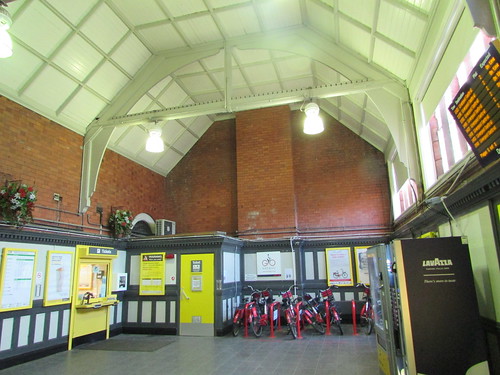
Trip to Merseyside 6-Jan-2018: Booking Hall at New Brighton Station.
I set off on foot down Victoria Road towards the estuary, pausing at Victoria Road Fish and Chips for a take-away portion of excellent chips which lasted me to the Promenade. The massive, red-painted container cranes at the new deep-water port at Seaforth called 'Liverpool 2' dominate the view across the river. I briefly discussed the building of this facility, to handle post-Panamax vessels, in the post Notes on Liverpool and its Docks and I think I first saw these cranes in December 2016, as reported here.
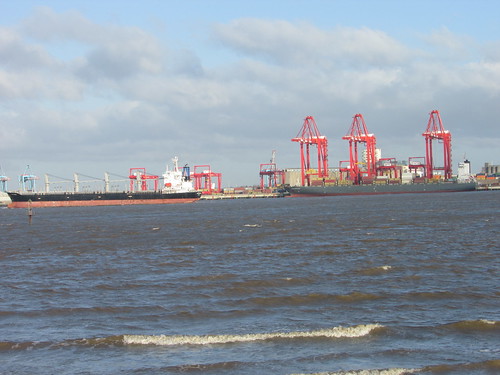
Trip to Merseyside 6-Jan-2018, view from New Brighton Promenade across river: (L:) Panamanian-registered bulk carrier 'Lord Nelson' (28,653 DWT) heads out to sea, (R:) Liberian-registered container ship 'Songa Antofagasta' (35,534 DWT) moored at 'Liverpool 2'.
Although the new quay is open, there have been problems with the unexpected appearance of a sink-hole in the North Quay and locals have grumbled that they haven't seen many super-sized container ships yet. Needless to say, a Peel Ports spokesman remained confident for the future of this facility. The modern Floral Pavilion lies on the landward side of the promenade.
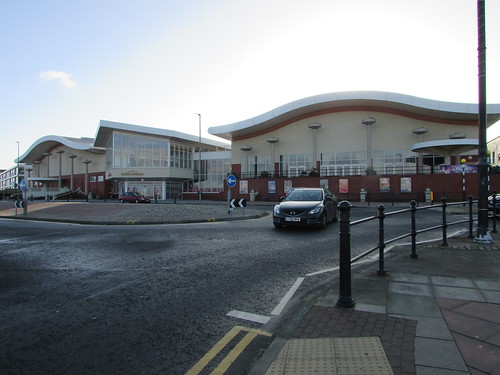
Trip to Merseyside 6-Jan-2018: Floral Pavilion Theatre, Promenade, New Brighton.
Before I made my way back to the railway station, I watched 'Oramalia' heading out to sea, following 'Lord Nelson'.
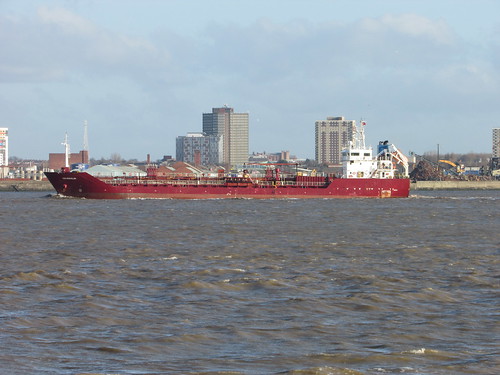
Trip to Merseyside 6-Jan-2018: Viewed from New Brighton Promenade, Gibraltar-registered oil/chemical tanker 'Oramalia' (6,863 DWT) heads out to sea.
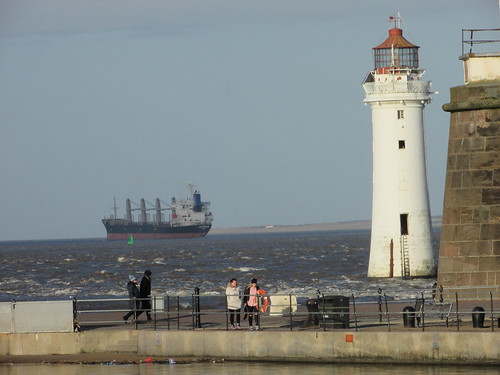
Trip to Merseyside 6-Jan-2018: Panamanian-registered bulk carrier 'Lord Nelson' 28,653 DWT heads out to sea with the former New Brighton Lighthouse on the right.
I arrived at the station in time to see a train just leaving. I spent the short time waiting for the next service taking pictures around the station.
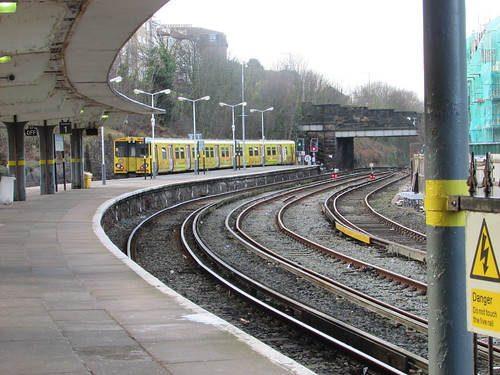
Trip to Merseyside 6-Jan-2018: Class 508 'Merseyrail' service leaving New Brighton station.
The train returned me quickly to the City and I alighted at Liverpool Lime Street station where escalators took me to the main line concourse. I'd originally intended to explore a little more but I was tired from the walking and the temptation of a Wolverhampton-bound train standing in the new platform 8 proved too great so, after a quick photograph at the platform end, I boarded the train home.
Liverpool Lime Street station Upgrade
When complete, the Upgrade with give Lime Street one extra platform and two lengthened platforms. Originally, the wide island platform 7/8 carried a carriage road allowing taxis and other vehicles direct access to trains. This was a common feature at important stations when I was growing up but appears to have fallen out of favour (although on my 2009 visit to Howrah station in Kolkata I was delighted to find the carriage road still in use). For some years, the carriage road at Lime Street had been used for various buildings, including the Virgin Trains First Class Lounge since the Virgin services to London used platform 7. All these buildings have been demolished (the Virgin First Class Lounge has been relocated on the concourse). Eliminating the space used by the carriage road has allowed the island platform to be narrowed, leaving room for an additional track and platform which will be the new platform 7, increasing subsequent platform numbers by one.
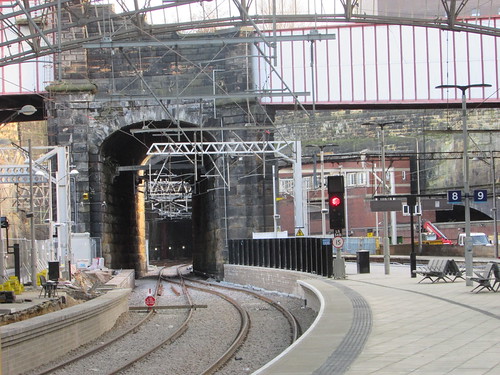
Trip to Merseyside 6-Jan-2018: Liverpool Lime Street Station. L: New platform 7 under construction, R: New platform 8 in use.
My train departed from the new platform 8 but work on the new platform 7 was still under way. There's a colourful (but inaccurate) computer-generated publicity image showing the final arrangement reproduced below.
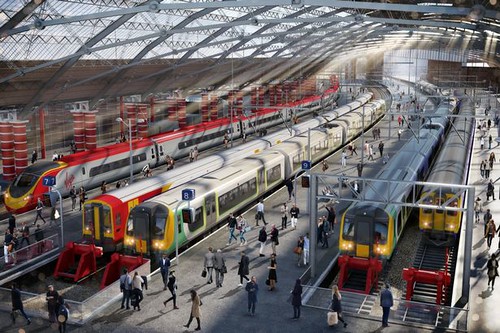
Computer image of Liverpool Lime Street after Upgrade.
Postscript
Although I returned home from Liverpool Lime Street without incident, the following day Network Rail closed the station to all trains for an estimated two days because of the discovery of dangerous corrosion in an Overhead Line structure affecting all lines.
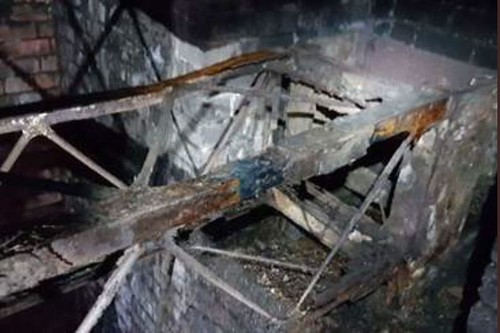
Corroded OLE gantry on approach to Lime Street pictured by RMT Union.
This is not the only case of Network Rail's shortcomings affecting Lime Street. Less than a year earlier, in February 2017, the station was closed for a week following partial collapse of the stone-built retaining wall in Edge Hill Cutting. In November 2017 the Rail Accident Inspection Branch published its report on the incident which you can find 17/2017.
Related posts on other websites
Although the links worked at the time this post was published, changes made by that website's owner may 'break' the link.
West Midlands Trains.
RAIB Report 17/2017.
Related posts on this website
As I comment above, 'Merseyside' is a recurring theme in this blog. Your can find all my posts about Merseyside here.
Posts on the Old Locomotive Committe are here.
My photograph albums
Where necessary, clicking on an image above will display an 'uncropped' view or, alternately, pictures may be selected, viewed or downloaded, in various sizes, from the album covering this trip:-
Trip to Merseyside.
I'm amazed that this is the twelfth annual review since I started this blog. Another year older, with a generous collection of new memories and a clear understanding of how fortunate I've been.
OVERSEAS TRAVEL
In 2017, two overseas trips proved sufficiently ambitious, and they both included my beloved Burma (Myanmar, as it is now known). To track down overseas visits I've written about in earlier years, to both Burma and other countries, you can try the following posts:-
Jan Ford's Travels (2001 onwards).
Jan Ford's Travels - The early trips (before 2001).
Jan Ford's Travels: Around the World in pictures (alphabetic list with links to pictures).
Burma and Australia in 2017
I set off on 19th April and visited Yangon, Mon State, the Bagan Medical Clinic and local schools with Doctor Hla Tun (as in previous years) before a visit to Kayah State and Inle Lake. The first of a series of posts is here and each post in the series has a link to the subsequent episode.
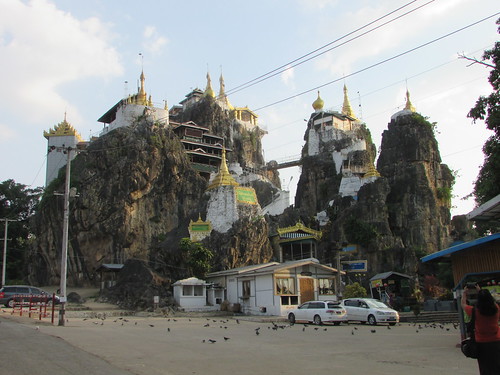
Taung Gwe Zedi, Loikaw.
Then, I spent a few days in Australia visiting Perth, Melbourne and Hobart. The first of the Australia posts is here and each post has a link to the subsequent episode.

Port Arthur Historic Site: The remains of the Penitentiary.
Second trip to Burma in 2017
I set off on 29th September and visited Yangon, the Delta Region, Myitkyina, Indawgyi Lake, Mandalay. Then, I travelled on the 'Road to Mandalay' river ship to Bagan with Doctor Hla Tun. After spending time at Bagan Medical Clinic, I returned to Yangon for a final stays at the Belmond Governor's Residence. The first of a series of posts is here and each post in the series has a link to the subsequent episode.
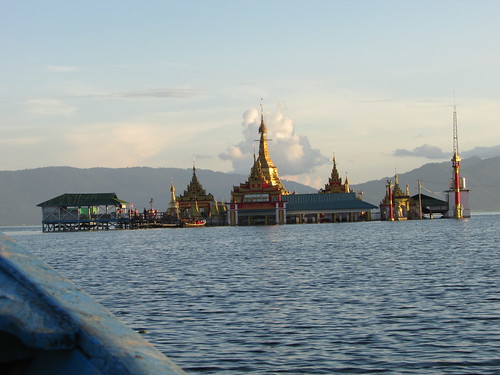
Shwe Mykitzu Pagoda, Indawgyi Lake, Myanmar.
TRAVEL IN THE UK
During the year I made a few trips (mainly by rail) to various destinations in the UK, some of which have blog posts.
By Bus to Brighton.
Croydon Airport (site of).
London: The Shard.
Exploring Liverpool's former South Docks.
Interlude in London.
Channel Tunnel Rail Link.
Rail Research UK Association Annual Conference 2017.
Quinton Rail Technology Centre.
High Speed One.
The Postal Museum and Mail Rail, London.
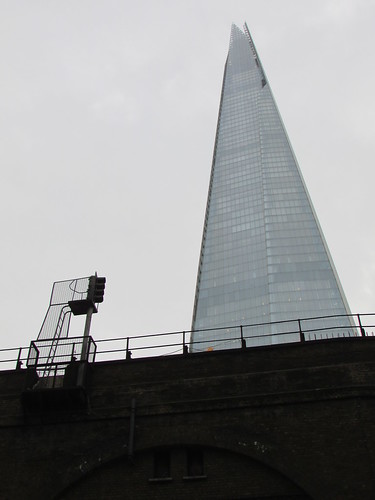
London Bridge Station: View from Tooley Street, with the Shard in the background.
RAILWAYS AND PRESERVATION
During 2015, I continued to support the Old Locomotive Committee and remained an active volunteer at The Battlefield Line and Peak Rail.
The Old Locomotive Committee
On Saturday, 17th June 2017 the 32nd Annual General Meeting of the Old Locomotive Committee was held in the Museum of Liverpool. As usual, I travelled to and from Liverpool by train. Various photographs I took have been added to the appropriate album.
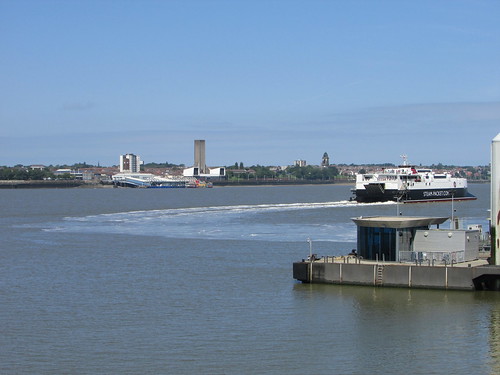
Liverpool: View from Pierhead as 'Manannan' leaves for the Isle of Man with Seacombe Landing Stage in the background.
The 'Lionsmeet' event was held on Saturday, 22nd July 2017 at the Worden Park track of the Leyland Society of Model Engineers. My report is here.
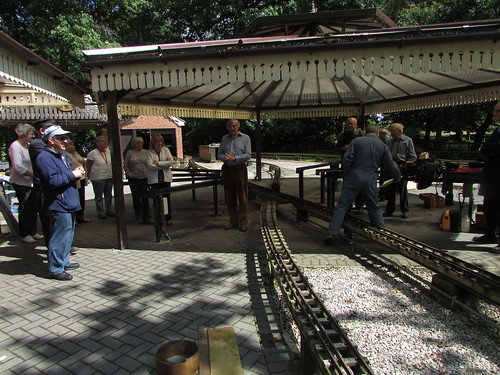 'Lionsmeet 2017' at Leyland SME: During the afternoon John Brandrick, Chairman of OLCO, made a short address of thanks to Leyland S.M.E. for their hospitality.
You can find all my posts about OLCO here and there's more information on the Old Locomotive Committee's website (and becoming a member) here.
The Battlefield Line
I had a number of driving turns during the year, some of which are described in blog posts:-
Dugald Drummond and the 'T9' - Historical Background
Bank Holiday with Steam and Diesel
Battlefield Line Model Steam Weekend, 2017
DMU Days at the Battlefield Line
Summer at Shackerstone
Battlefield Line Fish and Chip Evening Special
Two Failures
On the Footplate: the Drummond 'T9'
On the Footplate
Santa Specials at the Battlefield Line 2017

Drummond 'T9': 30120 being prepared at Shackerstone.
You can find all my posts about the Battlefield Line here.
Peak Rail
I regularly drove steam during the year at Peak Rail and there are a few blog posts:-
Peak Rail in 2017
Cars and Trains at Peak Rail
Peak Rail 1940s Weekend 2017
On the Footplate
Peak Rail Santa Specials

Visiting locomotive 'Jennifer' at Peak Rail.
You can find all my posts about Peak Rail here.
Myanma Railways
During my two visits to Burma in 2017 I again spent some time studying the railway system, resulting in a number of blog posts:-
Last Full Day in Yangon
Train movements at Yangon Central station
Features of Railway Signalling in Myanmar
Railway Signalling in Burma - Index
Around Mandalay
Mandalay Wednesday
Mandalay and its Circle Line
Non-operational steam in Myanmar
Rail-mounted Cranes on Myanma Railways
Final day in Yangon and the Circle Line
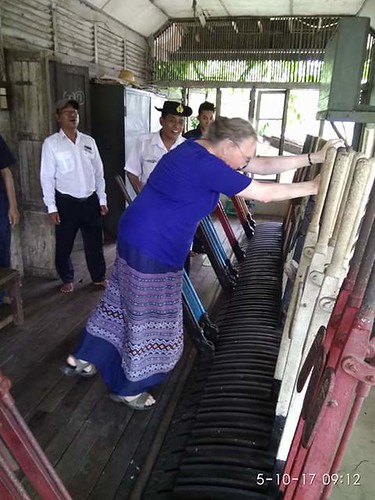
Jan in Kyee Myin Daing South Signal Cabin (Photo: Myanma Railways)
You can find all my posts about Myanma Railways here.
BREWOOD HALL
The Brewood Garden Party was held at Brewood Hall for the fifth time on Saturday, 8th July 2017. There's a report here.

Brewood Garden Party 2017.
You can find all my posts about Brewood Hall here.
TY GWYN
Ty Gwyn is a small commercial woodland around 27 hectares in area near Corwen in Wales. There's a review in the post Ty Gwyn 2017
. To see all my posts on Ty Gwyn, click here.
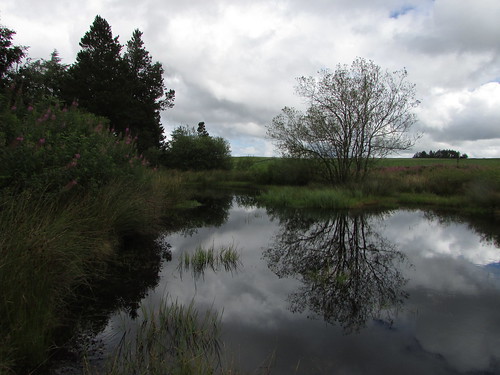
Ty Gwyn 2017: Memorial Pool in August.
'ROAD TO MANDALAY' SOCIAL CONTRIBUTION
For a number of years, I've supported the charitable initiatives operated under the above name in Burma. When I visit Burma, I try to see as much as possible of the work in hand. The charity provides Educational Support to a range of schools and orphanages (including the Orphans & Vulnerable Children Project in Mon State) and Medical Treatment to all ages (centred on the wonderful Bagan Medical Clinic).
You can find all my posts on Educational Support here.

Hlaing D.I.C. in Mawlamyine.
You can find all my posts on Medical Support here.

Bagan Medical Clinic, Friday 13th October 2017.
OTHER BLOG POSTS IN THE YEAR
This review covers trips and events during the year but doesn't include other types of post including:-
Technical or historical articles, mainly about railways;
Recollections of past events;
PREVIOUS ANNUAL REVIEWS
2016
2015
2014
2013
2012
2011
2010
2009
2008
2007
2006
History
Quinton Rail Technology Centre at Long Marston was originally a large Ministry of Defence site established early in World War II which boasted an extensive private railway. Main line rail access was provided via the adjacent Great Western Birmingham-Stratford-Cheltenham Line which crossed the Great Western's Oxford-Worcester-Wolverhampton line about two miles south of Long Marston at Honeybourne where elaborate junctions between the two lines gave good rail connections in various directions.
Post-war, military use steadily declined. British Railways withdrew passenger services through Long Marston around 1966 and, by 1976, the line to Stratford had been lifted north of Long Marston, retaining a single line south of Long Marston to a connection with the Oxford and Worcester line at Honeybourne so as to maintain rail connections to the Ministry of Defence site. South of Honeybourne, the Stratford-Cheltenham route was removed but the Gloucestershire Warwickshire Steam Railway have restored operations between Toddington and Cheltenham.
With further reductions in Ministry of Defence use, Bird's Commercial Motors took over part of the site as a scrapyard with the advantage of rail connections. The Wikipedia article here and the Warwickshire Railways site here document this period, together with various Open Days held at the site for enthusiasts. Initiatives to establish a permanent preservation presence were not successful.
Following the privatisation of British Rail, completed in 1997, the extensive sidings proved attractive to various ROSCOs (the Rolling Stock operating companies) for storage of out-of-use rail vehicles. This gave rise to various comings-and-goings of rolling stock to and from the site which are documented on Peter Tandy's photograph site here.
In 2004 the 479 acre site was sold to 'regeneration specialists' St. Modwen who, with Bird's, proposed to redevelop the site as 'Middle Quinton Eco-town'. The present plan retains the rail storage and railway equipment restoration facilities with the eastern part of the site developed as a "100 million pound mixed-use leisure-based scheme" called Meon Vale.
The site in 2017
On 21st November 2017, a wet, wintery day, I visited the site for a meeting and managed to take a few indifferent pictures. The remaining railway facilities are operated by Motorail Enterprises as Quinton Rail Technology Centre. Rail vehicle storage mentioned above is still important and I saw various freight vehicles and a number of Class 319 Electric Multiple Units.
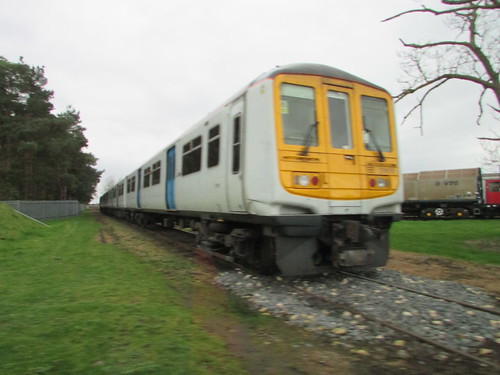
Quinton Rail Technology Centre, Long Marston: Class 319 EMU in store.
I didn't have an opportunity to explore but I also saw a number of taken-out-of-service light-rail trams and London Underground D78 vehicles.

Quinton Rail Technology Centre, Long Marston: Light Rail units in store.

Quinton Rail Technology Centre, Long Marston: former London Underground D78 vehicle in store.
There was a Class 01 diesel shunter, 01547, in the purple and white livery of the Defence Logistics Organisation, and two rubber-tyred 'shunting locomotives' complete with buffers, drawhooks and air brake connections in the same livery.

Quinton Rail Technology Centre, Long Marston: Diesel shunter 01547 in the purple and white livery of the Defence Logistics Organisation.
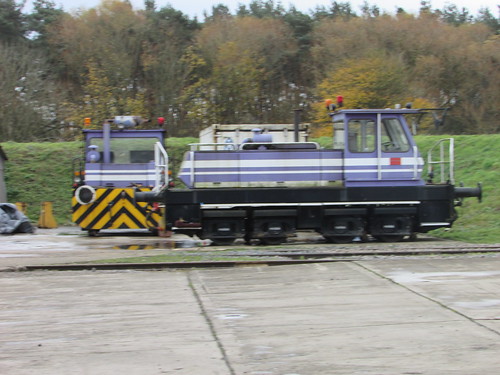
Quinton Rail Technology Centre, Long Marston: Two rubber-tyred 'shunting locomotives' in the purple and white livery of the Defence Logistics Organisation.
A number of companies involved in various aspects of modern railway operation have established a presence on the site.
The Rail Alliance is a B2B (business to business) networking organisation "that sits at the very heart of the rail supply chain". In partnership with RAIL Magazine, an annual outdoor exhibition called 'Rail Live' is staged at Quinton Rail Technology Centre. Rail Alliance works closely with the Rail Research UK Association (RRUKA) which is also based at Long Marston. Various rail-related tests can be carried out at Quinton Rail Technology Centre in connection with product development, certification and training. One section of the continuous test track is equipped with overhead catenary and, on the day of my visit, Keltbray Rail had a selection of road/rail Overhead Line Equipment maintenance vehicles operating, carrying out what looked like training.
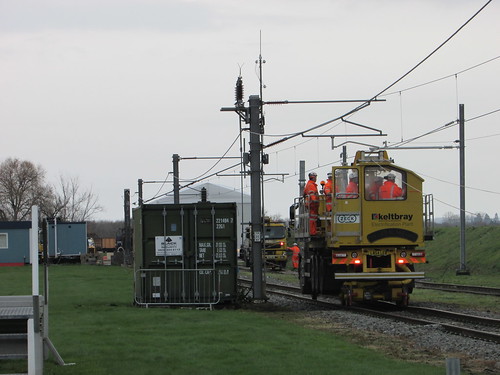
Quinton Rail Technology Centre, Long Marston: Road/Rail vehicle in use on the section of test track with overhead catenary.
Perhaps the highest-profile company on site is Vivarail, who are producing Class 230 trainsets using redundant London Underground D78 vehicles.
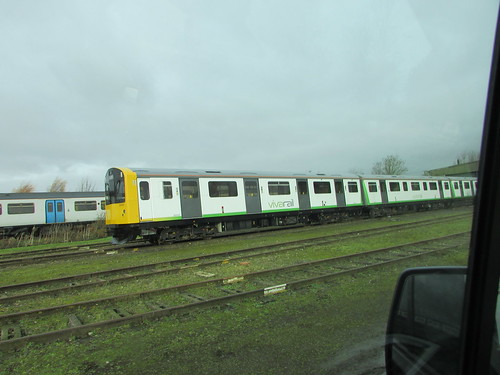
Quinton Rail Technology Centre, Long Marston: Vivarail DMU 230001.
Track diagram
There a simplified track diagram of the system when owned by the Ministry of Defence in the publication:-
‘Railway Track Diagrams Book 3: Western’ (TRACKmaps: 4th edition) ISBN: 0-9549866-1-X.
Related posts on other websites
Although the links worked at the time this post was published, changes made by that website's owner may 'break' the link.
Long Marston railway station (Wikipedia).
Long Marston (Warwickshire Railways).
Long Marston (Peter Tandy's photograph site).
Meon Vale (St. Modwen).
Quinton Rail Technology Centre.
Keltbray Rail.
Vivarail.
London Underground D78 vehicles.
Related posts on this website
Rail Research UK Association Annual Conference 2017
My pictures
Where necessary, clicking on an image above will display an 'uncropped' view or, alternately, pictures may be selected, viewed or downloaded, in various sizes, from the albums listed:-
Quinton Rail Technology Centre.

