Wednesday, 7 January 2015

Driving Steam in Ukraine (Part 2)

In Part 1 I described my journey to Kolomiya in Ukraine on a trip to drive Russian-built steam locomotives. On Monday 24th October 2005, our footplate experience commenced. The fitters were still working on the leaking tubes on YeA2026 so we had three steam locomotives available. The twelve people on the course were divided into three groups of four to travel on different engines on different routes. The two Engineer's coaches which Su251-86 had arrived with were allocated to two of the trains to provide accommodation.

One group were allocated to Er797-86 which, with bogie wagons as a load, was heading south-west on the Rakhov line.

The second group were allocated to Su251-86 which, with a similar load, was heading south-east for Chernivtsi.

My friend Mike and I, with two others, were with Em735-72, with one of the coaches and two bogie wagons which would head north-east to Stefaneshty.
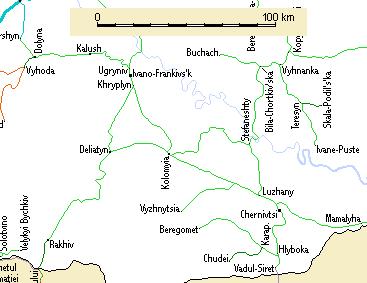
Railways around Kolomiya.

Of course, each locomotive was under the control of a Ukrainian Driver and Fireman. Since few railwaymen in Ukraine have much English, the problem of communication had been addressed by Dzherelo SPK by providing a bilingual college student on each locomotive to act as an interpreter. The idea was that two of each group would be Trainee Driver and Fireman for a time before swopping roles. The two Engineer's coaches which Su251-86 had arrived with were allocated to two of the trains to provide accommodation for the other two trainees who would exchange with the pair on the footplate at a suitable stopping point.

After the first day, I think the whole group stayed on the footplate and swopped round as necessary. The Russian loading gauge is particularly generous and the cabs were large so this presented no problem. I was reminded of my first time on the footplate of a Broad Gauge steam locomotive in India in 1992 (described here), when I commented at the time that the cab was big enough "to hold a party".

Em 735-72 in the sidings ready to leave Kolomiya.

We set off, passed the roundhouse and the diesel shed, taking the left of two single lines, with the line to Chernivtsi on our right. The map above shows how sinuous the line to Stefaneshty is, as it winds through rolling hills. The line is something of a switchback too so, having set the regulator and cut-off to the Ukraine Driver's instructions, speed would fall a little on the uphill sections, then pick-up again on the downgrades. I was driving at this point and, although the locomotive might have been a rather battered survivor, I had the confidence that it would just keep clomping along for ever. And, of course, I would have stayed in the right-hand driver's seat for ever but we had three other trainees to share with. All too soon, we were arriving at Stefaneshty. The single line from Luzhany (on the direct line from Kolomiya to Chernivtsi) converged on our right and we were routed into the rightmost loop line, where we stopped opposite the station building. With our winding route from Kolomiya, we must have travelled around 80 km.

Em 735-72 on arrival at Stefaneshty.

The Ukrainian Fireman immediately set-to emptying ash from the ashpan, whilst his driver oiled round the motion again. I don't know whether the ashpan had been emptied the previous evening, but there was certainly plenty of ash dumped between the rails at Stefaneshty. The fireman detached the locomotive from its train (one air brake hose to disconnect, then pull the release lever to open the knuckle on the massive Russian-pattern automatic coupler) and the Ukrainian Driver ran the locomotive around its train.

Em 735-72: Oiling round and Ashing-out at Stefaneshty.

We set off in the opposite direction, this time with Em 735-72 running tender-first. At the south end of Stefaneshty, we were routed onto the left-hand single line to Luzhany, leaving the line we'd travelled earlier on our right. A journey of about 35 km took us to the junction at Luzhany where, once again, Em 735-72 was run around its train. The engine was now chimney-leading again, for the last leg of about 60 km back to Kolomiya. I know that Mike and I travelled in the coach for at least part of this journey, because I was able to take a picture of the standard Russian Autocoupler.
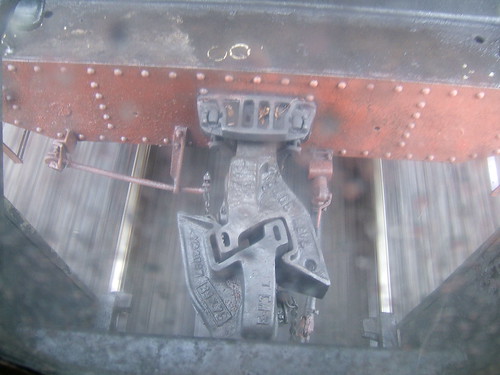
Em 735-72 at speed in the rain, showing Russian pattern autocoupler between tender & coach. The release lever to open the knuckle on the coupler is on the left and the air brake hose (with two red-painted 'palm' couplings between the vehicles) is just to the right of the Automatic Coupler.

We arrived back at Kolomiya safely, as did Su251-86 returning from Chernivtsi. But we learnt that Er797-86 had got into trouble on the Rakhov line, short of steam, causing some disruption to the public trains and resulting in a late arrival back in Kolomiya. Further disappointing news was that, since YeA 2026 had failed another steam test, there was insufficient time to cool the boiler down, carry out remedial work, light it up again and carry out a further steam test before the end of our visit. With great regret, YeA 2026 was 'scratched'.
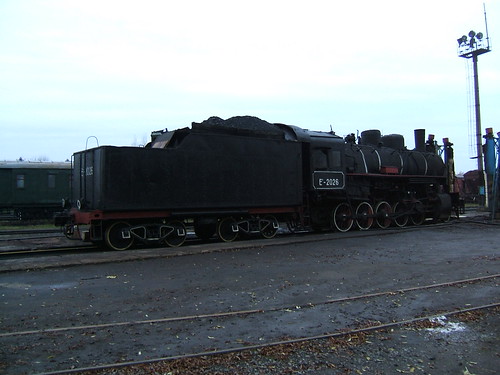
YeA 2026 left to cool-down after failing the steam test.

We returned to our hotel for an evening meal and bed, because we had another early start the following day when we'd do it again.

Continued in Driving Steam in Ukraine (Part 3).

Russian Railway background

At the time of my visit to Ukraine in 2005, I was almost completely ignorant about Russian Railway practice. The book 'Soviet Locomotive Types - The Union Legacy' (reference [1] below) is an invaluable primer on Russian steam, diesel and electric traction. In 2011, a river cruise from Moscow to St. Petersburg (described in a series of posts here) gave me tantalising glimpses of railways in Russia. Then, in 2011, I travelled by the 'Golden Eagle' private train from Ulaan Baatar to Moscow (described in a series of posts here).

Book References

[1] 'Soviet Locomotive Types - The Union Legacy' by A J Heywood & I D C Button (Frank Stenvalls Forlag) ISBN 0-9525202-0-6.


My Pictures

Ukraine Steam.


Tuesday, 6 January 2015

Driving Steam in Ukraine (Part 1)

Background

In the earlier post Ukraine 2005 I briefly described my trip to Ukraine to drive Russian-built steam locomotives. After a long interval, I'll take up the story.

Ukraine has an extensive railway system to the Russian gauge of 5 feet and, although Ukraine has been a sovereign state since 1991, the railway infrastructure and rolling stock was principally provided by Russia during the Soviet era.

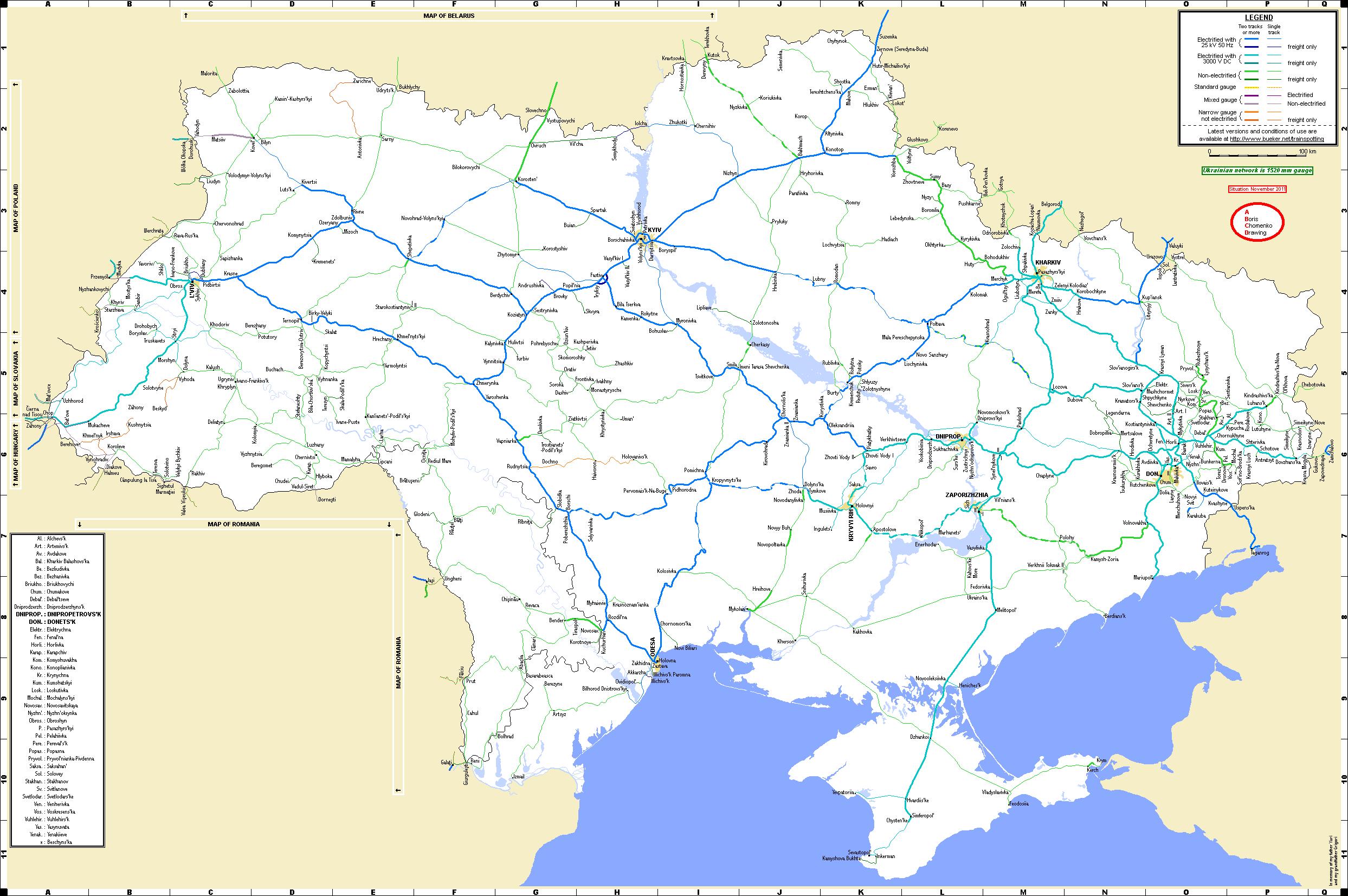
Click here for a railway map of Ukraine.

The visit was arranged by East Europe Railtours Limited in the U.K. and Dzherelo SPK in Ukraine. On 22nd October 2005, we arrived by air in Kiev, the capital of Ukraine, and met up with the other members of the group. In total, there were twelve of us. We travelled overnight by train on the overhead electrified line west to L'viv (Lvov in Russian) which is fairly near the Polish border. After changing engines, we continued south to Ivano Francovsk on the non-electrified line, arriving in the morning.

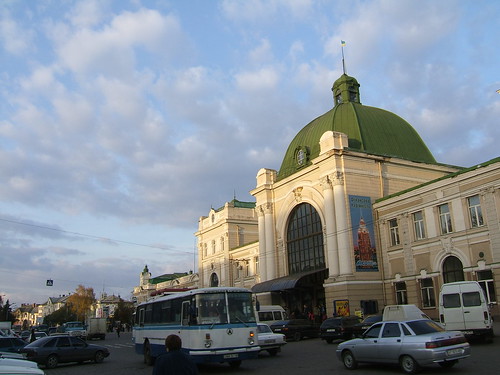
The station buildings at Ivano-Frankovsk viewed from the road side.

From Ivano Francovsk, a coach took us further south to Kolomiya and the Hotel Pysanka which would be the base for our engine driving activities. 'Pysanka' is the word for the decorated eggs typical of the area. Just outside the hotel was the Pysanka Museum ('Egg Museum') displaying a range of decorated eggs. The central building of the museum was egg-shaped, so this provided a useful landmark when exploring the town.

The group outside the hotel in Kolomiya.

Railways around Kolomiya

Kolomiya is an important railway junction. The railway from Ivano Francovsk to Chernivtsi passes through Kolomiya and two branches radiate. The branch to the south-west passes through some beautiful country in the Carpathians to Rakhov, and then over the border into Romania. The other branch heads broadly north-east to Stefaneshty.

Railways around Kolomiya.

Kolomiya Steam Shed

Having checked-in at our hotel, we were taken to the steam shed for a briefing and the opportunity to look at the locomotives. The motive power depot at Kolomiya had a roundhouse with steam locomotives. Nearby, there was a straight shed (which we didn't visit) for diesel locomotives.

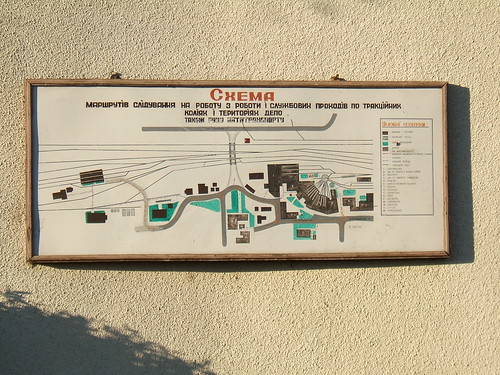
Plan of the motive power depot displayed at Kolomiya depot.

The following steam locomotives were 'on shed':-
Em 735-72
Er 797-86
Yea 2026
b 2137
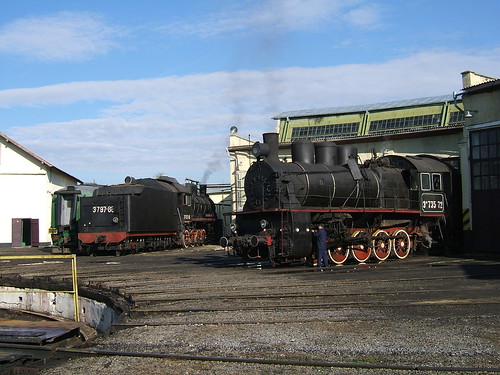
The 'Em' and 'Er' were sub-classes of the ubiquitous 0-10-0 freight locomotives which were produced in large numbers. There's a brief profile here.

Er 797-86/Em 735-72 at Kolomiya depot.

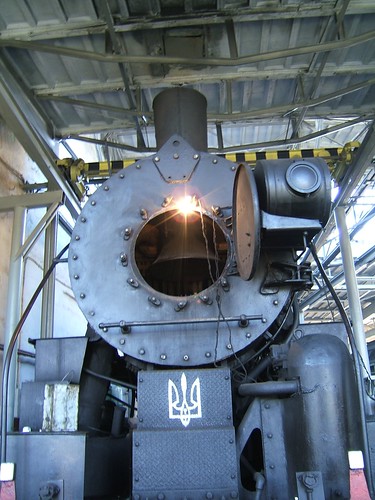
The 'Yea' was an American design imported in both the First and Second World Wars. There's a brief profile of this class here. We found Yea 2026 inside the shed at Kolomiya, with smokebox door open, as the fitters were still completing the replacement of leaking smoke tubes.


Yea 2026 inside the shed at Kolomiya, with smokebox door open.

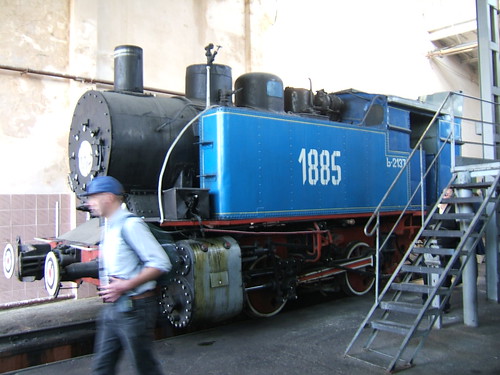
The 'b' class was a four-coupled side tank but this was not steamed during our stay. I think the '1885' on the side tank commemorates the year the first railway opened at Kolomiya.

B 2137 inside the shed at Kolomiya.

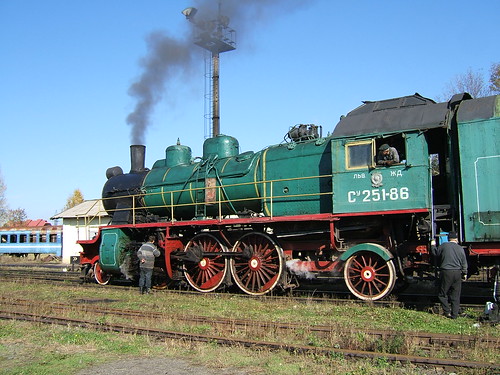
Leter in the day, an 'Su' class (Su 251-86) arrived light engine under its own power from her home depot, Chernivtsi, to add to the 'stud'. She brought two rather battered Engineer's Coaches.

Su 251-86 on arrival at Kolomiya from Chernivtsi.

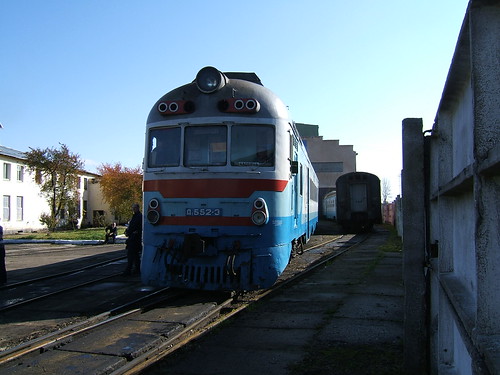
We spent most of the day around the shed studying the locomotives and looking at the activity around the station, with diesel traction like the 2M62 (a 2-section Co-Co) on freight trains and 4-car Diesel Multiple Units like the D1 on passenger trains.

2M62-0888 with a freight at Kolomiya.

Diesel Multiple Unit D1-552-3 stabled near the Roundhouse at Kolomiya.

The following day the driving commenced, as described in Driving Steam in Ukraine (Part 2).

Russian Railway background

At the time of my visit in 2005, I was almost completely ignorant about Russian Railway practice. The book 'Soviet Locomotive Types - The Union Legacy' (reference [1] below) is an invaluable primer on Russian steam, diesel and electric traction. In 2011, a river cruise from Moscow to St. Petersburg (described in a series of posts here) gave me tantalising glimpses of railways in Russia. Then, in 2011, I travelled by the 'Golden Eagle' private train from Ulaan Baatar to Moscow (described in a series of posts here).

Book References

[1] 'Soviet Locomotive Types - The Union Legacy' by A J Heywood & I D C Button (Frank Stenvalls Forlag) ISBN 0-9525202-0-6.

My pictures

Ukraine Steam.
Ukraine Modern Image.

Sunday, 4 January 2015

'Flying Scotsman' at Birmingham Railway Museum

The 'Learn to be a Driver' scheme at Birmingham Railway Museum attracted considerable interest but when the world-famous 4472 'Flying Scotsman' came to the Museum in late 1992, it became the star attraction. It was during this period that I first became intimately acquainted with 'Flying Scotsman', since I was then a volunteer Instructor Driver at the Museum.

The Museum held their Autumn Gala on the weekend of 28th and 29th November 1992, giving an opportunity to see not only 4472 in steam but also 7029 'Defiant' and 6024 'King Edward I'. 46203 'Princess Margaret Rose' also took part but she was away most of the Saturday on a Main Line Railtour. The 1992 Issue 4 edition of 'Lionsheart' published a brief notice of the event in September that year (as did other publications).

At this time, 'Flying Scotsman' was turned out in apple green, numbered 4472, with conventional drafting and the rather tiny single chimney which, surmounting the massive boiler, contributed to the impression of raw power. This was the appearance I liked best.


Flying Scotsman at Steamtown Rasilway Museum (Photo: David Ingham [CC BY-SA 2.0 (http://creativecommons.org/licenses/by-sa/2.0)], via Wikimedia Commons

I don't believe I'd seen the locomotive prior prior to her visit to Birmingham in 1992. I'd certainly seen other 'A3s' at work on the Eastern Region before steam was eliminated but I'd not followed subsequent main line steam railtours (although I did a trip behind the 'Midland Compound' in 1960, described in My First Steam Special) and, at the time, I'd not taken much notice of the work 'Flying Scotsman' had done on steam rail tours.

The locomotive's fame meant that Birmingham Railway Museum was almost overwhelmed by enthusiasts seeking an opportunity to actually drive 4472. Earlier 'Learn to be a Driver' courses had included a technical lecture on locomotives, an introduction to the role of the shunter, a visit to the Museum's working signal box, a period driving a small locomotive and 75 minutes (shared between three trainee drivers) driving a large locomotive. To cater for the demand, the 'Flying Scotsman' experiences were simplified to one hour on 'Flying Scotsman' (shared between three trainee drivers), providing places for 30 or more trainees each day. Only four people at a time were allowed on the footplate so, with three trainees and the Instructor Driver, there was no room for a Fireman and the Instructor Driver had to do the firing and boiler management along with instructing and supervising the trainees. 'Flying Scotsman' and the Museum's staff and volunteers were kept busy until the 1st December 1992, when 'Flying Scotsman' left Birmingham Railway Museum to visit various preserved railways, prior to being 'stopped' with leaking boiler tubes.

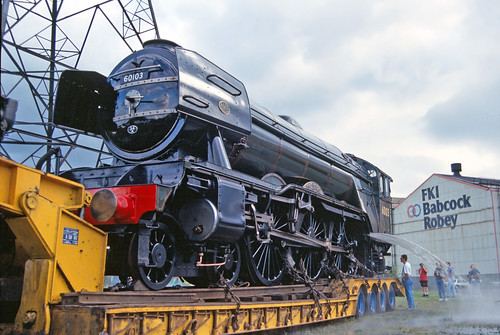
The locomotive was moved to FKI Babcock Robey for repair, emerging on 22nd July 1993 with the British Railways modifications re-applied so the locomotive appeared in British Railways green, numbered 60103, with 'Continental'pattern smoke deflectors, double chimney and dual 'Kylchap' exhaust.

'Flying Scotsman' being prepared to leave FKI Babcock Robey, following a steam test (Photo: John Edkins).

'Flying Scotsman', in its new guise as 60103, returned to Birmingham Railway Museum on 3rd November 1993 for more 'Learn to be a Driver' work. There were still lots of people keen to drive 'Flying Scotsman' and I remember it as a very busy period with courses carrying on well after dark each evening. The locomotive left the Museum on 17th February 1994 but was back at the Museum for more 'Learn to be a Driver' work from 18th November 1994 to 11th January 1995.

I didn't meet up with 'Flying Scotsman' again for over five years, when we were reunited at Peak Rail in 2000. I may not have liked the locomotive's appearance as '60103' but at least it was historically correct. The locomotive which visited Peak Rail combined 'Kylchap' exhaust, double chimney, LNER livery, the running number 4472, no smoke deflectors (at that time) and air brakes. But that's another story.

References

There's a brief history of this iconic locomotive (with references to various other websites and a list of books) in my post 'Flying Scotsman'.

Saturday, 3 January 2015

Christmas Dinner, London, 2014

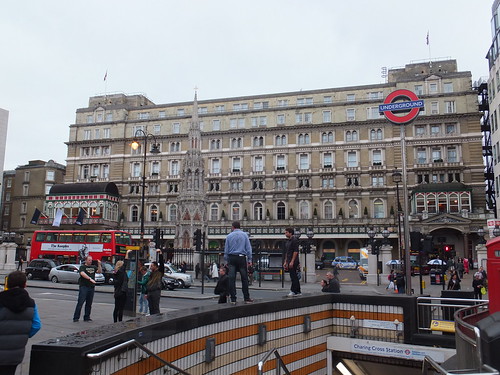
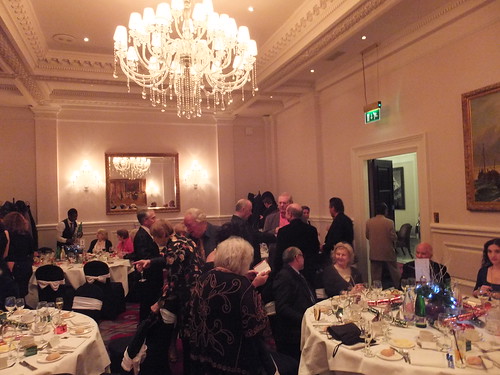
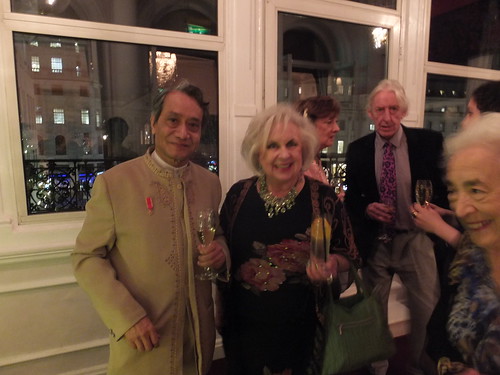
My friends Jilly and Rita had urged me to attend one of the meals organised for members of the Royal Burma Society and so, on the evening of Friday, 19th December 2014, all three of us attended the Society's Christmas Dinner held at the Amba Hotel Charing Cross, London.

The impressive facade of the station building at Charing Cross houses the Amba Hotel Charing Cross. The entrance to the hotel is behind the red bus.


The guests enjoyed an evening of good conversation and good food.


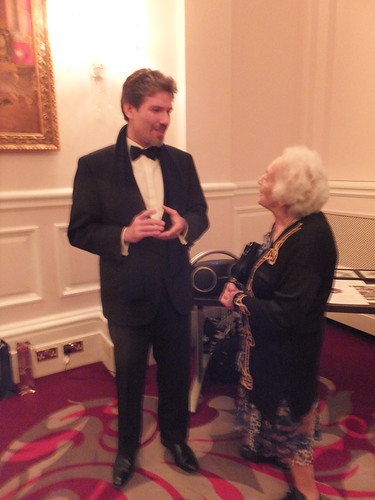
During the meal, the Italian Operatic Tenor, Yuri Sabatini moved between the tables delighting the diners with well-known operatic works.


The Royal Burma Society was founded by HRH Prince Shwebomin of Burma (who is now Patron) and Michael P. Wright (who is now General Secretary). Stan Spurling is President of the Society and Isolde Spurling is Director of Events & Communication.

Some of the members of the Society have travelled in Burma and various Charitable Donations are made, in particular to the Zay Ta Wun Buddhist Monastic Education Centre in Nyaung U.

My pictures

Christmas Dinner, London, 2014

Crewe Salop Goods Junction Signal Box

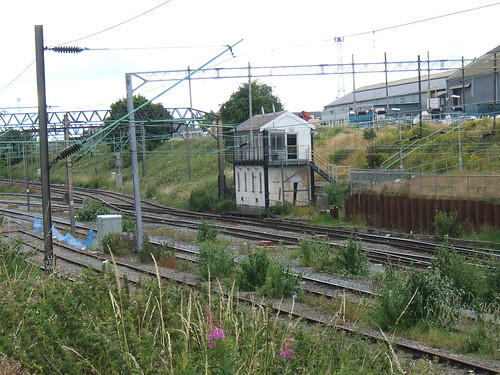
A view of Salop Goods Junction Signal Box in 2008, heavily altered inside and out but its LNWR origins are still clear.

I first started to take an interest in the railways at Crewe in the 1950s and I became fascinated by the extensive marshalling yards south of the station which were provided with their own through lines - the Goods Independents. My post Railways at Crewe in the '50s has a sketch showing my early understanding of the complex arrangements.

The Goods Independent lines were generally inaccessible but in summer when there were extra holiday trains and excursion trains, Crewe station became very congested and, particularly at weekends, passenger trains not requiring to stop at Crewe were frequently routed via the Goods Independents. I travelled on passenger trains using the Goods Independents a few times so these journeys gave me views of Salop Goods Junction Signal Box.

The signal box was provided as part of the major remodelling at Crewe between 1896 and 1907 which constructed the Goods Independent lines in the form which still, largely, survives today (the Down Chester Independent is now a siding). From Sortings Sidings North Box, there were four roads 'paired by direction' (Down Fast Independent, Down Slow Independent, Up Slow Goods, Up Fast Independent) which passed under the line from Crewe station to Shrewsbury and continued in a cutting alongside Crewe station. Salop Goods Junction signal box was provided on the Down side at this point. Pointwork was provided to change the sequence of the four lines to 'paired by use' (Down Liverpool Independent, Up Liverpool Independent, Down Manchester Independent, Up Manchester Independent). A branching pair of lines formed the Down and Up Chester Independents, which climbed so as to join the Chester main line at Crewe North Junction. Salop Goods Junction box also controlled connections allowing freight trains access to and from the Shrewsbury line at Gresty Lane No. 1 box.

Like a number of signal boxes at Crewe, F. W. Webb provided Salop Goods Junction Signal Box with the 'Crewe' All Electric System.


Click here for a larger version.

Diagram of the lines controlled by Salop Goods Junction Signal Box as built.


This diagram appeared in the book 'Power Railway Signalling' book reference [1], together with similar diagrams for Crewe North Junction and Crewe South Junction.

At some point, the 'Crewe' All Electric System installation was replaced by an LMS (or BR) mechanical frame. John Tilly's excellent site here includes a photographic survey of Salop Goods Junction Signal Box in 2007 on the page here.

In 1980, there was a fatal accident on the Up line between Salop Goods Junction and Gresty Lane No. 1 where a freight train, allowed to proceed past Salop Goods Junction under Permissive Regulations, collided with a freight train which had stopped on the approach to Gresty Lane No. 1 to change engines. The Accident Report, by Major Olver, can be found on the splendid Railways Archive Site here.

Book References

[1] 'Power Railway Signalling' by H. Raynar Wilson, published c1908, reprinted in two parts by P. Kay (ISBN 1 899890 00 9).

Photographs

Crewe Area rail.

Friday, 2 January 2015

A Weekend in Vienna (Part 5)

In November 2014, I spent a weekend in Vienna with my friend Rita. On Sunday, after our visit to Schoenbrunn Palace, we decided to visit the Danube Tower, using the 'Red Route' Big Bus to get there. There's a map of Vienna showing the 'Red Route' here.

Trip to Danube Tower, Sunday afternoon, 9th November 2014

We caught the bus in Walfischgasse and travelled on the same route we'd used on the previous afternoon (described in Part 3).


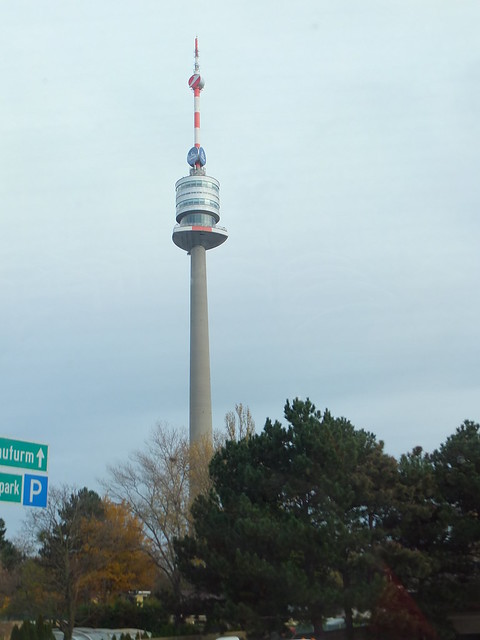
Donauturm (Danube Tower).

By the time we'd arrived at the Danube Tower, it was already dusk, so we hastened to purchase tickets in the souvenir shop and make our way to the lift, manned by a charming girl. The roof of the list is transparent and, once underway, the attendant switched on powerful lights facing upwards. The view looking up as we sped skywards was quite hypnotic.

View from lift looking up.

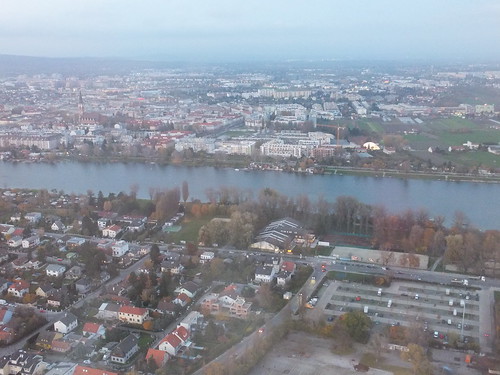
At the top of the tower, the lift serves two levels, quite close together. Rita and I disembarked at the upper level. There were good view of the sprawling city and the River Danube, although reflections from the windows made photography less than ideal.

Vienna and the River Danube.

There is a restaurant at this level which requires reservation but a flight of stairs led down to a cafe, quite crowded but offering a variety of food at reasonable prices which was served promptly. The ring shaped cafe was rotating slowly around the fixed central core containing the kitchens. Each table was set at right angles to the adjacent window, offering all diners good views. It took me a while to get used to the fact that, every few seconds, the rotating cafe gave a little judder. I was amused that, each time one of the staff came out of the kitchen with food, their position relative to the tables had altered. The ceiling of the cafe was also fixed to the core, allowing a series of edge-lit signs to be provided pointing to various landmarks around the city. Both Rita and I enjoyed our simple meals.

Rita in the cafe at Donauturm.

We then moved to another viewing gallery, this time provided with doors leading to an outside viewing area. I toured the outside area, trying to take more photographs but the wind at that height was quite cold.

The tall building (with red aircraft warning lights) is part of United Nations City. The row of white lights is the Reichsbruke bridge over the Danube. The coloured lights beyond the right hand end of the bridge are at the Prater Amusement Park.

We descended to ground level and walked to the bus stop where we'd got off. We were supposed to be in time for the last 'Red Bus' of the day but it was dark, cold and not many people about (none waiting for the bus) so it was a great relief when we saw our brightly-lit bus approaching. By the time we were dropped off in the city, we were both tired and appreciated that it was only a few minutes walk to our hotel.

Walk to the Imperial Hotel, Monday morning, 10th November 2014

We started Monday morning with our usual excellent cooked breakfast, plus pancakes with chocolate sauce. Rita wanted to see the Imperial Hotel and we decided that would provide a suitable walk. This hotel was built as a palace for one of the princes, but a few years later was converted into a splendid hotel. After a pleasant interlude whilst we enjoyed morning hot chocolate, we walked back to the Ambassador Hotel to complete our packing.

We were picked up by car on time, arrangements at Vienna Airport worked well and we arrived at Heathrow about right time. Rita had booked a car to take her home - he was a little late because of traffic congestion at the airport. Once I'd made sure that Rita and her luggage were safely in the car, I made my own way home (tube to London, Virgin train from Euston to Wolverhampton and taxi home) after a fascinating but tiring introduction to Vienna.

Related posts on this website

A Weekend in Vienna (Part 1).
A Weekend in Vienna (Part 2).
A Weekend in Vienna (Part 3).
A Weekend in Vienna (Part 4).

Books

[1] 'Imperial Vienna' by Lina Schnorr, published by H.B. Medienvertrieb GesmbH (ISBN: 978-3-9502396-9-0).
[2] 'Vienna: Art and Architecture', by various authors, published by h.f. ullmann (ISBN 978-3-8331-6006-6).

My Pictures

Click on any picture above for an uncropped view or search the albums below for pictures at different resolutions which may be downloaded for non-commercial purposes.

The albums below relate to this post:-
'Red Route' City Tour.
Donauturm, Wien (Vienna's Danube Tower).
Imperial Hotel, Wien (Vienna).

The collection below includes all the albums on the Vienna trip (except the Imperial Hotel):-
Austria.

Wednesday, 31 December 2014

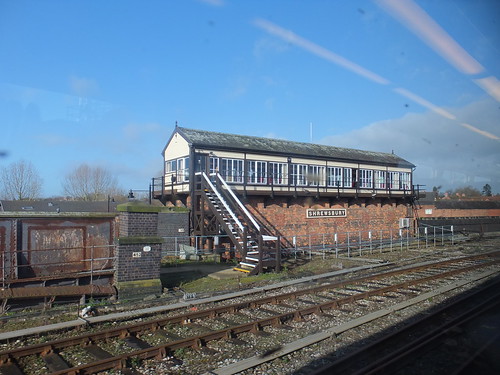
Railways around Shrewsbury

A trip by train to Chirk on 26th February 2014 (where I wrote a little about Shrewsbury station) described here) encouraged me to start this article. I was back at Shrewsbury on 8th March 2014 (I wrote a little more about the station here). I passed through Shrewsbury a few more times in 2014 (but without feeling the need to wax lyrical about the station).

Wikipedia has some information on the line from Wolverhampton to Shrewsbury here and on the line beyond Shrewsbury to Chester here.

I've been familiar with the G.W.R. route from Wolverhampton to Shrewsbury and beyond since childhood. Back then, manual signal boxes with Absolute Block working controlled the route from Wolverhampton to Shrewsbury but over the years, one by one, they've been eliminated. I've continued to use the line to Shrewsbury and beyond intermittently for various trips.

Wolverhampton area

When I was young, of course, Wolverhampton (Low Level) Station was in full use, the haunt of 'Castles' and 'Kings'. From Wolverhampton, there were two competing main lines to London, G.W.R. and L.M.S. and I've written briefly about my recollections of Wolverhampton's stations in the post West Midland Railways. In the 1960s, the G.W.R. route to London was chosen for closure, once the former L.M.S. line had been electrified. When the Low Level station was taken out of use for trains north of Wolverhampton, the line from Shrewsbury was adapted so as to make a connection with the L.M.S. route, just north of Wolverhampton (High Level) Station. A rather sad passenger service survived from Wolverhampton to Birmingham (Snow Hill) which ended up being operated by a single unit diesel multiple unit ('bubble car'). In the last days of this passenger service I actually got to work Handsworth Jn. and Hockley signal boxes (unofficially). This service was finally withdrawn in 1972 but the site was retained as a parcels depot until complete closure in 1981.

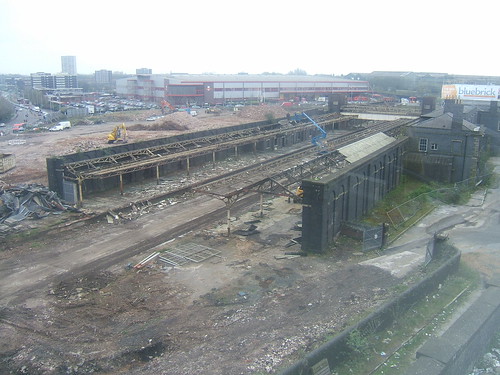
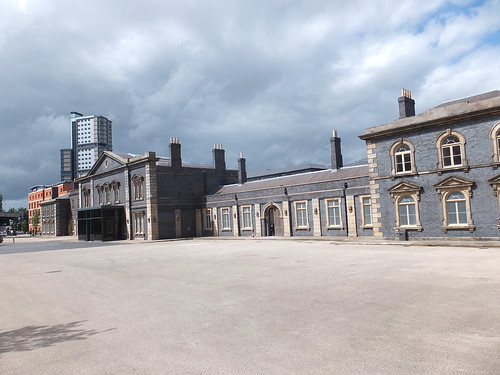
At Wolverhampton (Low Level), the trains are long gone, but the station mouldered on for years, as a listed structure. There were optimistic plans to renovate the station and turn it into a railway museum and some artefacts were actually brought in. But it was not to be. Various plans for a major conference centre came and went. The Bluebrick Project finally redeveloped the site with newbuild Premier Inn and Bars and Bistros, retaining the principal structures. The platform awnings were dismantled, prior to renovation and incorporation in the new development.

As recently as 2006, the site was being cleared. The Up platform is on the left, the Down platform on the right.

In 2012, work to renovate the original down side station buildings was commenced by 'Grand Station - Conference and Event Venue, Wolverhampton'.

Grand Station - Conference and Event Venue, Wolverhampton.

As I mention above, the line to Shrewbury now diverges from the Stour Valley Line to Bushbury and the north at a double junction just north of Wolverhampton station.

View from a Down train diverging from the Stour Valley onto the Shrewsbury Line just North of Wolverhampton station. The Stour Valley Line curves to the right towards Bushbury. The tall chimney on the right is part of Wolverhampton's Waste Incineration Plant.

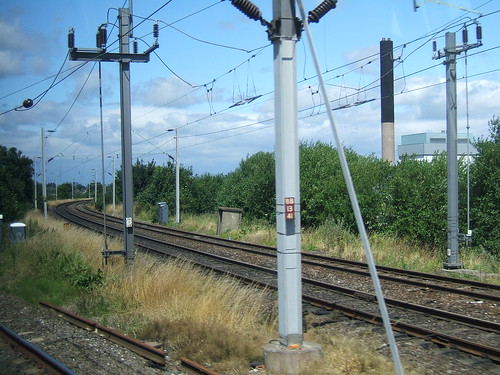
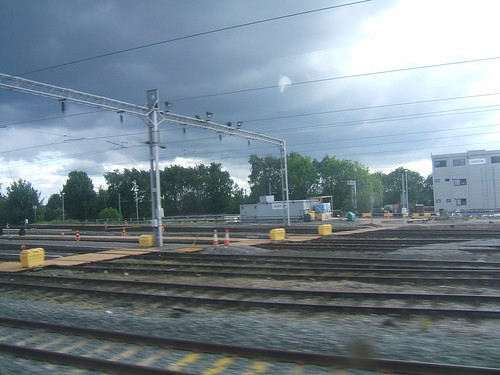
The Shrewsbury line has been electrified as far as Oxley, where there's a large Alstom Maintenance Depot which looks after the 'Pendolinos' operating the service to London (Euston).

Sidings at the Alstom Traincare Depot, Oxley in 2011.

Wolverhampton is described in sections of book reference [3] and in [4]. The post West Midland Railways has a list of further books on railways around Wolverhampton.

Madeley Junction

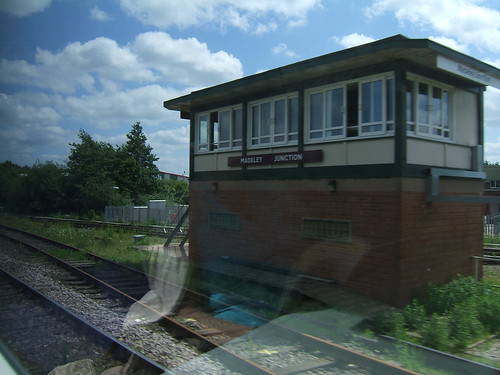
This signal box controlled the junction with the branch to Ironbridge. This branch remained in use for some time to convey coal to Ironbridge Power Station. There were two Ironbridge power stations, 'A' and 'B' (confusingly, also called 'Buildwas A and B'). There's a Wikipedia article here. The 'A' station closed in 1981, the 'B' station, now operated by E-On, has been converted to run on biomass until 2015, as described here.

As signalling between Wolverhampton and Shrewsbury was modernised (with colour light signals throughout) Madeley Junction was first provided with a signalling panel to control most of the line from Wolverhampton to Shrewsbury (including Wellington). But Madeley Junction is now abolished and control is now from the West Midlands Signalling Centre (I think).

Madeley Junction Signal Box in 2008.

Wellington

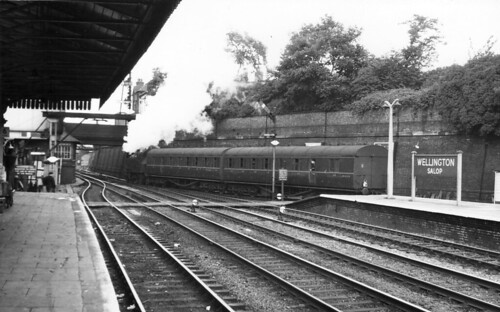
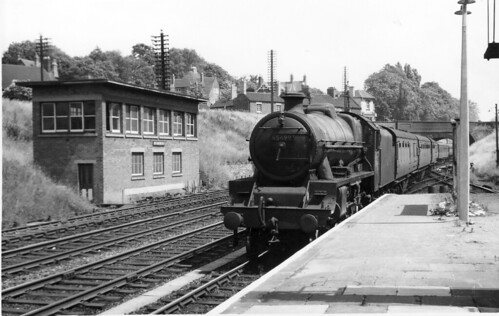
Wellington, on the way to Shrewsbury, has become a fairly regular destination over the last few years. The signal boxes and upper-quadrant semaphore signals have gone but the station buildings and platform canopies are remarkably intact.

THEN
2.45 p.m. Wellington-Crewe (via Market Drayton) leaving Wellington, Sat 21-Jul-1962 (D. Wynne Jones Collection).

NOW
Wellington Down platform, looking towards Shrewsbury showing departing down train, 24-May-2008.

THEN
1.15 p.m. Stafford-Shrewsbury arriving at Wellington with 'Jubilee' 45699 'Galatea', Sat 21-Jul-1962 (D. Wynne Jones Collection).

NOW
View towards Wolverhampton from Wellington Down Platform (Platform 2). Bay (Platform 3) on right, 24-May-2008.

Wellington is described in sections of book references [1] and [2].

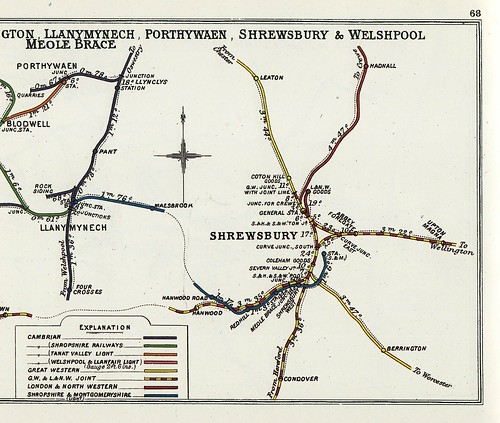
Development of railways around Shrewsbury

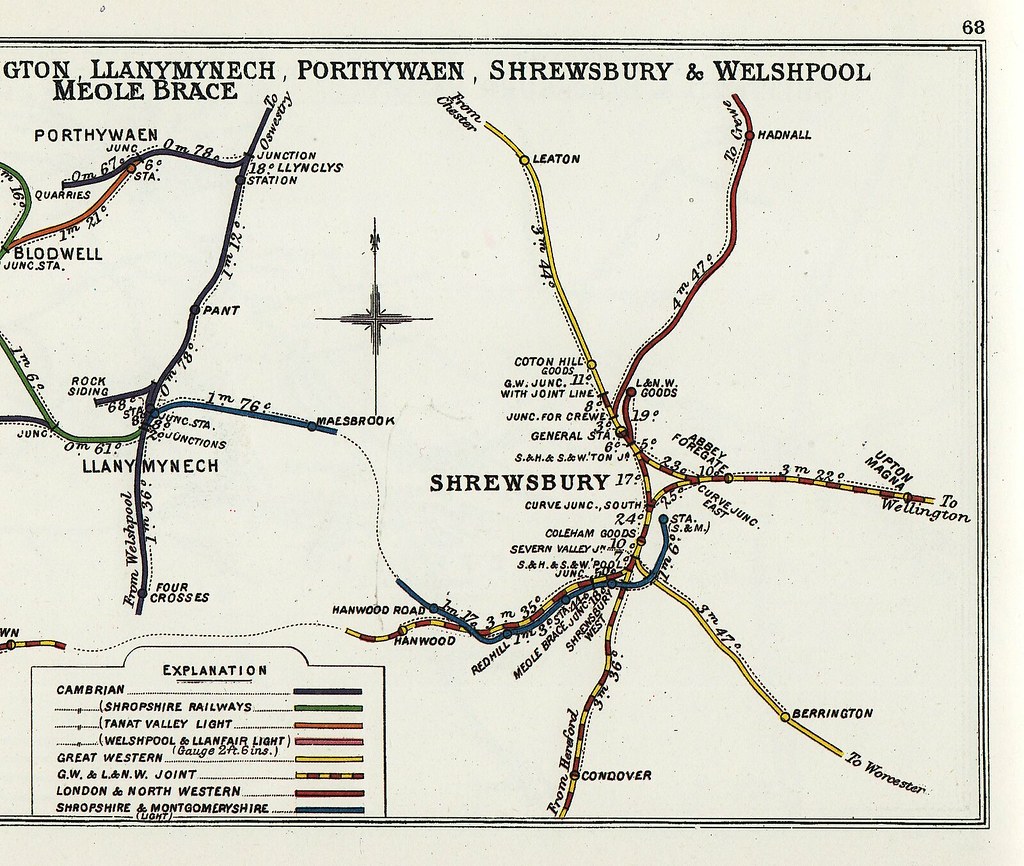
Click here for larger image
Railway Clearing House map of lines around Shrewsbury (c. 1914).


Signalling around Shrewsbury

Shrewsbury station still retains three manual signal boxes and a mass of both upper-quadrant and lower-quadrant semaphore signals (although Health and Safety Concerns have led to rebuilding of access ladders and platforms so that the resulting structures are scarcely recognisable as British signals). There are also a few colour light signals dotted around.

Abbey Foregate Signal Box

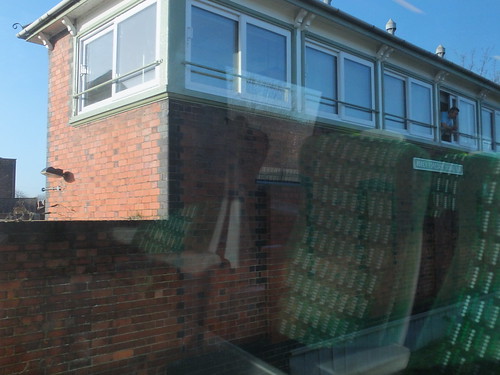
Approaching Shrewsbury from Wolverhampton, Abbey Foregate Signal Box is a modernised Great Western brick-built box. The Down Home is now a colour light signal with a dual theatre-type route indicator but other signals are semaphore and points are manually operated by rodding.

The signalman (...er... 'signaller') leans from one of the modern windows of Abbey Foregate Signal Box. Note the 'Great Western' pattern cast signal box nameplate.

Severn Bridge Junction

This famous 'box' is a large, tall L&NWR composite box which continues to control traffic in and out of the simplified south end of Shrewsbury station, albeit with fewer working levers than before.

The fortress-like appearance of Severn Bridge Junction signal box.

Crewe Junction

The north end of Shrewsbury is controlled by another proud survivor, also a L&NWR composite design, also retaining its manual operation.

Shrewsbury: Crewe Junction signal box.

Book reference [5] gives a detailed history of railways around Shrewsbury.

For a detailed map of what remains in 2014, refer to 'Railway Track Diagrams: Book 4 Midlands & North West', published by TRACKmaps (ISBN 978-0-9549866-7-4).

Book References

Wellington appears in the following books:-
[1] 'GWR Junction Stations' by Adrian Vaughan, published by Ian Allen Ltd. (ISBN 0 7110 1790 5).
[2] 'By Great Western to Crewe' by Bob Yate, published by Oakwood Press (0 85361 639 6).
Wolverhampton appears in the following books:-
[3] 'Rail Centres: Wolverhampton' by Paul Collins (originally published in 1990 by Ian Allen, reprinted by Booklaw Publications in 2008) ISBN 1-901945-23-5. [4] 'Oxford Worcester & Wolverhampton Portrait of a Famous Route Part 2: Worcester to Wolverhampton' by Bob Pixton, published by Runpast Publishing (ISBN 1 870754 60 3).
Shrewsbury is described in the following book:-
[5] 'Rail Centres: Shrewsbury' by Richard K. Morriss, published by Booklaw Publications (ISBN 1-901945-20-0).
[6] 'Shrewsbury Railway Station – A brief history' by John Horsley Denton published by John Horsley Denton and Tim Smith (20pp).

My Pictures

Wolverhampton Low Level Station
Wolverhampton to Shrewsbury line
Wellington, ex-Great Western Railway
Shrewsbury area railways

[Book 6 added 15-Sep-2015]

A Trip to South Wales (Part 3)

On Saturday, 26th July 2014, I travelled to Shrewsbury, took the slow train on what's now marketed as the 'Heart of Wales Line' to Swansea then headed to Cardiff and Newport before returning to Wolverhampton via Hereford and Shrewsbury.

The post A Trip to South Wales (Part 1) describes my journey as far as Swansea and the post A Trip to South Wales (Part 2), describes the remainder of my journey.

Historical Background

The Shrewsbury and Hereford railway was developed between 1850 and 1853, linking the named towns. It was in an area of interest to both the Great Western Railway and the London and North Western Railway so the railway became a joint line. There's more information here.

Hereford was joined to Newport in South Wales by the Newport, Abergavenny and Hereford Railway, as described here.

Additional lines were constructed by the Pontypool, Caerleon and Newport Railway, as described here.

After various closures and alterations, today these three lines form the modern Welsh Marches Line, mainly operated by Arriva Trains Wales services, as described here.

The Central Wales Line (noe the 'Heart of Wales Line') was the creation of the LNWR in its efforts to reach Swansea. The process proved complicated and involved a number of railway companies and several financial disasters. At the southern end it was the Llanelly Railway, one of the earliest in Britain (founded in 1829) which opened a line as far as Pontardulais in 1839. By 1857 the railway had reached Llandilo. A separate company, the Vale of Towy Railway, completed its line between Llandilo and Llandovery in 1857 and this line was leased to the Llanelly Railway.

Meanwhile at the northern end of the line, the Knighton Railway was formed in 1858 to build a line from Craven Arms, on the north/south Shrewsbury to Hereford line, as far as Knighton. A year later the Central Wales Railway was formed to take the railway on to Llandrindod, and in 1860 a further company, the Central Wales Extension Railway was formed to make the link with the Llanelly at Llandovery. Behind the scenes of all these developments was the LNWR.

It took until 1868 to complete the line with a branch from Pontardulais to Swansea. In the same year the LNWR took over the Knighton, Central Wales, and Central Wales Extension Railways and took a half share in the Vale of Towy Railway. Part of the reason for the time taken was the difficulty of construction of the Sugar Loaf tunnel and the Cynghordy Viaduct just to the north of Llandovery on the Extension line. The Cynghordy viaduct had eighteen arches built in sandstone and lined with brick and is 259 m (850 ft) long on a gentle curve and 31 m (102 ft) above the valley at its highest point. From that date the LNWR had access to Swansea.

Preserved LNWR composite signal box at Llandrindod Wells.

For more information, refer to 'A Regional History of the Railways of Great Britain: Volume 12 South Wales' [reference 4].

Layouts and Illustrations of Selected Stations

Oxford Publishing Co. published a series of three volumes of drawings and photographs of selected Great Western stations R. H. Clark. These books (details are given in 'Book References' below and they are still available second-hand, if not new) have historical details of a number of stations (or former stations) I passed through on my trip to South Wales and I've listed these below. Note that the numbers refer to the Key Map in each volume, not page numbers: the actual drawings are in alphabetic order by station name.

Volume 1 [reference 1]:
67 Hereford
89 Moreton-on-Lugg
102 Pontrilas
107 St. Devereux
119 Tram Inn
Volume 2 [reference 2]:
101 Leominster
116 Ludlow
128 Neath General
Volume 3 [reference 3]:
6 Abergavenny Junction
66 Craven Arms
81 Gowerton
116 Llandilo (Llandeilo)
'GWR Junction Stations' reference [5] has sections describing Leominster and Wellington stations.

Shrewsbury is described in book reference [6].

Book References

[1] 'An Historical Survey of Selected Great Western Stations - Layouts and Illustrations' by R.H. Clark, published by Oxford Publishing Co. (SBN 0 902888 29 3).
[2] 'An Historical Survey of Selected Great Western Stations - Layouts and Illustrations - Volume 2' by R.H. Clark, published by Oxford Publishing Co. (ISBN 0 86093 015 7).
[3] 'An Historical Survey of Selected Great Western Stations - Layouts and Illustrations - Volume 3' by R.H. Clark, reprinted 1987 by Book Club Associates.
[4] 'A Regional History of the Railways of Great Britain: Volume 12 South Wales' by D. S. M. Barrie, published by David & Charles (ISBN 0-7153-7970-4).
[5] 'GWR Junction Stations' by Adrian Vaughan, published by Ian Allen Ltd. (ISBN 0 7110 1790 5).
[6] 'Rail Centres: Shrewsbury' by Richard K. Morriss, published by Booklaw Publications (ISBN 1-901945-20-0).

Related articles on other sites

Shrewsbury and Hereford railway (Wikipedia).
Newport, Abergavenny and Hereford Railway (Wikipedia).
Pontypool, Caerleon and Newport Railway (Wikipedia).
Welsh Marches Line (Wikipedia).
Heart of Wales Line (Wikipedia).

Related articles on this site

A Trip to South Wales (Part 1).
A Trip to South Wales (Part 2).

My pictures

General:
Swansea.
Newport, Gwent.

Railway pictures:
Wolverhampton to Shrewsbury Line.
Shrewsbury area railways.
Heart of Wales Line.
Swansea area railways.
Cardiff's railways.
Newport Station, Gwent.
Shrewsbury-Hereford line.

Llandudno Railway Station

The three pictures below show the stages that Llandudno station buildings have been through since I started travelling by rail.

The first illustration shows the appearance from the road in the 1950s when the station had to carry large numbers of passengers in the holiday season.

Llandudno Staion in the 1950s (from 'An Historical Survey of Chester to Holyhead Railway Track Layouts and Illustrations').

By the time of my visit in 2011 (described in the post A Trip to the Seaside (Part 2)), the former platforms 4 and 5 had been downgraded to sidings and all the station buildings to the right of the vehicle entrance had been demolished, although vehicles could still use the carriage drive which extended along the broad island platform serving platform 3 and the disused platform 4.

Llandudno Station, 2011.

When I returned to Llandudno in 2014 (by road with Ann and Dean described here), I found that further work had been carried out. The vehicle entrance is no more and the large aperture has been glazed and provided with a set of automatic doors for foot passengers. The sidings (formerly serving platforms 4 and 5) have been removed, allowing the creation of a substantial car park. Traditional cast gateposts with metal gates and fencing are provided to close off the carpark when necessary (they may be re-furbished items relocated from the old vehicle entrance). Curiously, the internet entry on the National Rail Enquiries Site here states that there's no car park at the station.

Llandudno Station, August 2014.

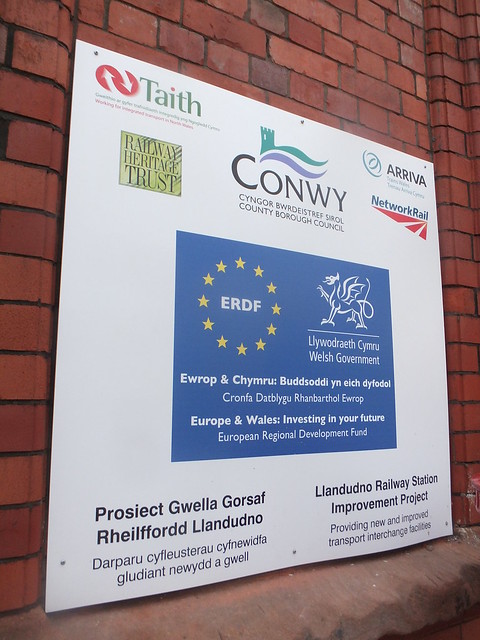
As elements of the old station have been retained, the overall effect is, I admit, not bad. A sign outside the station shows the various bodies involved in the Improvement Project.


Sign showing bodies involved in the Improvement Project.

Related posts in this blog

Trip to Holyhead (Part 1: Crewe to Llandudno).
The Holyhead to Crewe Railway Line.

My pictures

All my pictures of Llandudno Station are in the album:-
North Wales Line (Crewe - Llandudno).

Kipling's Burma


The well-known 1912 photograph of Kipling by
E. O. Hoppé, via Wikimedia Commons.


Joseph Rudyard Kipling (1865-1936) was a poet and writer with exceptional writing skills but, as the political climate changes, he is sometimes regarded as a controversial figure. Although Kipling was born in India, his schooling was in England. His parents were unable to pay for him to go to university so, as a young man, he returned to India in 1882 and worked in the newspaper industry.

Burmese expansionism into Manipur and Assam led to the First Burma War (1824 - 1826) after which British India also acquired what is now Rakhine State in the north and what is now Mon State in the south, with Mawlamyine as the first capital of British Burma. Following the Second Burma War of 1852, Lower Burma was placed under direct administration from India, after which Rangoon (now Yangon) became capital of British Burma. Kipling's first contact with Burma, as an assistant editor in India, was in dealing with cable reports from Burma. Growing British concerns about French intentions in Upper Burma precipitated the Third Burma War in 1885 and resulted in the dreadful King Theebaw being exiled to India and the remainder of Burma being annexed by Britain. Elements of the former Burmese Army became brigands and harried the British for some time. Kipling's prolific writing included a very well-known poem called 'The Road to Mandalay' first published in 1892 in 'Barrack Room Ballads':-

By the old Moulmein Pagoda, lookin' lazy at the sea,
There's a Burma girl a-settin', and I know she thinks o' me;
For the wind is in the palm-trees, and the temple-bells they say,
"Come you back, you British Soldier; come you back to Mandalay!"
Come you back to Mandalay,
Where the old Flotilla lay;
Can't you 'ear their paddles clunkin' from Rangoon to Mandalay?

On the road to Mandalay,
Where the flyin'-fishes play,
An' the dawn comes up like thunder outer China 'crost the Bay!

'Er petticoat was yaller an' 'er little cap was green,
An' 'er name was Supi-Yaw-Lat jes' the same as Theebaw's Queen,
An' I seed her first a-smokin' of a whackin' white cheroot,
An' wastin' Christian kisses on an 'eathen idol's foot:
Bloomin' idol made o' mud-- Wot they called the Great Gawd Budd--
Plucky lot she cared for idols when I kissed 'er where she stud!

On the road to Mandalay ...

When the mist was on the rice-fields an' the sun was droppin' slow,
She'd git 'er little banjo an' she'd sing "Kulla-la-lo!"
With 'er arm upon my shoulder an' 'er cheek again my cheek
We useter watch the steamers an' the hathis pilin' teak.
Elephants a-piling teak
In the sludgy, squdgy creek,
Where the silence 'ung that 'eavy you was 'arf afraid to speak!

On the road to Mandalay ...

But that's all shove be'ind me -- long ago and fur away,
An' there ain't no 'buses runnin' from the Bank to Mandalay;
An' I'm learnin' 'ere in London what the ten-year soldier tells:
"If you've 'eard the East a-callin', you won't never 'eed naught else."
No! you won't 'eed nothin' else
But them spicy garlic smells,
An' the sunshine an' the palm-trees an' the tinkly temple-bells;

On the road to Mandalay ...

I am sick 'o wastin' leather on these gritty pavin'-stones,
An' the blasted English drizzle wakes the fever in my bones;
Tho' I walks with fifty 'ousemaids outer Chelsea to the Strand,
An' they talks a lot o' lovin', but wot do they understand?
Beefy face an' grubby 'and--
Law! wot do they understand?
I've a neater, sweeter maiden in a cleaner, greener land!

On the road to Mandalay ...

Ship me somewheres East of Suez, where the best is like the worst,
Where there ain't no Ten Commandments an' a man can raise a thirst;
For the temple-bells are callin', and it's there that I would be--
By the old Moulmein Pagoda, looking lazy at the sea;
On the road to Mandalay,
Where the old Flotilla lay,
With our sick beneath the awnings when we went to Mandalay!

O the road to Mandalay,
Where the flyin'-fishes play,
An' the dawn comes up like thunder outer China 'crost the Bay!


In 1908, the American composer Oley Speaks (1874-1948) set the words to music and this is the form in which I and many people knew it - I was unaware until planning my first visit to Burma in 2008 that the words were by Kipling. Apparently, Frank Sinatra used the first and last verses on one of his recordings but Kipling's family disapproved of this interpretation. 'Moulmein', referred to in the poem, is now called Mawlamyine.

In March 1889, following disagreement with his employer and increasing success in the publication of poems and articles, Kipling decided to return to England and become a full-time writer. He took an eastwards route, via Burma, Japan and the United States. During the journey, he supplied a number of letters for publication to his former employer in India, the 'Pioneer'. In one of these letters, Kipling wrote an evocative line which still resonates with visitors to modern Burma:-

"This is Burma and it will be quite unlike any land you know about".

The letters were subsequently published by Macmillan and Company in London in 1900 as a 2-volume publication 'From Sea to Sea and other Sketches - Letters of Travel'. The publication went into innumerable reprints over the years. A 'Pocket Edition' appeared in 1908 (with a smaller page size and printed on thinner paper but similarly in two volumes) and this version was also frequently reprinted.

The line appears in Volume I, the section 'From Sea to Sea', Chapter II where Kipling describes the arrival of the steamer at Rangoon, as the Shwedagon appears:-

"Then, a golden mystery upheaved itself on the horizon - a beautiful winking wonder that blazed in the sun, of a shape that was neither Muslim dome nor Hindu temple-spire. It stood upon a green knoll, and below it were lines of warehouses, sheds and mills. Under what new god, thought I, are we irrepressible English sitting now? ... It explained in the first place why we took Rangoon, and in the second why we pushed on to see what more of rich or rare the land held. Up till that sight my uninstructed eyes could not see that the land differed much in appearance from the Sunderbuns, but the golden dome said: 'This is Burma and it will be quite unlike any land you know about.'"

Kipling goes on to describe his brief time in Rangoon. On his way to Japan, the steamer called at Mawlamyine which Kipling also describes. All told, Kipling was only in Burma about 3 days, yet he's one of the best known writers about Burma and, for me and many other visitors, correctly expresses the sense of wonder the country induces.

The Wikipedia article contains much more information about Kipling. There is also an active Kipling Society. Their website includes the text of an address by George Webb to the Royal Society of Asian Affairs in 1983 titled 'Kipling's Burma' here.

Book References

There are a number of books about Burma written by Englishmen where I have re-prints obtained in Yangon and these may be available elsewhere or as e-books or 'Print on Demand' books. I always try AbeBooks for hard-to-find or second-hand books (where you have the pleasure of dealing, albeit by internet, with real booksellers and real book enthusiasts all over the world).Alternately, try Google Books. The Internet Archive is also a source for digitised books.

[ 1] 'The Land of the White Elephant: Sights and Scenes in South-Eastern Asia' by Frank Vincent Junior, published 1873 by Samson Low, Marston, Low & Searle, London.
[ 2] 'British Burma and its People: being sketches of native manners, customs and religion' by Capt. C. J. F. S. Forbes, F.R.G.S., published 1878 by John Murray, London.
[ 3] 'The Burman: His Life and Notions' by Shway Yoe (Sir James George Scott), first published 1882, re-published by W. W. Norton & Co, Inc. in 1963.
[ 4] 'History of Burma From the Earliest Time to the End of the First War with British India' by lieut.-General Sir Arthur P. Phayre G.C.M.G., K.C.S.I., and C.B., first edition 1883, second edition 1967 by Susil Gupta, London & Santiago de Compostela.
[ 5] 'A Short History of Burma' by S. W. Cocks, M.A., first edition 1912, reprinted 1918, second editions 1919, 1923 by Macmillan & Co., Limited, London.
[ 6] 'The Burman Empire: A Compilation of twelve lectures delivered by W. L. Barretto, O.B.E., B.A., of the Middle Temple, Bar-at-Law', published 1935 by Hein Co & Press, Pyapon.
[ 7] 'Britsh Rule in Burma 1824-1942' by G. E. Harvey Late Indian Civil Service' published 1946 by Faber and Faber Limited, London.
[ 8] 'Political Incidents of the First Burmese War' by Thomas Campbell Robertson, Late of the Bengal Civil Service, published 1853 by Richard Bentley, New Burlington Street.
[ 9] 'Burma, After the Conquest, viewed in its political, social and commercial aspects' by Grattan Geary, published 1886 by Sampson Low, Marston, Searle and Revington.
[10] 'A Civil Servant in Burma' by Sir Herbert Thirkell White K.C.I.E., published 1913 by Edward Arnold, London.
[11] 'The Pagoda War, Lord Dufferin and the fall of the Kingdom of Ava 1885-1886' by A.T.Q. Stewart, published 1972 by Faber and Faber (ISBN 0 571 08722 1).
[12] 'Red Moon Rising' by George Rodger, published 1943 by The Cresset Press, London (describing events during World War II).

[Additional book references added: 13-May-2016]

Tuesday, 30 December 2014

Brewood Hall Maintenance

Of course, trying to look after an old, listed building is a bit like the saying about painting the Forth Bridge - as soon as you finish, you need to start again (although Network Rail claim to now use a special long-life paint - we shall see). A lot of people seem to believe that if you have a listed building, there is Government support to preserve it for future generations. Sadly, not so. Listing brings obligations but no benefits. What many owners find particularly irksome is that when an individual spends money on the maintenance of a listed building, not only do those funds come from taxed income but that all repairs also carry the standard rate of VAT - a "double-whammy" which can be a significant additional burden.

A few fairly recent examples of maintenance work are outlined below.

External Repainting

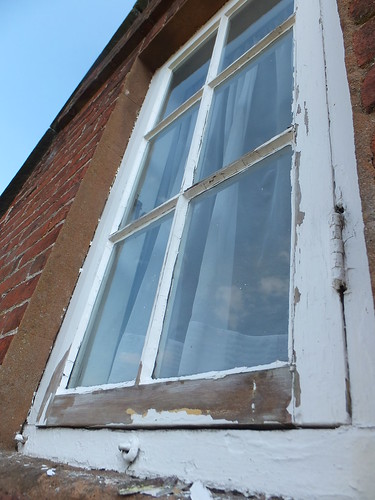
When I came to the Hall, lead-based primer offering excellent performance was still in use. Health and Safety legislation then banned the use of lead in paints, leaving zinc-based primers as the best alternative. After a few years, the use of zinc, too, was banned. Modern water-based primers have very poor performance compared with the earlier options. In September 2013, external repainting as necessary was carried out. The view below shows an upper window with flaking paint removed prior to re-painting.


Window awaiting repainting.

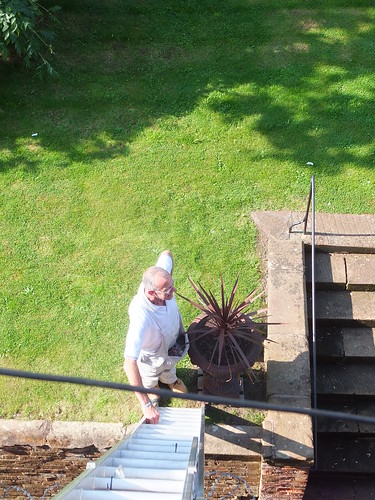
Whilst a ladder was in position on the rear elevation, I took a few pictures, included in the Brewood Hall Roof album, linked below.


This picture was taken from a ladder on the rear elevation, during repainting in 2013. John Keay foots the ladder for the photographer. Note the telecommunications 'drop wire' L to R in the foreground

Manhole Cover

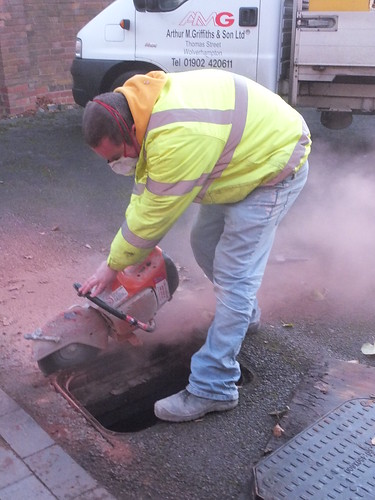
The cost of this little job was actually covered by insurance. In connection with some ongoing maintenance work, we had a skip delivered. When the lorry came to collect the loaded skip, the front wheel cracked a cast iron manhole cover in the yard. This was a bit surprising - the manhole cover had been replaced a few years earlier in connection with renovation of the Small Barn and a heavy-duty cover had been specified. The skip firm's insurance covered the damage so, in November 2013, Pete and Jim cut out the old frame and fitted an 'extra heavy duty' manhole cover.


Jim cutting out the old manhole cover frame.

Soil Pipe

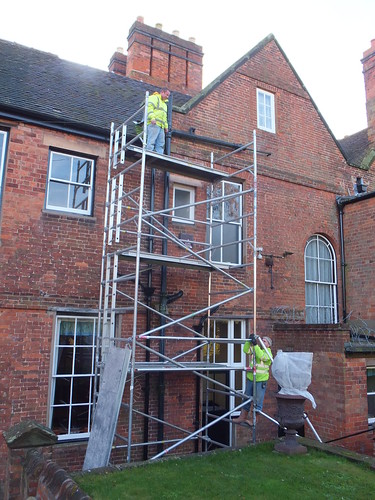
Most of the rain water pipes and soil pipes at Brewood Hall are cast iron. In severe weather, this raises the risk of cracking and in November 2013 Pete and Jim replaced a cracked soil pipe at the rear of the Hall. Modern Health and Safety practice required the use of an access tower to get to the broken pipe so the relatively simple job of exchanging the cracked pipe for a new one was compounded by the need to hire a suitable self-assembly tower, bring it to site, erect it and, on completion of the work, disassemble the tower and transport it back to the hire company.


Jim and Pete assembling the access tower.

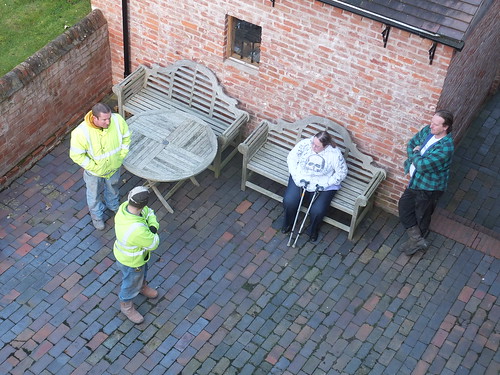
Before the access tower was taken down, I ascended with a camera to take a few record shots. My pictures of the garden are on page 2 of my May-December 2013 album, linked below.

Jim, Pete, Anne and Dean pictured from the access tower.

Roof Maintenance

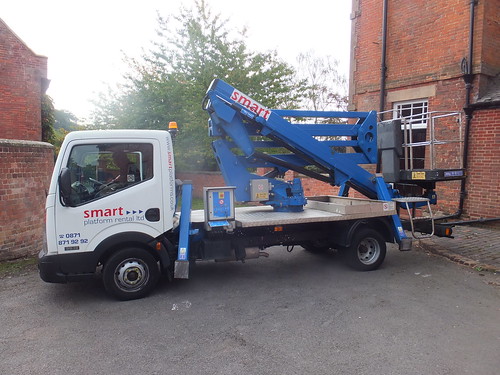
The Hall roof has clay tiles, with some lead work. The Small Barn has clay tiles. The Big Barn was re-roofed (possibly as late as 1930) with slate. As far as possible, these roofs and the associated guttering and rain water pipes have an annual inspection before the worst of the winter weather sets in. In 2014, my roofers managed all the work from a triple extension ladder apart from one area. They promised to return when they had a 'Cherry Picker' on hire and on 29th September 2014, they were back. In case you're wondering, yes, I did manage to get a 'lift' to see the less-accessible areas of the roof. I was very impressed with the capabilities of the truck-mounted 'Cherry Picker'.

The neat appearance of the truck-mounted 'Cherry Picker'.

My pictures

Brewood Hall Roof and Views of the District.
Brewood Hall Maintenance.
Brewood Hall Garden, May-December 2013 (page 2)