Wednesday, 11 September 2013

Stationery Distribution to Schools along the Ayeyarwady River

Education Support in Myanmar

I've written a number of posts describing the support which the 'RTM Social Contribution' makes to education in Myanmar. You can find all these posts here. A number of these posts describe visits to schools to distribute stationery to students but, in general, these schools are in the Mandalay and Bagan area, accessible as the 'Road to Mandalay' ship carries out its regular cruise schedule on the Ayeyarwady River.

Each year, the 'Road to Mandalay' makes two or three extended cruises further upstream as far as Bhamo, accompanied by two 'Fast Boats' which act as ferries taking Guests ashore for various trips. Some of these trips include visits to schools with donations of stationery. In addition, a number of schools along the river receive donations of stationery, although the 'Road to Mandalay' does not stop. In these cases, the 'Fast Boats' load the stationery and, preceding the 'Road to Mandalay' up river, drop off the donated materials at each of the schools in turn. This means that, by the time the 'Road to Mandalay' comes abeam each school, the students are waiting on the river bank, waving exercise books which they have received and indicating their thanks by waving and cheering. I have been on Bhamo Cruises in 2010 and 2012 and can confirm that the excitement as the 'Road to Mandalay' passes, sounding her siren, is quite affecting.

Stationery Distribution in 2010

My first Bhamo Cruise was in 2010. All my reports on that trip can be found here. On 26th August 2010, after visiting the 'Pottery Village', we sailed past a number of schools which had earlier received stationery donations and there's a brief description in the post Nwe Nyein Pottery Village.
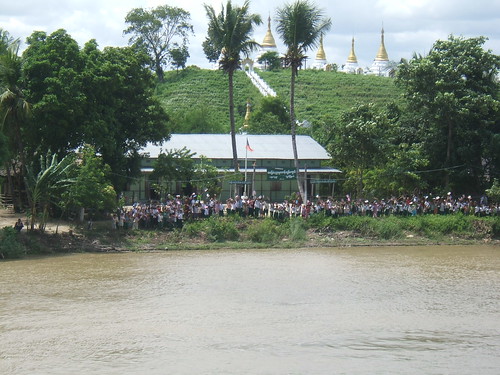
Students waving as the 'Road to Mandalay' passes in 2010.

There are a number of pictures of the schools we passed in the set Cruising North on the Irrawaddy.

Stationery Distribution in 2012

I repeated the Bhamo Cruise in 2012 and all my reports are here. The itinerary was similar to that on my first Bhamo Cruise and, on Thursday 13th September 2012, we visited the 'Pottery Village' and then sailed past eight schools where the 'Fast Boats' had earlier delivered stationery. The post Visit to a Pottery Village and Stationery Distribution to 8 Schools describes the day.
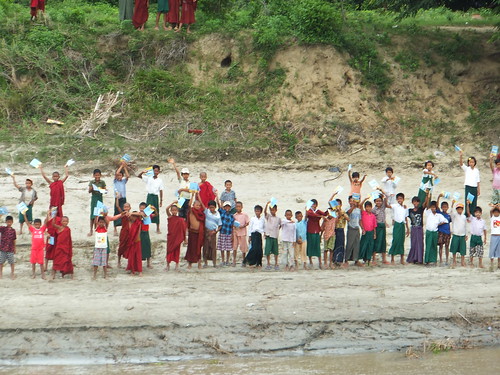
Children waving their new, blue exercise books in 2012.

All my pictures as we cruised north are in the set Schoolchildren and others along the Ayeyarwaddy.

In order, as we sailed north, these are the schools we passed:-

Place Nbr of Students River Bank
Ma Au 154 West
Pya 58 East
Nyaung Pin Thar 95 East
Yone Pin 270 West
Kote Tet 355 West
Ka Bwet 327 West
Kyaw Lay Well 60 East
Pon Ner 108 East

The following reports on the Bhamo Cruises are based on information from Doctor Hla Tun.

Stationery Distribution on First Bhamo Cruise in 2013

On the 15th August 2013, the 'Road to Mandalay' sailed north through the Third Defile of the Irrawaddy River, passing eight riverbank schools where the 'Fast Boats' had earlier delivered stationery to about 1300 students. As the 'Road to Mandalay' passed each school, students, assembled on the riverbank, waved in thanks.
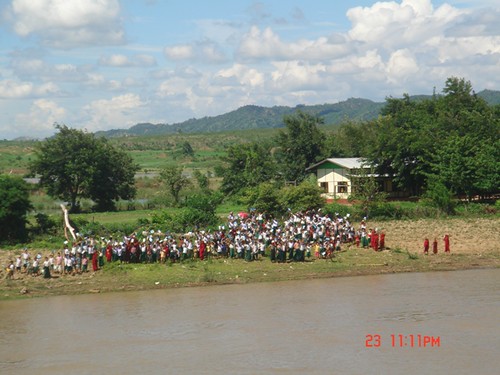
There are about 300 students at Ka Bwet school which also includes a secondary school.
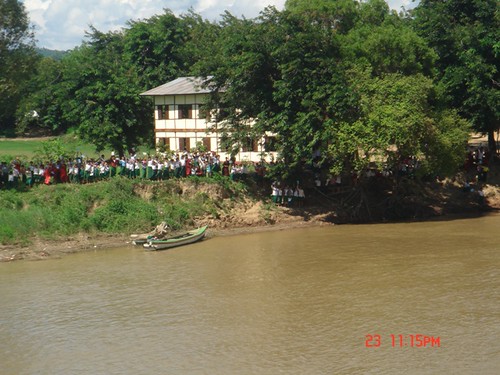
There are about 340 students at Kote Tet school which includes a secondary school.
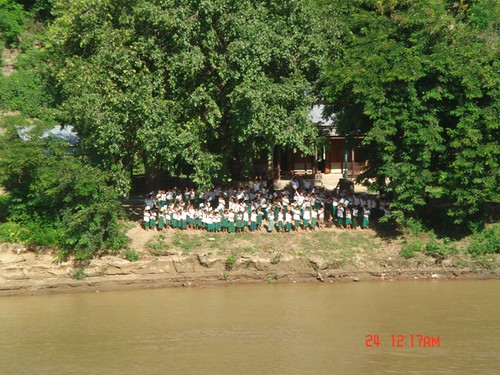
There are around 125 children in Pon Ner Village.

Stationery Distribution on Second Bhamo Cruise in 2013

On the 28th August 2013, the 'Road to Mandalay' sailed north on the second Bhamo Cruise. Once again, stationery, exercise books, pencils, rulers and ballpens were distributed to the eight riverbank schools.

Stationery Distribution on Third Bhamo Cruise in 2013

During the third Bhamo Cruise in 2013, on September 12th stationery was again distributed to more than 1300 students of the eight schools along the Third Defile of the Ayeyarwady River.


Pictures showing these riverbank schools are included in the set Schoolchildren and others along the Ayeyarwaddy.

[Second Bhamo Cruise in 2013 added 16-Sep-2013, Third Bhamo Cruise in 2013 added 25-Sep-2013]

Monday, 9 September 2013

Donation to Min Ga Lar Pa Ra Hi Ta Monastery

This report is based on information from Doctor Hla Tun, who also supplied the photographs.

The Abbot of the Min Ga Lar Pa Ra Hi Ta Monastery in Pagoda Hill Village, Twan-Taye Township, accepts about 700 girls and 460 boys who are orphans, single parent children or very poor. The Monastery provides accommodation, food, school attendance and teaches handicrafts to offer a future career. The Monastery is around 30 miles south of Yangon and, if the traffic is quiet, the journey from Yangon takes around 75 minutes.

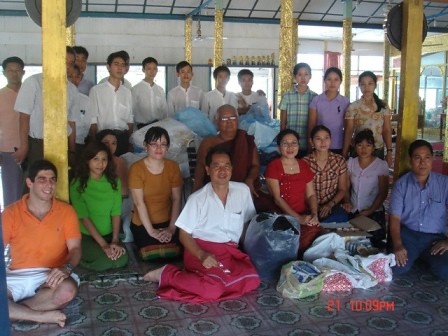
Five volunteer teachers, the Abbot and the visitors.

Orient Express operate The Governor's Residence Hotel in Yangon, often referred to simply as 'TGR'. On 13th July 2013 Doctor Hla Tun, together with staff from The Governor's Residence visited the Monastery to make donations of old linen, uniforms, gloves and stockings from the Hotel, plus stationery and soap.

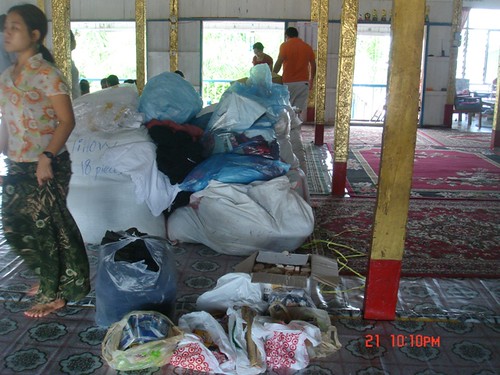
Linen, old uniforms, stationery and soap donated to the Monastery.

There is a Government-recognised Middle School within the Monastery Compound which accepts children up to Grade 9. Beyond this, students have to attend the Government High School in the Village. Between 25 and 30 students from the Monastery Graduated and around 15 of these now work as Volunteer teachers in the Monastery. In addition, about 20 Monks work as Guardians in the Monastery.

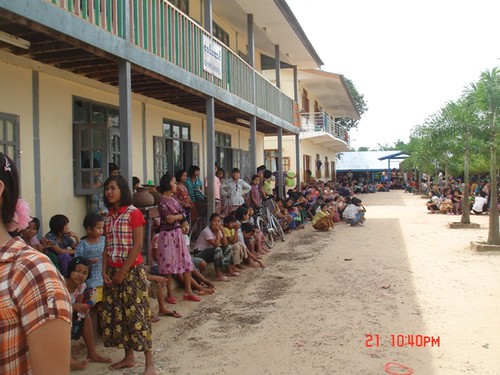
Girls in front of their hostel. The building in the background is used as a dining room but it is not large enough to take all 1,160 children at one time so Breakfast, Lunch and Dinner are each divided into two sittings.

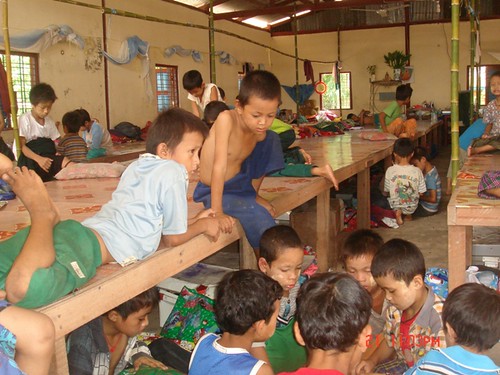
Boys in their hostel building. Note the blue mosquito nets on the wall.

Inside view of hostel building.

Photographs

Min Ga Lar Pa Ra Hi Ta Monastery.
The Governor's Residence Hotel.

Friday, 6 September 2013

Orphans and Vulnerable Children Project in Myanmar

This report is based on information from Doctor Hla Tun, who also supplied the photographs.

In an earlier post ('Road to Mandalay' co-operation with other organisations) I described how the United Nations Childrens Fund ('UNICEF') had withdrawn funding from the Orphans and Vulnerable Children ('OVC') Project in Myanmar. I also explained that a German Foundation which provides help for HIV affected children, with local assistance from Doctor Hla Tun, started to provide funding in 2012 to allow the 'OVC' project in Myanmar to continue its work.

The 'OVC' Project in 2013

Between the 31st May and 2nd June 2013 (during the 'Road to Mandalay' 'off season' for 2013), Doctor Hla Tun visited Mon State and villages within Tha Nin Thar Yi Division to provide assistance to the Orphans and Vulnerable Children Project. The Project includes HIV infected children, HIV affected children and children whose parents can’t afford for them to attend school.

These children are helped by providing school enrolment fees and stationery. Twice a year a Forum is arranged providing snacks and cold drinks. Material and moral support is also provided to the Education Car Provider - the Self Help Groups ('SHG').

In the 2012-13 academic year, help was provided to 446 'OVC' students but in the 2013-2014 academic year (starting on 3rd June 2013) this number was raised and 758 'OVC' students were helped.

The distributions for 2013-2014 were made during Doctor Hla Tun's visits to Maw La Myaing City and Mu Don Township (included in Mon State) and the villages of La Mine and Kod Dut (included in Yaye township within Tha Nin Thar Yi Division). The numbers of 'OVC' students assisted at each location are:-
Maw La Myaing: 288
Mu Don: 142
Kod Dut: 202
La Mine: 126
Distribution at Mu Don

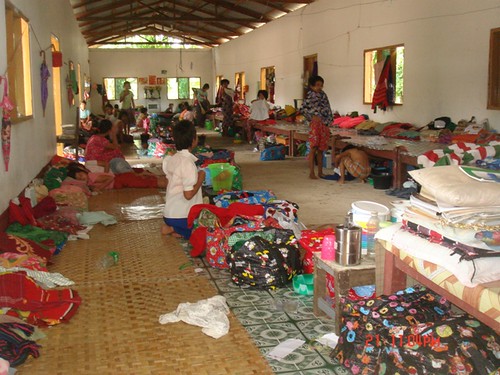
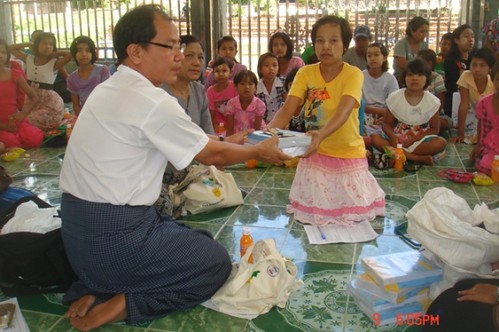
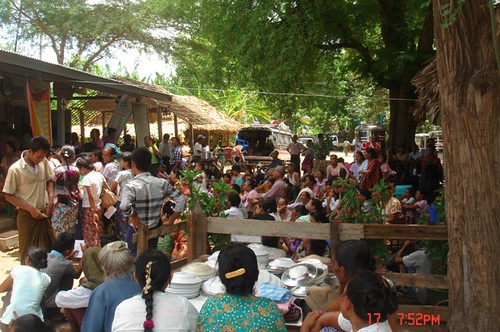
There are three Drop In Centres ('DIC') in Mu Don township (part of Mon state). Students from those centres came to the Win Sein Taw Ya Pagoda Compound on 1st June 2013 to receive support for the academic year 2013-14. Students were given school enrolment fee, stationery, a cold drink and a snack.

Distribution of support to OVC students at Win Sein Taw Ya Pagoda Compound.

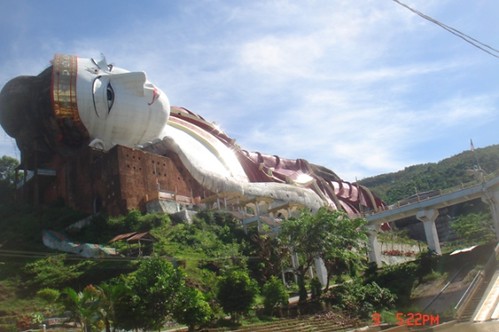
The Win Sein Taw Ya Pagoda houses the World's Largest Reclining Buddha.

The World's Largest Reclining Buddha.

Incidentally, I visited the World's Largest Reclining Buddha in 2012 and that visit is described here. My photographs of this remarkable construction are here.

Distribution at Kod Dut

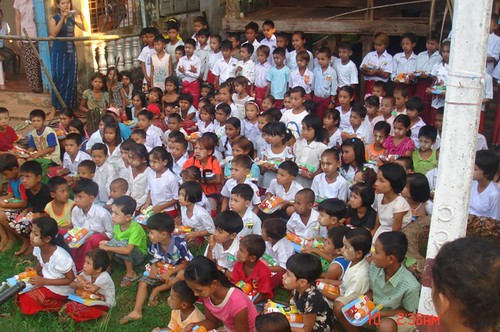
Distribution of stationery, snacks and drinks was made at the Drop In Centre ('DIC') in Kod Dut village on 1st June 2013.

Distribution of stationery, snacks and drinks at the Drop In Centre in Kod Dut village.

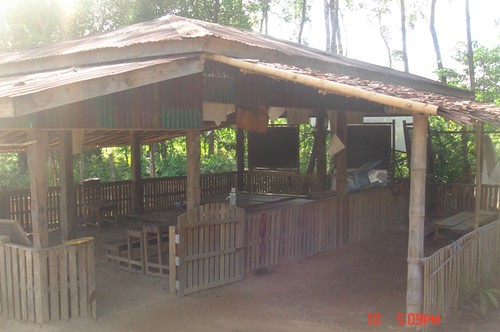
The Mon Ethnic Temporary School is about 5 miles from Kod Dut. It was founded by a Monk, has five classrooms and is recognised by the government.

Mon Ethnic temporary School.

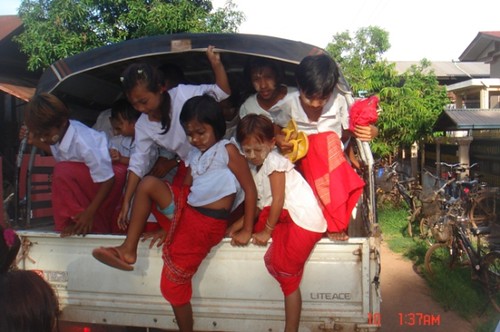
Very poor Mon students attending the school were invited to Kod Dut on 1st June 2013 to receive stationery. They travelled from their school in the Monk's white pick-up, wearing the traditional Mon ethnic costume of white and red. The girls cheeks were covered with thanaka (the creamy, natural make-up and sun-screen made from the Thanaka tree), rather than cosmetics.

Students from Mon Ethnic temporary School.

Bagan Medical Clinic: May, June, July 2013

This report is based on information from Doctor Hla Tun, who also supplied the photographs.

The 'Road to Mandalay' luxury river cruise ship (operated by Orient-Express) has a regular schedule sailing the Ayeyarwady River between Mandalay and Bagan in Myanmar (Burma). On Friday, Saturday and Sunday each week the 'Road to Mandalay' is anchored at Bagan, whilst the ship's Guests experience the remarkable sights of Bagan.

Doctor Hla Tun is the Ship's Doctor on 'Road to Mandalay' and he also manages the 'RTM Social Contribution' which supports a number of charitable initiatives in Myanmar in the field of education and medical support. The Bagan Medical Clinic, opened in August 2011, is perhaps the most ambitious of these initiatives. The Clinic is open on Friday, Saturday and Sunday each week, staffed by two local doctors and a number of health assistants. In addition to looking after the Guests on the ship, the indefatigable Doctor Hla Tun becomes the senior doctor at the Clinic on Friday, Saturday and Sunday.

The 'Road to Mandalay' has an 'off season' (in 2013 from 8th May to 14th July) when Doctor Hla Tun is able to return to Yangon. However, the Bagan Medical Clinic continues to open as normal during the ship's 'off season' and, in 2013, Doctor Hla Tun spent five weeks during the 'off season' back at the Bagan Medical Clinic.

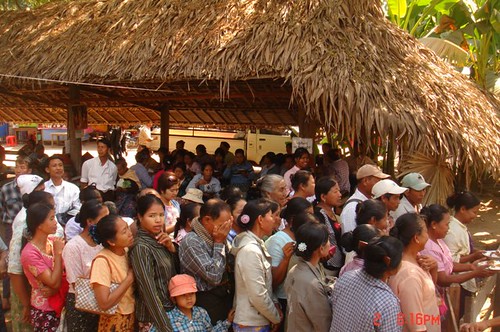
Patients waiting in front of the clinic. Some are holding their white medical record books issued by the Clinic.

During May, 3,303 treatments were carried out, during June a further 5,586 and during July 6,079 more, bringing the total number of treatments since the Clinic opened (on 6th August 2011) to 69,892. Because of the high demand, the facilities at the Clinic are being expanded with the construction of a new building.

Patients enjoying free lunch in front of the new clinic building under construction next to the original building.

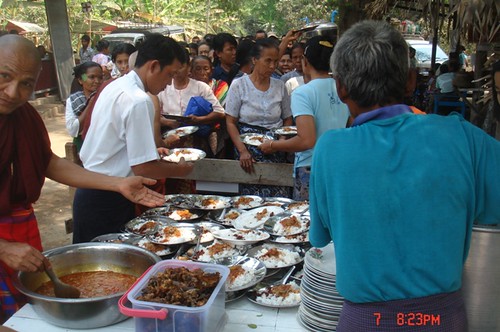
A free lunch is provided because the long distances most patients travel to reach the Clinic necessitates patients setting off very early in the day or even the previous day.

Treatment is provided free for poor patients and on a cost-sharing basis for those who can afford to make a contribution. Where hospitalisation is required for further management of their condition, poor patients may also receive a donation from the Clinic for transportation, accommodation and part of cost of surgical procedures or blood transfusions. All this work is funded by both foreign and local donors, supported by local volunteers.

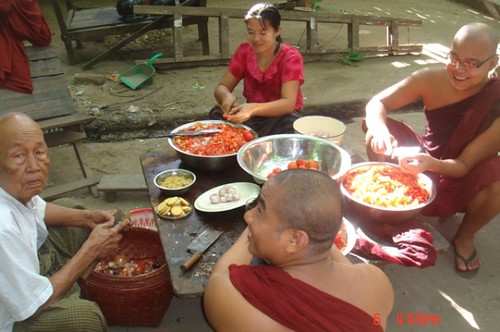
Monks and volunteers preparing lunch in the Monastery Compound for clinic patients.

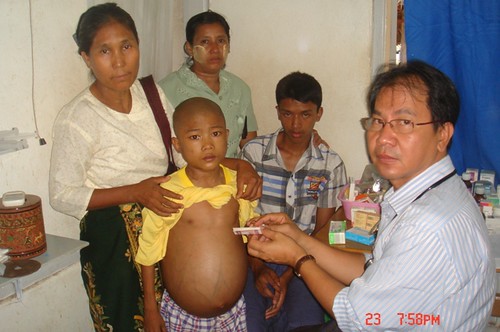
As an example, one young boy was diagnosed with Ascites (accumulation of fluid in the peritoneal cavity) and congenital heart disease. A donation was made by the Clinic for further management of the condition in hospital.

This boy with Ascites and congenital heart disease was given a donation for further management of the condition in hospital.

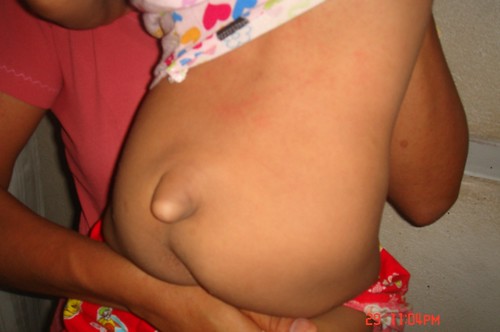
The Clinic can only deal with outpatient procedures. Not realising this, one mother brought her son who is suffering from congenital Spina Bifida. However, the Clinic was able to refer her to a hospital for further management of the condition and donate money towards the costs.

Spina Bifida patient.

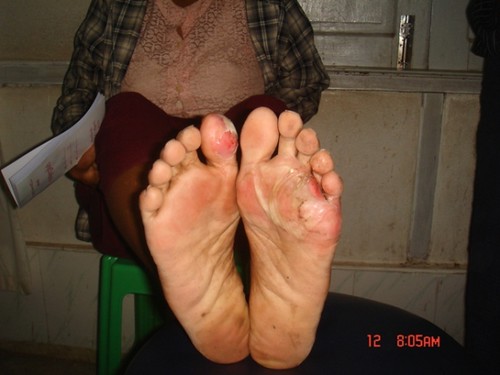
One 49 year old lady had a very unfortunate experience. She suffered from Diabetes with numbness of her feet and hands due to neurological involvement. Since she lived in a remote village about 70 km from the Bagan Clinic she hired a motor bike and driver to bring her to the Clinic. On the way, the motor bike suffered a flat tyre and she and the driver had to walk for around an hour to reach a shop which could re-inflate the tyre. Whilst walking, she removed her sandals but because of the numbness in her feet she did not realise that the friction between the soles of her feet and the tarmac road surface was damaging the skin on her feet and creating blisters. On arrival at the Clinic, she had to sleep in the Monastery overnight, before seeing Doctor Hla Tun the following day, with additional problems to the original diabetes with neurological involvement.

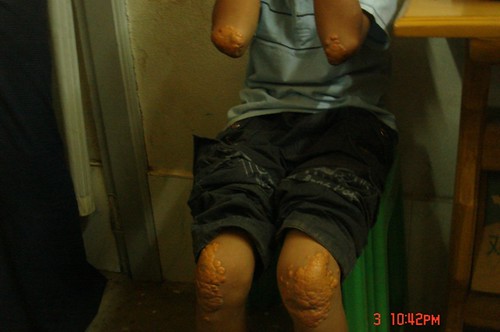
Damage to the feet of a diabetic patient.

Treatment Summary

The table below summarises the number of treatments per month and the total number of treatments since the clinic started.

Month Patients treated Total treatments
August 2011 355 355
September 2011 784 1,139
October 2011 1,434 2,573
November 2011 1,723 4,296
December 2011 2,013 6,309
January 2012 1,605 7,889
February 2012 2,464 10,353
March 2012 4,603 14,956
April 2012 2,043 16,999
May 2012 - Jan 2013 To be added To be added
February 2013 2,713 49,850
March 2013 2,713 49,850
April 2013 2,061 54,924
May 2013 3,303 58,227
June 2013 5,586 63,813
July 2013 6,079 69,892

Thursday, 5 September 2013

Bagan Medical Clinic: April 2013

This report is based on information from Doctor Hla Tun, who also supplied the photographs.

April 2013

The Bagan Clinic treated 2,061 patients in April 2013, bringing the total number of treatments since the Clinic opened on 6th August 2011 to 54,924.

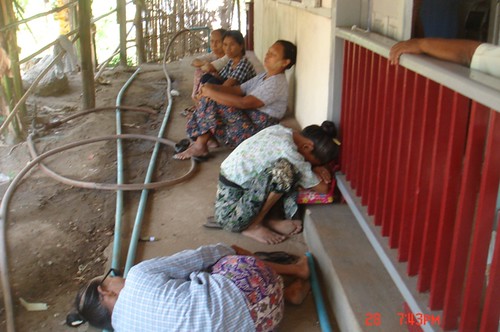
Many patients have to set off very early in the day (or even the previous day, sleeping overnight in the Monastery compound), to register for treatment. For this reason, a free lunch is provided for patients and, in the afternoon, waiting patients can often be found sleeping near the clinic.

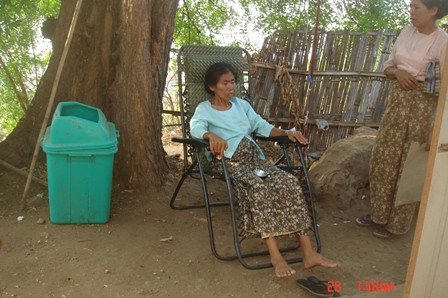
A small group of waiting patients resting near the clinic.

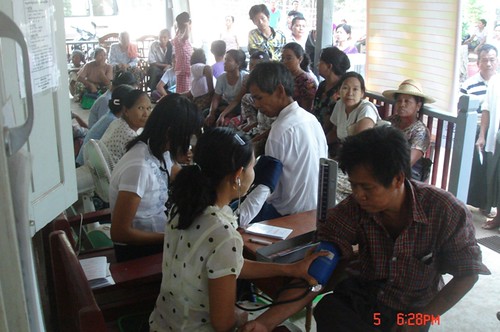
In front of clinic, two members of the clinic staff are kept busy measuring patients' blood pressure prior to the patients being seen by a doctor.

Measuring blood pressure in front of the clinic.


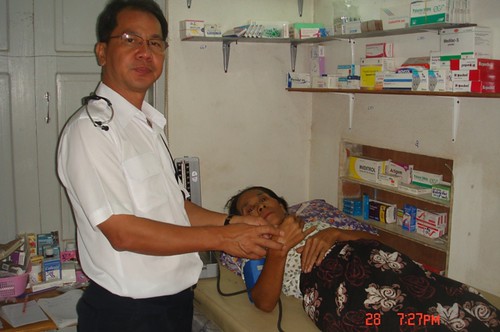
This lady had a painful abdomen after drinking or taking small amounts of food. The clinic treated her with Vitamins and Amino Acid and, because she was poor, donated money for referral to hospital where immediate surgery was performed, allowing her to eat and drink.


This 40 year old lady had suffered from a swollen, painful right knee joint for more than a year. She was referred to hospital for further management and the clinic made a donation for transportation and accommodation.

Treatment Summary

The table below summarises the number of treatments per month and the total number of treatments since the clinic started.

Month Patients treated Total treatments
August 2011 355 355
September 2011 784 1,139
October 2011 1,434 2,573
November 2011 1,723 4,296
December 2011 2,013 6,309
January 2012 1,605 7,889
February 2012 2,464 10,353
March 2012 4,603 14,956
April 2012 2,043 16,999
May 2012 - Jan 2013 To be added To be added
February 2013 2,713 49,850
March 2013 2,713 49,850
April 2013 2,061 54,924

Clinic photographs in 2013

Bagan Medical Clinic (2013).

Related posts in this blog

You can find all my posts about the Bagan Medical Clinic here.

Wednesday, 4 September 2013

Bagan Medical Clinic: March 2013

The 'Road to Mandalay' charity opened the Free Medical Clinic in Bagan on 6th August 2011. Details about the early months can be found in a series of earlier posts 'Free Medical Clinic in Bagan' - Part 1, Part 2 and Part 3. My visit in September 2012 is described in the post The Bagan Clinic. I was in Bagan again on Friday 15th February, 2013 and there's a little about visiting the Clinic in my post Bagan with photographs here.

March 2013

The following report is based on information from Doctor Hla Tun, who also supplied the photographs.

The Bagan Clinic treated an amazing 3,013 patients in March 2013, bringing the total number of treatments since the Clinic opened on 6th August 2011 to 52,863.

Over 80% of the patients travel distances between 30 km and 150 km to reach the Free Clinic at Bagan. A few patients travel between 150 km and 170 km to attend! For this reason, a free lunch is provided for patients.


Some of the more notable conditions presenting in March included:-


This elderly lady was referred to hospital with a dislocated hip. The clinic made a donation for the necessary transportation and accommodation.


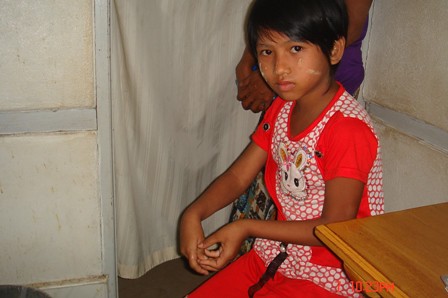
This young girl suffered from stiffness of the right hand. After being treated twice in the Bagan Clinic, she could passively move her right hand with assistance from her left hand.


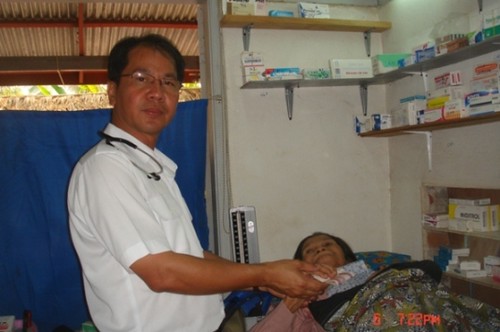
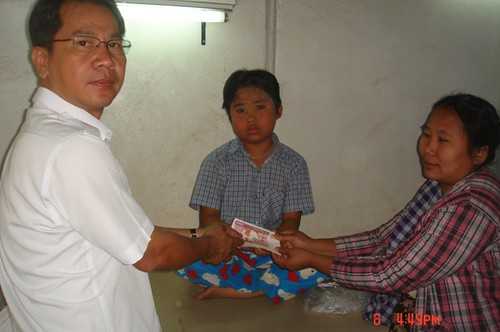
This 10 year old girl suffers from Idiopathic Thrombocytopenic Purpura and needs to be treated with fresh blood transfusion every 3 to 4 weeks. For a single transfusion, her parents need around 50 US Dollars for transportation, fee and hospitalization and the necessary blood tests prior to transfusion. The clinic made a donation to the girl's mother for blood transfusion. The clinic can directly provide medication for vitamin, minerals and liver support.

Treatment Summary

The table below summarises the number of treatments per month and the total number of treatments since the clinic started.

Month Patients treated Total treatments
August 2011 355 355
September 2011 784 1,139
October 2011 1,434 2,573
November 2011 1,723 4,296
December 2011 2,013 6,309
January 2012 1,605 7,889
February 2012 2,464 10,353
March 2012 4,603 14,956
April 2012 2,043 16,999
May 2012 - Jan 2013 To be added To be added
February 2013 2,713 49,850
March 2013 3,013 52,863


More Photographs

Free Clinic in Bagan.
Around the Bagan Free Clinic.
Bagan Medical Clinic (2013).

Bagan Medical Clinic: February 2013

The 'Road to Mandalay' charity opened the Free Medical Clinic in Bagan on 6th August 2011. Details about the early months can be found in a series of earlier posts 'Free Medical Clinic in Bagan' - Part 1, Part 2 and Part 3. My visit in September 2012 is described in the post The Bagan Clinic. I was in Bagan again on Friday 15th February, 2013 and there's a little about visiting the Clinic in my post Bagan with photographs here.

February 2013

The following report is based on information from Doctor Hla Tun, who also supplied the photographs.

The Bagan Clinic treated 2713 patients in February 2013, bringing the total number of treatments since the Clinic opened on 6th August 2011 to 49,850. Some of the more unusual conditions presenting included:-


This 30 year old patient first came to the clinic on 22nd February 2013 from her village about 17 km south of Bagan with severe memory loss. For ten months she had been unable to name her children or recognise neighbours. Happily, following treatment, she returned to the clinic on the 8th March, able to respond to any question and name her three children and their ages.


Most patients have had to travel to reach the clinic, sometimes considerable distances. With the co-operation of the local Monastery and the 'Road to Mandalay' ship, a free lunch is served to waiting patients.


This 12 year old boy was diagnosed with congenital hyperlipidemia. The clinic treated him with cholesterol-lowering agents but he was referred to hospital for further management of the condition.

A four year old boy had a congenital hernia with hypospasdias (an abnormally placed urinary meatus). This boy was referred to hospital for surgery.

In a number of cases, the clinic donated funds to poor patients for transport and accommodation where hospitalisation was necessary.

Treatment Summary

The table below summarises the number of treatments per month and the total number of treatments since the clinic started.

Month Patients treated Total treatments
August 2011 355 355
September 2011 784 1,139
October 2011 1,434 2,573
November 2011 1,723 4,296
December 2011 2,013 6,309
January 2012 1,605 7,889
February 2012 2,464 10,353
March 2012 4,603 14,956
April 2012 2,043 16,999
May 2012 - Jan 2013 To be added To be added
February 2013 2,713 49,850


More Photographs

Free Clinic in Bagan.
Around the Bagan Free Clinic.
Bagan Medical Clinic (2013).

Stationery Distribution in Taung Be School

This report is based on information from Doctor Hla Tun, who also supplied the photographs.

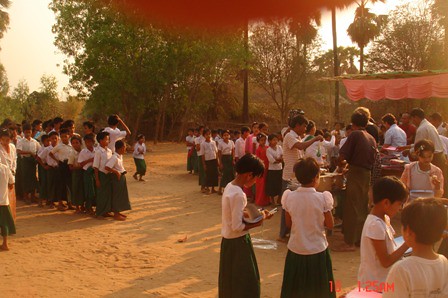
The work of the RTM Social Contribution, led by Doctor Hla Tun, is ongoing and distribution of stationery to schools is carried out regularly.

On 1st March 2013 stationery was distributed to 216 students at Taung Be Village Post Primary School. In 2001, RTM Social Contribution donated a school building with 2 classrooms. There are 278 pupils studying Grades 1 to 8 at the school, but not all were present on the 1st March.

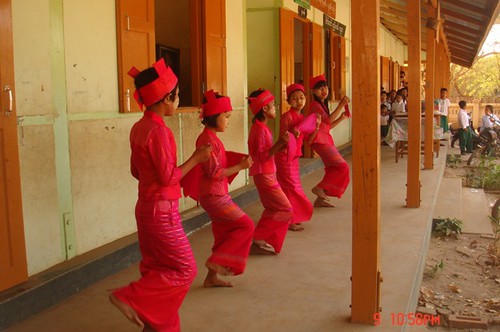
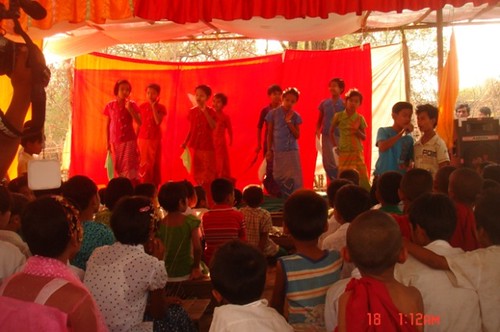
Five groups of students put on a School Concert of singing and dancing for the visitors.

Students wearing Shan Traditional Costumes singing and dancing Shan songs.

Students wearing Myanmar Traditional Costumes singing and dancing Myanmar songs.

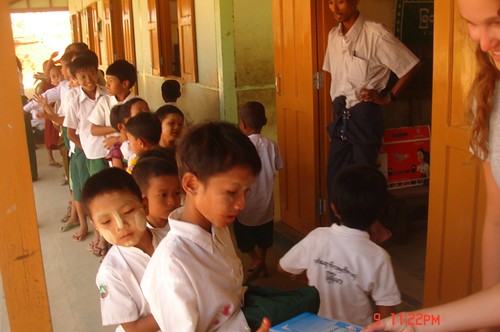
Stationery distribution comprised 3 exercise books, 4 pencils and a ruler for each student present.

Taung Be Post Primary School: Stationery distribution.

Photographs

You can find these and more photographs of the Education Support work in Burma in 2013 here.

Pencils for Kids

This report is based on information from Dr. Hla Tun, who also supplied the photographs.

'Pencils for Kids' is a Canadian charity dedicated to improving educational opportunities for children. You can find details on their website here. Although their initial focus was Niger, their success has allowed them to expand into other areas.

In March 2013, a group from the charity visited Myanmar to donate Backpacks to 350 orphans, single parent students and poor students in and around Yangon. Doctor Hla Tun assisted the group with the distribution of the Backpacks at four orphanages and one school. Each backpack includes exercise books, ball point pens, pencils, eraser, marker pen, coloured pencils, crayon, drawing book, ruler, pencil sharpener, toothbrush and pencil case, together with either school uniform or, for nuns, a robe.

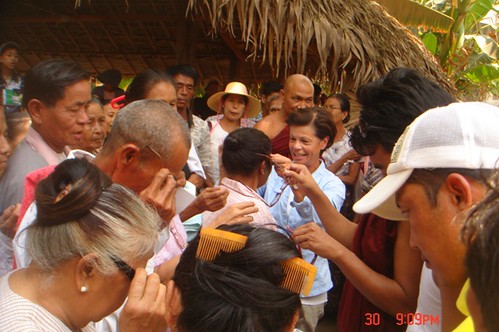
Members of the 'Pencils for Kids' group joined the 'Road to Mandalay' from March 20th to March 23rd and, on March 22nd, they distributed reading glasses to the elderly outside the Bagan Medical Clinic.

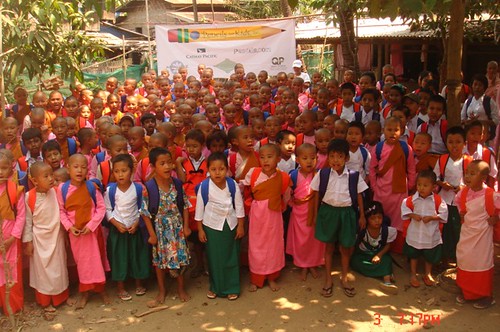
Group picture after delivering backpacks to 174 students at a Monastic School at a Nunnery in Yangon area.

'Pencils for Kids' members also brought reading glasses for elderly patients at the Bagan Medical Clinic. They made a trial by wearing and reading a newspaper or journal.

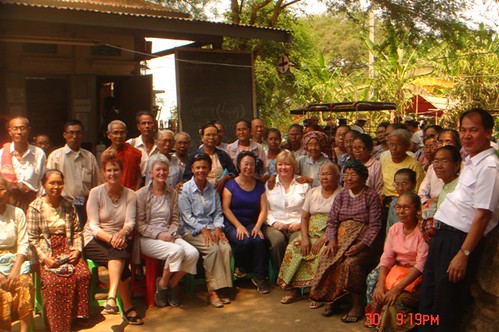
Patients wearing new spectacles pose with 'Pencils for Kids' members in front of the Bagan Medical Clinic.

Photographs

You can find these and more photographs of the work of the Bagan Clinic in 2013 here.

Education Support in Burma, 2013

This report is based on information from Doctor Hla Tun, who also supplied the photographs.

The work of the RTM Social Contribution, led by Doctor Hla Tun, is ongoing and distribution of stationery to schools is carried out regularly.

On March 9 2013, two donors from Australia visited Htee Pu Village near Mount Popa with Doctor Hla Tun.

It takes about an hour from Bagan by car to get to Htee Pu. There are about 220 students from Grade 1 to 9 in the school where not only local students but also students from neighboring villages can attend up to Grade 9. The Education authorities upgraded the school from Post-Primary school to Secondary school in 2010. Htee Pu itself has around 238 houses and a population of about 1018.

The donors performed the Opening Ceremony on a new school building which they had donated. In addition, they donated stationery to a total of 235 students (15 students from a neighboring village were also present). Each student received 3 exercise books, 3 pencils, a bear from Australia and a ruler. Twenty-seven outstanding students from all Grades also received crayons, pens and pencils.

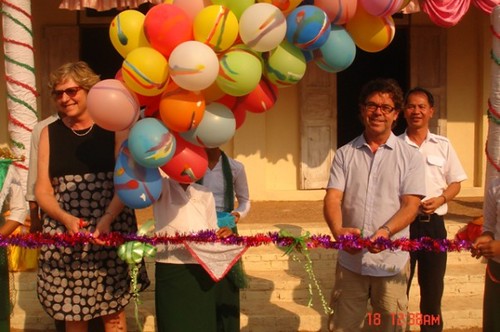
Donors cutting the ribbon during the opening ceremony.

Stationery distribution to 235 students.

Finally, there was a School Concert of singing and dancing, performed by six groups of students.

Traditional dance performed by 8 girl students with 2 boy students singing for the audience of students and visitors.

Photographs

You can find these and more photographs of the Education Support work in Burma in 2013 here.

Friday, 30 August 2013

Railways around Edge Hill in 2013

Introduction

In the post Edge Hill, Liverpool I described the growth of the railways around Edge Hill which reached their zenith in the first half of the 20th century. But, like almost all of our railway system, the railways around Edge Hill have changed significantly in the last fifty years, generally becoming simplified.

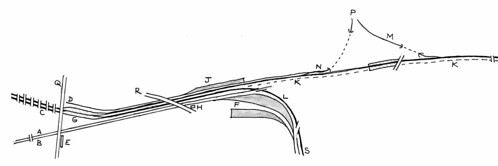
For comparison with my sketch in the earlier post Edge Hill, Liverpool, here's an incomplete, simplified, not-to-scale sketch of the lines around Edge Hill in 2013. An explanation of the letter references on the sketch is given in the table below the sketch.

Click for larger image..
Simplified sketch of Edge Hill area in 2013.

Ref Description
A Wapping Up and Down Goods: The cutting which served the Wapping Lines and the Crown Street Lines remains, with two sidings still extending towards the tunnel mouth. The tunnel is out of use although plans have been floated for this tunnel and the Waterloo Tunnel to be re-opened as part of a Metro system.
B Crown Street Up and Down Goods: Although the cutting towards Crown Street remains, Crown Street is now a public park.
C Lime Street Down Fast, Up Fast, Down Slow, Up Slow.
D Waterloo Up and Down Goods: Sidings still extend towards the tunnel mouth but stop short. The tunnel is out of use although plans have been floated for this tunnel and the Wapping Tunnel to be re-opened as part of a Metro system.
E Spekeland Road Coal Wharf: The yard still exists in a derelict form, as does a row of coal offices on Tunnel Road.
F Down Sidings: Still in active use for stabling passenger trains, together with the adjacent Alstom Traincare Depot.
G Edge Hill Station.
H Edge Hill Power Signal Box.
J Tuebrook Sidings.
K Up and Down Chat Moss Lines (to Manchester).
L Up and Down Main Lines (to Crewe).
M Olive Mount Chord.
N Up and Down Bootle Lines.
P Edge Lane Junction (to Bootle, serving docks).
Q Tunnel Road.
R Picton Road Overbridge.
S To Ditton, Runcorn and Crewe.
- Wavertree Technology Park Station (on Up and Down Chat Moss Lines near Olive Mount Chord).


My visits to Liverpool

On my various visits to Liverpool, I've tried to keep my eyes open regarding the railways. I had a fairly good mooch around Liverpool Lime Street station on Saturday, 18th May 2013 when I attended the Old Locomotive Committee Annual General Meeting.

I decided to visit Liverpool again on Saturday, 22nd June 2013 to have a closer look around the Edge Hill area. I took one of the reasonably-convenient London Midland services from Wolverhampton to Liverpool Lime Street. I've described an earlier trip to Liverpool with London Midland in the post Liverpool by Train.

Liverpool Lime Street Station

My visit to Liverpool on Saturday, 18th May 2013 gave rise to the post Liverpool Lime Street Station.

Lime Street Station. View from Platform 2 looking towards Edge Hill.

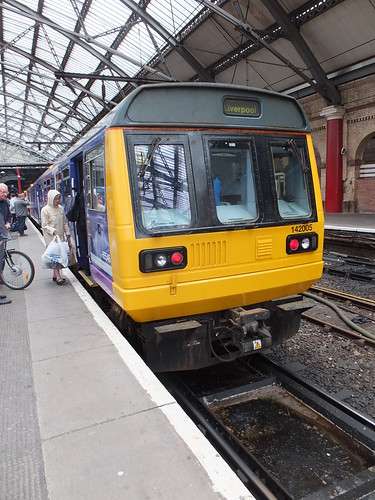
On arrival at Lime Street station on 22nd June 2013, I took a local service for the short trip to Edge Hill station. Platforms 1 to 6 at Lime Street are used by the various local services and the first departure calling at Edge Hill was one of the execrable 'Pacers'.


Liverpool Lime Street station, showing the 'Pacer' in Platform 2 which I took to Edge Hill.

Edge Hill Station

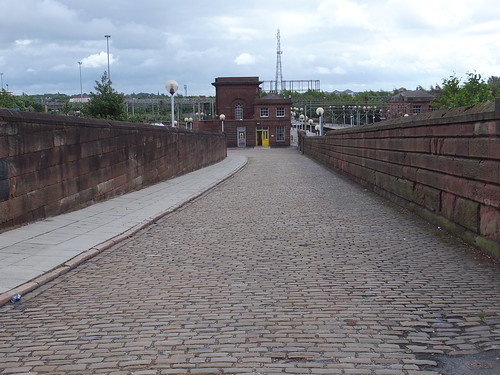
The station retains its four through platforms but the two bay platforms at the Manchester end have long gone. The platform canopies have been removed, revealing the pleasing design of the two 1836 station buildings, one on the north island platform, one on the south. Each island platform remains connected to Tunnel Road by a cobbled ramp but only the ramp to the north island platform is still in use (access to the south island platform is via a subway from the north island platform). After spending some time studying the historic station at Edge Hill, I left the station and made my way along Tunnel Road, past the derelict coal offices which served Spekeland Road Coal Wharf.

A modern view of the road access to Edge Hill station, viewed from Tunnel Road.

Crown Street

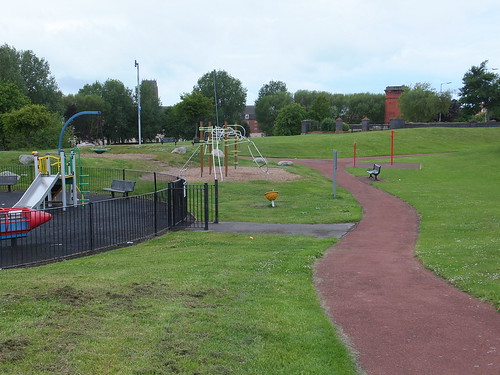
I left Tunnel Road and continued along the various streets running close to the original railway route to Crown Street. Although sidings still extend towards Crown Street, the railway is not very accessible. The sidings stop just short of Crown Street but trees, undergrowth and fencing now make the lines invisible. I could just see an electrification mast but all the Overhead Line Equipment had long gone. The area where Crown Street railway yard stood is now a park and playground. The park includes a brick ventilation shaft, presumably on the disused Wapping Tunnel.

Crown Street in 2013, with tunnel ventilation shaft in the right background and the Anglican Cathedral on the left in the distance.

Wavertree Botanic Gardens

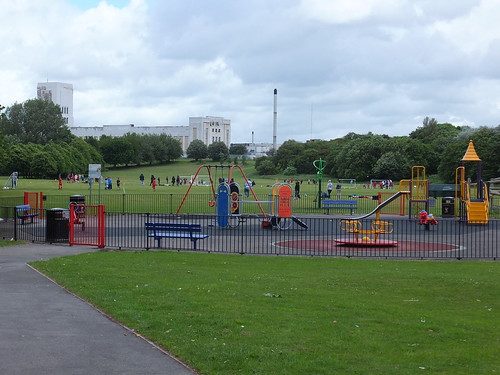
From Crown Street, I walked back to Edge Hill, crossing over one of the many bridges spanning the approach to Lime Street Station and continued to Wavertree Botanic Gardens. I believe this was the location of the famous 1930 Pageant and Exhibition celebrating the 100th birthday of the Liverpool and Manchester Railway. At this exhibition, as well as various static locomotive exhibits, the restored 1830 locomotive 'Lion' gave rides to the public. I've written a number of posts about 'Lion' and her present-day supporters' club 'The Old Locomotive Committee' - you can find all my posts here or go to the Old Locomotive Committee website here.

Wavertree Botanic Gardens in 2013.

Picton Road Bridges

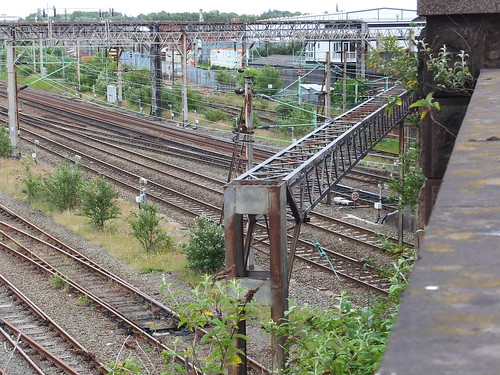
Leaving the botanic gardens, I carried on walking, crossing the railway on the long Picton Road overbridge and passing just behind Edge Hill Power Signal Box.

View looking towards Manchester from Picton Road overbridge. L-R: Former Up and Down goods lines to Waterloo Tunnel Mouth, Up and Down Chat Moss, Up and Down Main, Former Wapping goods lines. The present Power Signal Box is just visible in the background.

Further along Picton Road, I passed the Alstom Traincare Depot and continued under a group of bridges carrying the lines to Crewe and associated sidings. I then turned off to make my way north along Rathbone Road to the bridge over the Liverpool and Manchester railway. Freight by rail is now restricted to container traffic, block loads and engineering trains so the whole of the Edge Hill Grid Iron has gone. As part of a Regeneration Programme, much of the area has been regenerated as 'Wavertree Technology Park' and two million pounds was invested in a new station on the Liverpool and Manchester route which opened in 2000, rejoicing in the name 'Wavertree Technology Park'. This is adjacent to the Rathbone Road bridge. From the road bridge looking east, Olive Mount Cutting was visible. This was one of the major engineering achievements during the construction of the Liverpool and Manchester Railway. Originally double track, it was widened around 1870 to accommodate four tracks but the route has now been simplified to double-track.

Access to the Bootle Branch had originally been from Liverpool direction but in 1883 the double-track Olive Mount Chord was opened, forming a triangle so that trains from Manchester direction could directly reach the Bootle Branch and the docks which it served. Following a fire at Edge Lane Junction signal box in 1988, the Olive Mount Chord was abandoned. However, twenty years later the Chord was re-instated (as a single line) to improve the facilities for rail freight.

Looking towards Olive Mount Cutting and Manchester from Rathbone Road bridge. The new Olive Mount Chord diverges on the left.

After a short wait at Wavertree Technology Park station, another 'Pacer' arrived which took me back to Lime Street Station. By this time fairly tired, I caught the first available service back to Crewe and Wolverhampton.


Wavertree Technology Park station, looking towards Edge Hill.

The railway photographs I took during this visit have been added to the set Liverpool Area Railways.

Signalling

My earlier post Liverpool Lime Street Station briefly described the power box at Lime Street which is still in use. In the Edge Hill area, all the earlier manual signal boxes have been replaced by Liverpool Edge Hill Power Signal Box. This Power Box was built during electrification in the 1960s with an 'NX' signalling panel which I understand has been replaced. Oddly enough, Edge Hill Power Signal Box is discussed in Pevsner's 'The Buildings of England' book reference [2].

The Power Signal Box at Edge Hill.

External links

Liverpool and Manchester Railway (Wikipedia).
London and North Western Railway (Wikipedia).
London, Midland and Scottish Railway (Wikipedia).
Pictures of Exhibition Junction by edgehillsignalman.
Edge Hill Archive

Book References

[1] 'An Illustrated History of Liverpool's Railways' by Paul Anderson, published Irwell Press (ISBN 1-871608-68-6).
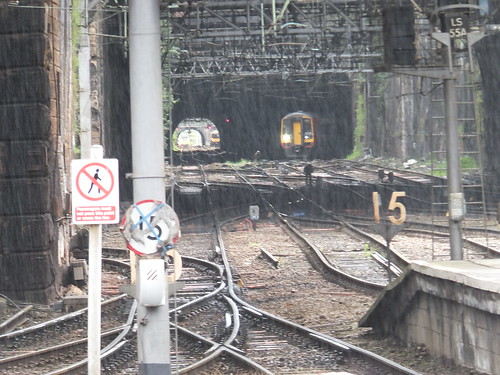
[2] 'The Buildings of England - Lancashire: Liverpool and the South-West' by Richard Pollard and Nikolaus Pevsner, published by Yale University Press (ISBN 0 300 10910 5). This book may be previewed here.

Track Diagrams

For more details of the present track layout, refer to the latest edition of 'Railway Track Diagrams Book 4: Midlands & North West', published by Trackmaps (ISBN: 0-9549866-0-1).

Related articles in this Blog

Liverpool Lime Street Station.
'Black 5' to Birmingham.
Edge Hill, Liverpool.

My Pictures

Liverpool: The City.
Liverpool Area Railways.