Sunday, 25 November 2012

Return to Malta (Part 2)

Events of Saturday 24th November 2012

Much of Malta's coastline is rocky but Golden Bay, where our hotel is located, is the northernmost of three sandy beaches on Malta's north-west coast.
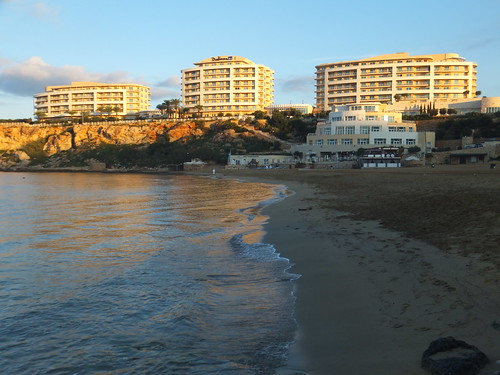
Radisson BLU Resort & Spa, Golden Sands, Malta.

Fortunately, the weather was shaping up to be a dry, warm day - the two weeks prior to our arrival had been wet. Shortly after 7.0 a.m. I decided to walk to the watch tower visible from the hotel - Ghajn Tuffieha Tower. Once outside the hotel, I took the long straight road to a T-junction where the road to Valetta formed the left turn and the entrance to Ghajn Tuffieha car park the right turn. I walked past a large derelict building (predictably constructed from limestone blocks) to reach the tower itself (also limestone but clearly having had a modern restoration).

Ghajn Tuffieha Tower.

I returned to the hotel the same way I came out. When I was last in Malta, Malta Bus ran a very unpredictable service with a fleet of aging buses. All swept away now, of course. The buses which stop a short walk from the hotel are pale blue and operated by Arriva. Their website is here.

I was back in time to have breakfast with Ann and Dean in Flavours Restaurant. Later in the morning, Ann had an appointment in the Myoka spa and Dean and I went for a walk. Dean showed me the cliff path to Ghajn Tuffieha Tower, then we descended the concrete steps leading to the pretty beach of Ghajn Tuffieha. The sun was now very warm, so I couldn't resist the opportunity to paddle in the clear sea. I decided the sea hadn't warmed up enough for total immersion.
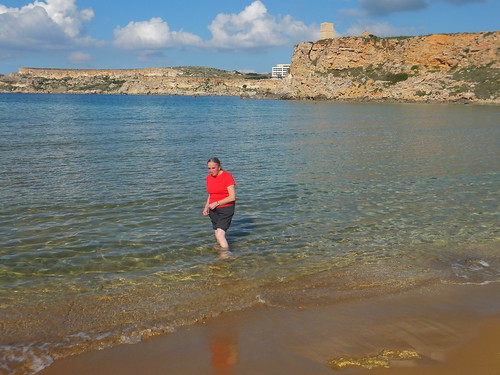
Jan in paddling mode. Ghajn Tuffieha Tower visible at the cliff top as is part of the Radisson Hotel (in the next bay).

In the afternoon, we all went by car to Bugibba, on the eastern coast, where Ann had arranged to meet a friend.
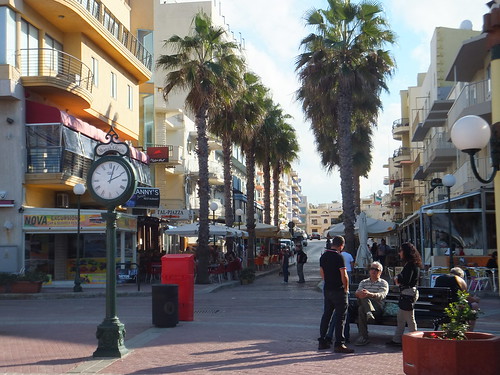
Bugibba.

Bugibba has a promenade but no beach, just rocks. Nontheless, it has become popular as a tourist destination. Following Ann's meeting, we took ice cream in a small seafront cafe before driving back to Golden Bay and an excellent dinner in Flavours Restaurant.

Photographs

Malta.

Saturday, 24 November 2012

Return to Malta (Part 1)

Events of Friday 23rd November 2012

On 23rd November 2012 I travelled to Malta with Ann and Dean. They've been visiting the Radisson resort at Golden Sands in Malta for a number of years and, this time, I agreed to accompany them.

We set off early by road for Heathrow and parked in the Terminal 4 Long-stay car park. A shuttle bus transferred us and luggage to the Terminal for check-in. The two-and-a-bit hour flight to Malta by A320 was pleasantly shorter than on many of my trips.

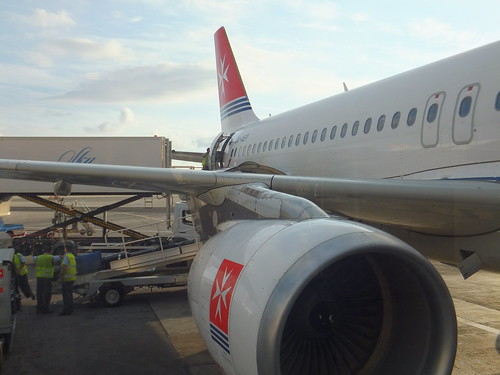
Our A320 on arrival at Malta International Airport.

It's actually my second visit to Malta. I've been trying to remember exactly when the first was - my guess is around twenty years ago. Needless to say, there have been major changes since my last trip. The first time I arrived at Luqa Airport its origins as an RAF base were still obvious. Now, development of the site into the present Malta International Airport has obliterated most evidence of its history although I did spot some derelict Nissen Huts just outside the airport. These durable buildings had clearly found civilian uses before finally falling into disrepair. I was intrigued by the signboard on one of these buildings - 'MALTA RABBIT CLUB'.

Dean had booked a hire car and we drove to Radisson Golden Sands as it was getting dark. Ann had arranged a well-appointed suite with two bedrooms and a large sitting room. Later in the evening, we enjoyed a splendid meal in the Agliolio Restaurant. By this time, we were all pretty tired so we retired to bed. I slept soundly.

A bit of history

Malta has a strategically-important location in the Mediteranean and, consequently, the island has been colonised a number of times over the centuries, latterly by the British. The Maltese people, of course, have the distinction of having been collectively awarded the George Cross, in recognition of the heavy bombing the island suffered in the second World War when Malta provided a vital base to Britain. Malta gained independence in 1964, became a Republic in 1974, joined the European Union in 2004 and adopted the Euro as its currency in 2008. The Maltese Constitution makes Catholicism the official religion and worship is deeply engrained in the society.

Although natural resources are few, Malta has quarries producing limestone which, cut into blocks, were the traditional method of constructing buildings. In recent times, Malta enthusiastically embraced tourism which I think has proved something of a mixed blessing. I believe Information Technology is now seen as the way forward. For more information, see the Wikipedia article.

Entering the EU meant (for at least some people) 'Falling on Soft Times'. But, looking at some of the farmers tending smallholdings producing vegetables and the delapidated state of many houses and commercial premises, I don't think the largesse has been spread around evenly. Malta received significant contributions from the European Regional Development Fund. For instance, the hotel we're staying in (opened in 2005) was funded 50% private enterprise, 12.5% Malta Government and 37.5% ERDF. Rather like Spain, there has been massive housing developments which in these troubled economic times have become difficult to sell. The EU has recently proposed a massive reduction in funds to Malta signalling worrying times ahead.

More when I can.

Photographs

Malta.
Tuesday, 20 November 2012

Oak Tree Pruning at Brewood Hall

Events of Tuesday, September 25th, 2012

The most famous oak tree in this part of the country is the Royal Oak at Boscobel House, just a few miles from Brewood. The Royal Oak is a descendant of the tree in which King Charles II hid to avoid capture following his defeat at the Battle of Worcester in 1651.

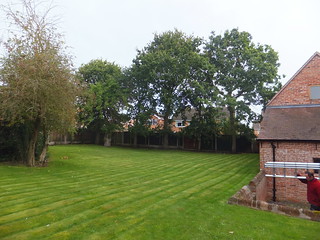
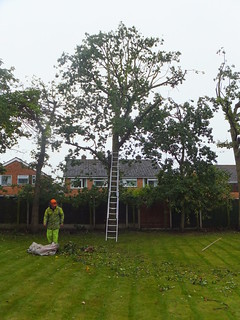
The trees in the rear garden at Brewood Hall are somewhat younger and were planted in 1972 as saplings around four feet tall. My Uncle Eric (now deceased) had grown the saplings from acorns.

The oak trees at Brewood Hall before pruning.

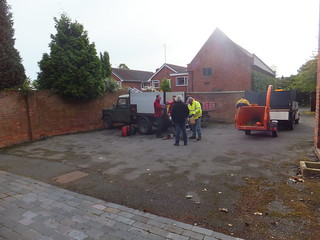
The trees were first pruned a few years ago and the trees were pruned again in September, 2012. Attending to mature trees requires a number of trained men with various vehicles, including a wood chipper.

A Land Rover and two lorries (one towing a wood chipper) at Brewood Hall.

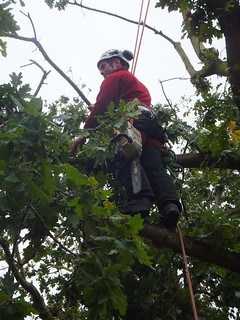
The actual cutting was carried out by two 'climbers' equipped with chain saws, under the direction of the senior forester on the ground.

A 'climber' in the crown of one of the oaks.

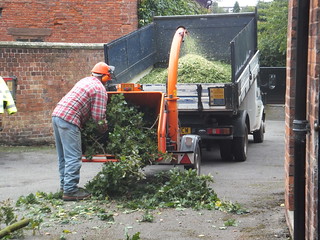
The removed branches were carried or dragged to the wood chipper and converted into small chips which were taken away by one of the lorries.

Branches being converted to chips. Ear defenders were very necessary when the wood chipper was in operation.

The job was completed in a few hours. Fallen leaves and twigs were cleared away, leaving little trace of the work carried out other than the pruned and reshaped trees themselves.

View of one of the re-shaped trees.

Photographs:

Oak Tree Pruning at Brewood.

Monday, 19 November 2012

The Clack Valve

'Planet' leaving the 'New' Platform at 'MOSI' with Bev in charge

One Saturday, some time ago, I was rostered driver on the 'Planet' replica at Manchester Museum of Science and Industry ('MOSI'). I'd completed my oiling-round and daily examination of the engine and the fireman was just waiting for the boiler to develop full working pressure. I felt a bit peckish so I decided to pop across the road for a sandwich. When I returned a few minutes later, the locomotive was virtually invisible, wreathed in a thick cloud of steam. Apparently, having obtained full pressure, the fireman had tested the injector but, on shutting it down, the Clack Valve had not re-closed so the boiler was now ejecting steam through the injector overflow.

Steam locomotives use non-return valves, usually called 'Clack Valves', to allow fluid to pass in one direction only. Clack valves are most commonly inserted in the water feed to the boiler, allowing pressurised water to enter the boiler but preventing steam and hot water from escaping.

A 'Sticking Clack' can be a fairly common problem on locomotives with injectors. It's usually caused by a small piece of solid matter getting trapped in the clack valve as it closes, preventing a proper seal. The usual source of solid matter is boiler scale. Fluid flow in the vicinity of the Clack Valve can be turbulent and particles of scale can get swept into harm's way. There are a couple of techniques that can be used to rectify matters.

Vibration can be used to dislodge the offending matter. This is usually achieved by whacking the clack body. Different firemen tend to have different places on the clack to deliver the blow but I've usually found the top of the clack body is the most effective. On many old engines this preferred position is attested to by the battered appearance of the top of the clack body, caused by blows from coal picks. To prevent this sort of damage, I try to use a wooden footplate brush to thump the clack body.

Alternately, the clack can be made to 'hiccup' by shutting the steam cock feeding the injector and then opening it again. I've found that gently closing the steam cock and then immediately opening it wide can often cause the right sort of disturbance to seat and unseat the clack and hopefully, when the steam cock is closed again, the clack will seal properly.

If neither technique remedies the situation, then that feed has to be declared a 'failure'. Most locomotives have two injectors and two clacks so one failure does not prevent the crew from finishing the 'diagram', provided they're fairly confident about the other 'feed'.

The problem on 'Planet' was quickly rectified by a few sharp 'taps' and it didn't recurr. If the problem happens regularly, it suggests permant damage or scoring to either the clack or its seat.

Water Feed Pumps

Before the invention of the Injector by the Frenchman Henri Giffard in about 1859, early locomotives like 'Sans Pareil' and 'Lion' used pumps to pressurise the feed water to the boiler, allowing water to be delivered to the boiler against the internal steam pressure.

Water pump on the 'Sans Pareil' replica

Right hand water pump on 'Lion'

Clack Valves were still required to prevent steam and water escaping from the boiler when the pump was not being used to feed cold water to the boiler. The original 'Planet' (built in 1830) employed a water pump driven from the reciprocating motion of the crosshead but this method of feeding water to the boiler can only be used whilst the locomotive is in motion. The replica 'Planet' does have a pump but it's also provided with an injector (an anachronism, of course) allowing water to be fed to the boiler whilst stationary, provided there's sufficient steam pressure to operate the injector).

'Ball and Cage' Clack

'Lion' uses a 'Ball and Cage' clack design. The pressurised feed water from the pump 'unseats' a ball to allow water to enter the boiler but, when the feed pressure drops, the ball falls back onto the seat and prevents the flow from reversing. This works well if the ball and seat are 'true' but later designs of clack tended to make use of a disc valve.

A 'Ball and Cage' clack valve on 'Lion'

And what about the operation of injectors? We'd better keep this for another time.

Sunday, 18 November 2012

Sunday in Yangon

Events of Sunday, September 23rd, 2012

I was up early and took breakfast around 6.00 a.m. in the Restaurant of 'Road to Mandalay', still at her midstream mooring at Bagan. After saying a final 'goodbye' to staff on the ship, 'local boats' took us ashore about 7.00 a.m. We made the steep climb up the steps for the last time and joined our respective guides and buses to be transferred to Bagan Airport.

All went well on our flight back to Yangon so it was still quite early when I met up with my guide for the day in Yangon, a pretty young lady with excellent English. Of course, my idea of an itinerary was not quite the usual - A trip on the 'Circle Line', tracking down a 'plinthed' locomotive in the '"People's Park" and a visit to a bookshop with English-language books on Burmese History.

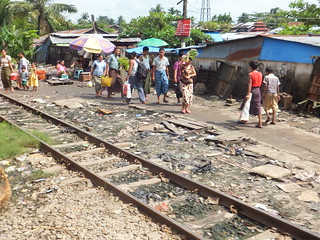
We started off by spending a couple of hours travelling part way around the 'Circle Line', ending up at Yangon Central Station. This part of the day is described separately here, but I've included a link to the pictures below as a lot of the photographs are 'social history' rather than 'railway technical'.

Life alongside the 'Circle Line'

On a previous trip, I'd driven past the "People's Park" in Yangon and spotted a couple of 'plinthed' locomotives and, more improbably, a gunboat. On that occasion, I didn't have the opportunity to stop but, this time, we parked our vehicle and walked along the outside of the fence to where I'd seen the exhibits. We spotted a steam locomotive and brake van which a sign claimed to be the first locomotive in Burma, but it was rather hidden by trees so we determined to go inside the Park in the hope of getting a better view. There was no sign of the larger locomotive or the gunboat which our driver believed had been scrapped.

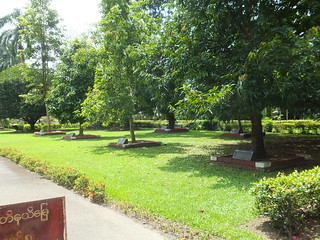
Inside the park, we walked towards the locomotive but found our way stopped by civilian security guards - that part of the park was currently off-limits. The reason given was rather curious. Apparently that corner of the part has a number of commemorative tree dedicated to member's of Burma's military regime. Following the slight liberalisation which is taking place, there were fears that Burmese might attempt acts of vandalism on these trees so the public are not allowed in.

Commemorative Trees in the "People's Park".

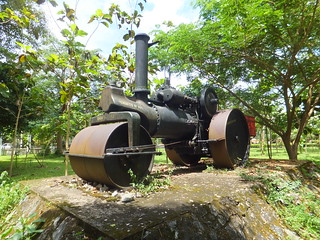
However, just outside the restricted area, we did find a 'plinthed' Aveling Barford steam roller, a long way from its birthplace in Grantham.

An Aveling Barford steam roller, a long way from home.

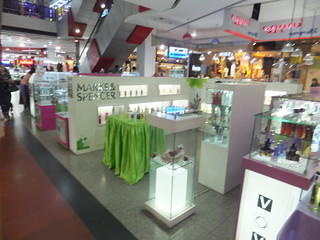
For a bookshop with English-language books, my guide recommended Tab Book Centre, not far from the "People's Park". This is situated in the Taw Win Centre, a modern shopping mall of the type I detest but the bookshop was excellent. I didn't expect to find a 'Marks and Spencer' shop selling cosmetics, but the picture below shows it's there. I'm afraid I think it's a 'fake' store.

The 'Marks and Spencer' store in the Taw Win Centre.

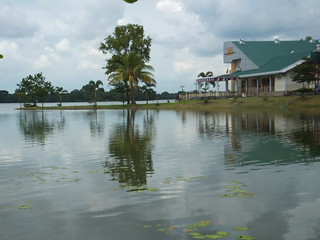
It was time to head out of the city towards the airport for my international flight back to Bangkok. With a little time in hand, we stopped for a snack at an open-air restaurant, with gardens and a garden centre, overlooking Inya Lake. The gardens are particularly popular with young couples at the weekend and we saw lots of young people enjoying their free time.

Part of Inya Lake, viewed from the open-air restaurant, showing the sailing club.

After this relaxing break, we continued to the airport. I said goodbye to my guide and driver and started my long journey back to Birmingham. Check-in ticketed my luggage for all three legs (Yangon-Bangkok, Bangkok-Dubai, Dubai-Birmingham) and I wondered if I'd ever see it again (in fact, it popped out on the luggage carousel at Birmingham safely). Security at Yangon was painless and prompt and the flight to Bangkok pleasant.

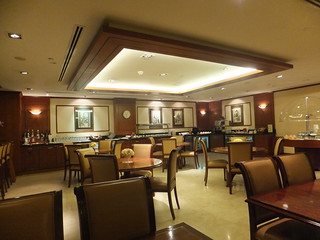
I'd a few hours to wait at Bangkok for my next flight to Dubai. Emirates now have a well-appointed but not too large Lounge which I was able to use. First of all, I was able to have a shower and change my clothes which made me much more relaxed. I passed the time snacking and working on the computer.

The comfortable 'Emirates' lounge at Bangkok Airport.

My inbound flight was late but I was still in a reasonably good mood by the time I boarded the A380 for Dubai. Although I slept a little, I was quite tired by the time we arrived in Dubai. I woke up enough to make my way to the huge (and busy) lounge in Dubai. The wait here wasn't long and then it was off to join my final flight to Birmingham. Here, Emirates provided a car back home so before long I was at Brewood, exhausted but happy after another wonderful trip.

Photographs:

Circle Line Revisited
People's Park, Yangon
Yangon (includes pictures from earlier trips).

Saturday, 17 November 2012

The Circle Line Revisited

Events of 23rd September, 2012

No, not London's underground line but the metre gauge surface railway in Yangon (formerly Rangoon) in Myanmar (formerly Burma). I first travelled on this line in March 2008 (described here) and, having a few hours available in Yangon on 23rd September 2012, thought it was time I sampled the line again.

I had a charming guide, car and driver at my disposal, so I discussed with her what was possible. The Circle Line is notorious for its unreliability and she wasn't sure we'd have time to do a complete circuit, so I compromised on a part circuit. We agreed to drive to an intermediate station on the east side of the city and catch a clockwise Circle Line train to Yangon Central Station (originally called Phayre Street which I presume was named after Lieut.-General Sir Arthur P. Phayre G.C.M.G., K.C.S.I. and C.B.).

The car duly dropped us at a point on the main road into the city where a short side street, teeming with commercial life, led to the station. The station building was on the other side of the double-track railway so we walked across the tracks (as everyone does in this part of the world) and she spoke to the booking clerk. She seemed to suggest that a train going in the right direction was not due for some time but that a possibility was to get a train going in the wrong direction and change after two stations, so we decided to do that. She offered me a drink at a nearby tea shop whilst we were waiting so I had tea with condensed milk plus a cup of Green tea.
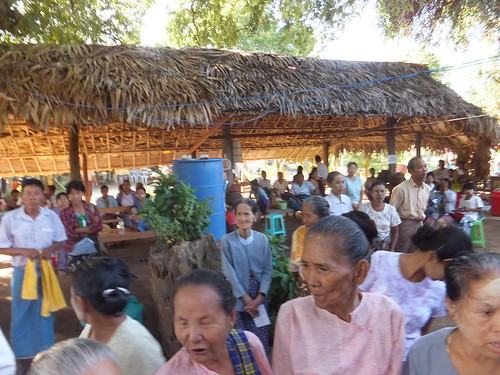
We then returned to the station and I pointed out that I thought it unlikely that an intermediate station could sell me the one U.S. Dollar Tourist Ticket (locals pay a smaller fare denominated in Kyat). This required some serious discussion so we were invited into the office where what I took to be the Station Master was sitting at a table attempting, improbably enough, the repair of an electric soldering iron. It was concluded that I should travel without a ticket to Yangon Central Station where I could pay my Dollar Fare. With an interpreter available to explain my interest in railways, it became quite friendly with a lot of smiling and I ended up taking photographs of both the Station Master and the Booking Clerk.
Station Master and Booking Clerk on Yangon's Circle Line.

The facilities in the office were very basic, home-made and grubby. The Booking Clerk had only a roughly-made shelf behind his ticket window. A pad of pre-printed paper tickets sat in pride of place and as passengers pushed a Kyat note through the window, he would tear off the next ticket and push it back to them. To one side, a little pile of Kyat notes built up. There was no obvious sign of any sort of cash box. The Station Master sat at a superannuated table which bore a bright orange hand-cranked magneto-ringing telephone. He made one call whilst we chatted and seemed to obtain a satisfactory reply which surprised me, since the tangle of wires leading away had the appearance of having been vandalised. Two plastic-insulated cables dangled from the ceiling and were terminated on a panel of bolt-type terminals.

When the train came in, we hurried to the rear coach and boarded. As I found before, there are no windows in the window frames, no doors in the doorways and (more surprisingly) no automatic brakes on the coaches, although the coaches had once been vacuum-fitted. The Guard squats on the longitudinal seat right at the back of the coach and is able to lean out of the last window to flourish a green flag to authorise departure from each stop. Young men and the many vendors are continually moving from coach to coach at station stops (these are non-corridor coaches). They seem to take a particular delight in deferring boarding until the train has gathered a little speed. Similarly, on entering a station, they choose to jump off early and run alongside. The guard's equipment appeared to consist of two well-used shopping bags. A selection of flags protruded from one bag - the contents of the other were only revealed a little later. The final part of the guards kit appeared to be a piece of string of some antiquity. When required, the guard would attach this string from one side of the coach to the other so as to define perhaps the last three feet of the coach as the guards area. This reminded me of the old tube trains on the London Underground when Guards were still employed. Coaches with Guards' Control Panels had a hinged bar which hung vertically when the Control Panel was not in use but could be fixed horizontally by the Guard to exclude passengers.

More on this trip when I can.

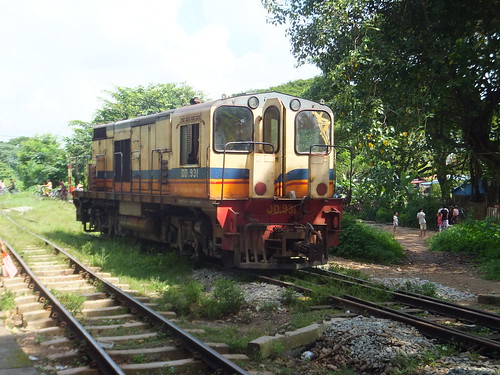
DD.931 runs round her train.

List of stations on the Circle Line

Stations are listed in a clockwise direction. Burmese words can be Anglicised in various ways, so alternative spellings of at least some of names may be found.

Golf Course
Kyait Ka Lei
Mingalardon Market
Mingalardon
Wai Bar Gi
North Okkalapa
Pa Ywet Seit Gone
Kyauk Yae Twin
Tadalay
Yaegu
Parami
Kanbe
Bauk Hlaw
Tarmwe
Myittar Nyuni
Mahlwagone (#1)
Pazundaung
YANGON CENTRAL
Pha Yar Lan
Lanmadaw
Pyay Road
Shan Road
Ahlone Road
Pan I Daing (or Pann Hlaing)
Kyee Myin Daing
Hanthawaddy
Hledan
Kamaryut
Thin Myaing
Oakkyin
Thamine
Gyogone
Insein
Ywa Ma
Phi Taw Thar
Phaw Khan
Aung San
Da Nyn Gone (#2)

#1: Before Mahlwagone the line from the north and east converges.
#2: Beyond Da Nyn Gone the line to the west diverges from the Circle Line to Golf Course.

Photographs:

Railways in Myanmar (pictures accompany an earlier post).
The Circle Line, Yangon (pictures accompany an earlier post).
Circle Line Revisited (pictures accompany this post).
Yangon Central Station (recent pictures accompany this post).

[First published 23-Sep-2012, revised 17-Nov-2012, 21-Nov 2012]

Last Night on 'Road to Mandalay'

Events of Saturday, September 22nd, 2012

I spent the day looking at initiatives by the 'Road to Mandalay' Social Contribution. I made both a morning and afternoon visit to the Bagan Medical Clinic (described here), visited what I have come to regard as 'old friends' at Htee Pu (described here) and, I hope, made new friends at Nga Minn May (described here).

Sunset was at 6.00 p.m. so the Farewell Cocktail Party on the Top Deck was held in total darkness, relieved by some electric lights and candles.

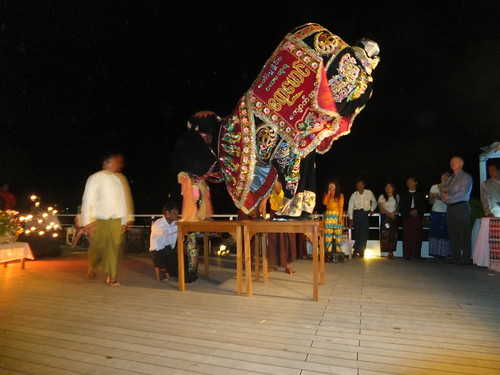
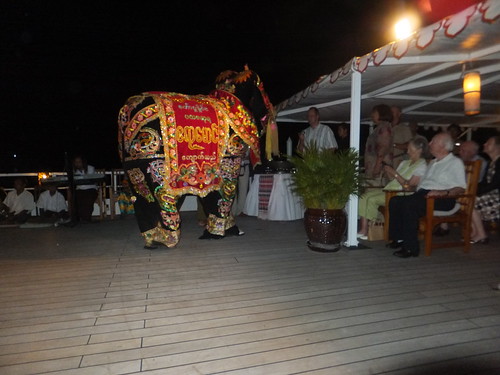
The 'Elephant' introduces himself to the guests.

We were entertained by a traditional Elephant Dance where two men in an elaborately- dance decorated elephant costume dance to music and song before performing remarkable balancing feats, still in the elephant costume.

The 'Elephant' balances on his forelegs.

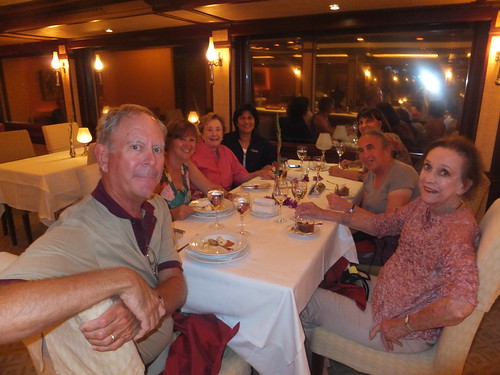
The Farewell Dinner was served in the Restaurant at 8.00 p.m. and I had been invited to join Margot and Audrey and their friends.

Smiling faces at the Farewell Dinner.

Before retiring for the night, I had to complete my packing as luggage was to be available no later than 6.00 a.m. Sunday morning. However, 'Road to Mandalay' staff would then ensure that my case magically appeared in the luggage hall at Yangon Airport without further intervention on my part. And so to bed.

Photographs:

Elephant Dance on the 'Road to Mandalay'

Visit to Nga-Minn-May School

Events of Saturday, September 22nd 2012

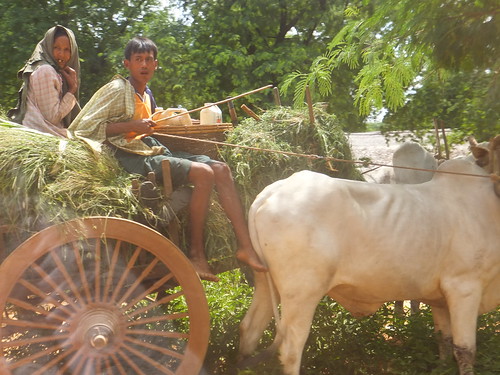
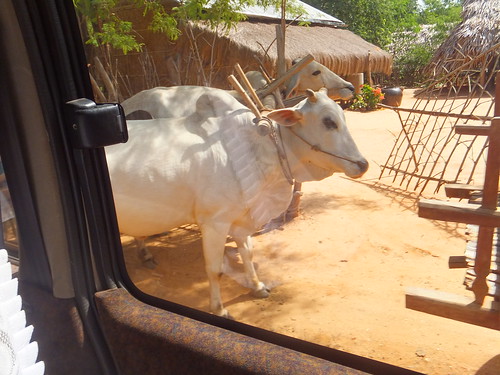
After our visit to Htee Pu school (described here), it took about three quarters of an hour to drive to Nga-Minn-May. I'd not visited this village before and my trip allowed me to see the refurbishment carried out at the school with the support of the 'Road to Mandalay' Social Contribution. The last part of the journey involved slow travel on rutted dirt roads. We became even slower as we were forced to follow a bullock cart until the young driver turned onto a side track.

Passing a bullock cart on the approach to Nga-Minn-May.

Our car pulled up near to a large school building. I was surprised at just how many adults and children from the village were watching our arrival from under the shade of an ancient tree.

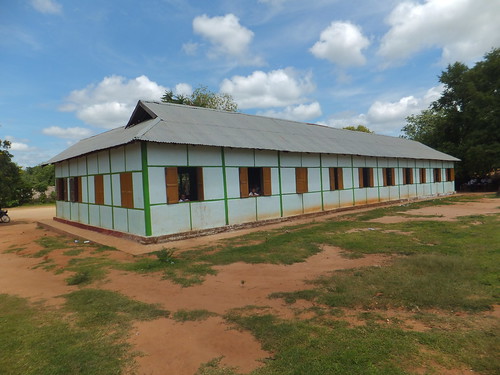
First, Doctor Hla Tun and the group of men from the village who had organised the refurbishment showed me around the school. It was quite a large wooden-framed structure with a 'wing' at each end and a verandah across the front. The roof was corrugated iron. The walls had originally been wooden planks but the refurbishment had removed the wooden cladding and replaced it with brickwork faced with cement for durability. The new walls had been painted pale blue on the outside with the exposed wooden framing picked out in green.

The refurbished school building at Nga-Minn-May

Concrete had been placed around the vertical timbers where they entered the ground to prevent (or at least delay) rotting. The building certainly looked smart and the group of men from the village who'd been involved in the project seemed rightly proud.

The group of men from the village who had organised the refurbishment

Although it was a non-school day, the children (including the nursery children) were waiting in their various classes for our visit. As always in Burmese schools, discipline was impressive. Some of the original wooden cladding from the building had been adapted to form simple internal partitions to give the different classes some slight isolation from one another.

Doctor Hla Tun had brought a number of pairs of spectacles (from the donation made by Ruth and Linda) for distribution to the group of elderly villagers squatting in the school yard where we had parked. The Doctor supervised the selection of the most effective spectacles for each person.

Schoolchildren waiting around the ancient tree before the distribution of stationery.

It was then time to distribute the stationery to the waiting schoolchildren. The tables bearing the stationery were moved out into the dusty schoolyard to leave room for the children to line-up and teachers helped to make up the 'kits' for each child. The actual distribution by Doctor Hla Tun and Jan then proceeded quite quickly. Finally, a table and two chairs had been set-up near our vehicle, and we were invited to take a snack before starting our journey back to Bagan. Here, the Doctor carried on giving consultations at the Bagan Medical Clinic. I observed the work for an hour or two but then, shattered, returned to the ship leaving the Doctor and his colleagues to complete the day's work. There's a report on my visits to the Clinic that day here.

Photographs: Nga-Minn-May School.

Friday, 19 October 2012

Htee Pu School Visit

Events of Saturday, September 22nd 2012

After spending a little time at the Bagan Medical Clinic (described here), Doctor Hla Tun had arranged that we would go by road to Htee Pu village and make a distribution of stationery at the school. The Doctor had arranged to hire a decent air-conditioned vehicle from Bagan Monastery so, once the stationery was loaded, we set off. The route to Htee Pu is now becoming quite familiar to me - taking the Mount Popa road from Nyaung Oo, and finally taking the dusty, unmade road to Htee Pu village.

On the final leg, we got stuck behind a bullock cart on a narrow section and there was no alternative to creeping along behind the cart until it reached a spot wide enough for the driver to pull over and let us through. I found this a timely reminder of just how different life in Htee Pu is from what I'm used to.

Once the bullock cart reached a wide spot, it pulled over to let us through.

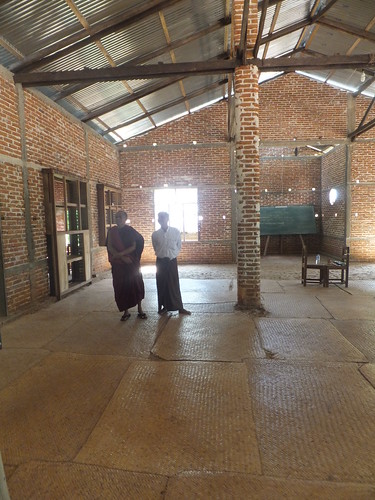
We parked and started to unload the stationery when Ruth and Linda arrived by car with San to take part in the distribution of spectacles to a number of elderly villagers. We were greeted by the head monk and we first looked at progress on the new, large assembly hall which is still unfinished but already in use.

The new, large assembly hall is unfinished but already in use.

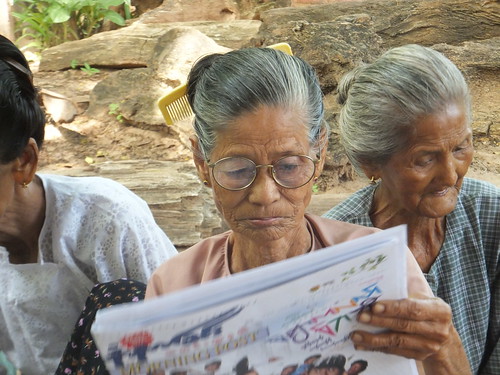
The elderly villagers were squatting in the school yard and Doctor Hla Tun, Ruth and Linda organised the distribution of reading glasses and the selection of the spectacles which gave the best results. This was a very light-hearted event with a lot of laughter, particularly when one recipient managed to wear her glasses upside down.

A lady from Htee Pu with her new reading glasses.

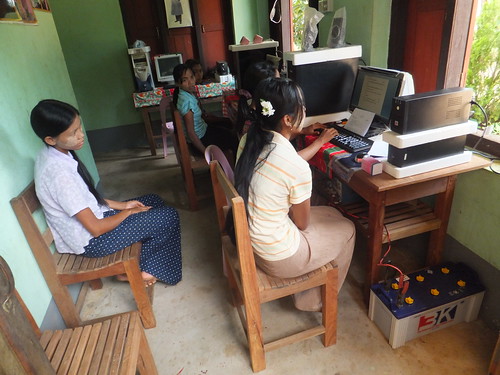
The head monk then proudly showed us the new computer department with, I think, three computer stations. Although it was Saturday and not a school day, four girls were carrying out keyboard exercises on the computers - some exercises in Burmese, some in English. The computers appeared to be powered from large wet lead-acid batteries via inverters. There was also a large solar panel in the yard outside presumably used to re-charge the batteries.

The Computer Department at Htee Pu School.

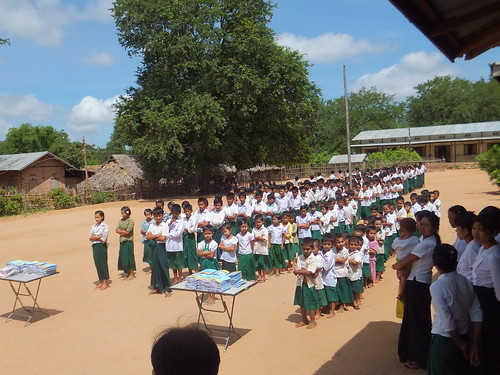
We met the headmaster who took us to look at the primary school classrooms. School day or no school day, all the pupils were present. I was surprised to discover that, even in Grade 1, English is being taught. In the mean time, a group of teachers had set up tables in the school yard and unpacked the stationery we were to distribute. All the pupils were now summoned from the various schoolrooms where they had been quietly waiting and they formed four lines to receive their stationery.

As the children line up to await the stationery distribution, their discipline is impressive.

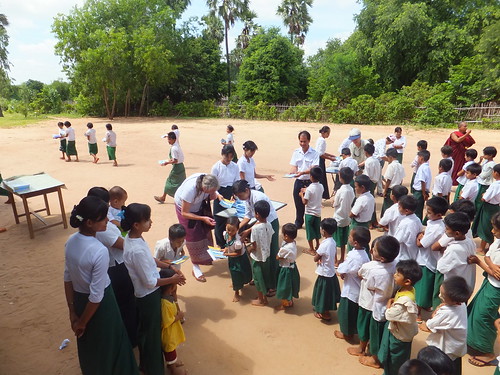
The teachers were rapidly making up 'kits' of stationery to be given to the pupils so Ruth, Linda, Doctor Hla Tun and Jan were able to complete the distribution quite quickly.

Ruth, Linda, Doctor Hla Tun and Jan distribute the stationery.

Once the stationery distribution was complete, the children returned to their classrooms and Ruth, Linda and Jan continued on a tour of inspection.

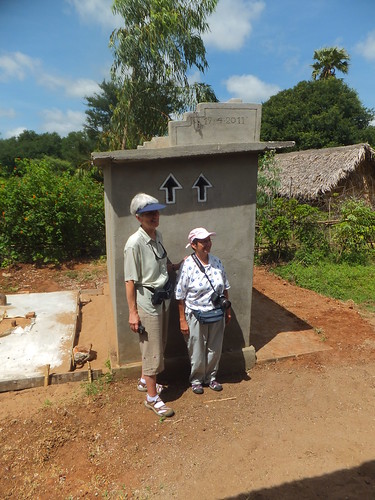
At many schools, toilet provision remains primitive and comprises a couple of small wooden shacks with a hole in the floor. The 'Road to Mandalay' Social Contribution has donated a number of solidly-constructed toilet blocks connected to a septic tank at various schools. One such block was completed at Htee Pu in 2011 and a second was under construction.

Ruth and Linda near the substantial toilet block.

The 'Road to Mandalay' Social Contribution has donated a number of school buildings at Htee Pu. I was delighted to see that the building which I had the honour of opening in 2010 (described here) has had the original dirt floor upgraded to brick.

Smiling children in one of the classrooms which now have brick floors.

In one of the classrooms, a group of girls performed a traditional dance for the visitors.

An impromptu dance performance.

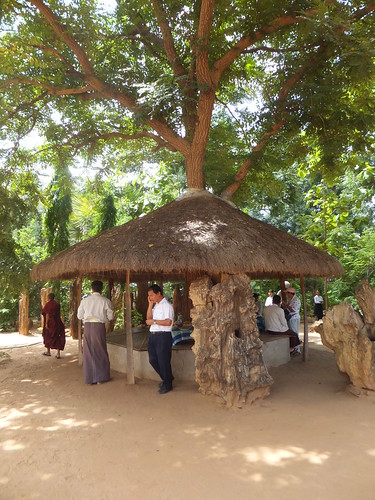
Before we left, we were invited to a simple meal. Hospitality is an important part of the Burmese culture. One of the larger trees had a low plinth built around the trunk, with a thatched roof circling the trunk at head height. This formed a very pleasant, cool shelter where we could relax for a few minutes before moving on.

The shelter where we were offered food.

The next destination for Doctor Hla Tun and I was the school at Nga-Minn-May where the 'Road to Mandalay' Social Contribution had recently funded refurbishment of the school building, described in a separate post.

Photographs:

Visit to Htee Pu School.

[Expanded 23-Oct-2012]

Sunday, 23 September 2012

The Bagan Medical Clinic

Events of Saturday, September 22nd 2012

Saturday was my last full day in Myanmar. The ship had arranged quite an intensive and varied series of options for the Guests but Doctor Hla Tun had invited me to accompany him for part of the day so I did none of the set options. I met the Doctor at 7.45 a.m. and we were transferred ashore by one of the local boats. They are powered by a Chinese diesel engine, so starting them up requires the boatmen to crank a starting handle furiously before the engine splutters into life. There were steep steps to reach the top of the bank and I'm sure they were steeper than last year. We walked the short distance to the medical clinic.

Bagan Medical Clinic.

A number of buildings seem to have appeared since last year. There's a substantial covered, open sided, raised area which waiting patients use to sleep if they need to wait until the next day for an appointment or if they cannot return home on the day they receive treatment. There's a simple shelter with some seats which patients can use whilst waiting in the day.

The shelter for waiting patients, just before 8.00 a.m.

Some patients have been travelling up to 150 km for an appointment, often by fairly primitive and slow methods. Although the Clinic provides a free meal for waiting patients (paid for by the local Monastery), private enterprise seems to have given rise to one or two food establishments as well.

The project has been carried out by the 'Road to Mandalay' Social Contribution in conjunction with the Head Monk of the monastery at every stage. One young monk who I'd met the year before seemed to be permanently based at the clinic and another monk seemed to be in charge of making announcements on a public address system which has appeared. The Head Monk himself is a familiar figure in the Clinic. He arrived at the Clinic a few minutes after Doctor Hla Tun and I and he made another visit in the afternoon on that day. The Clinic itself has spawned a much larger awning at the front of the building and an additional lean-to awning at the side.

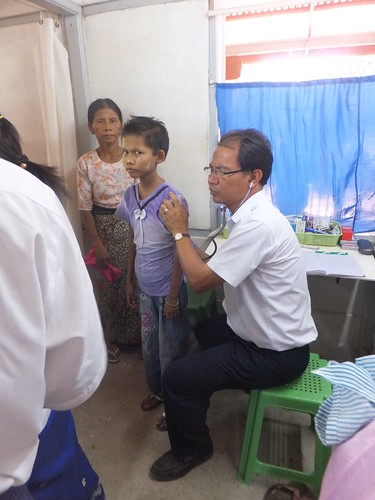
On Clinic days, there are normally three Doctors at work but one was away on the day I visited. Whenever possible, Doctor Hla Tun also carries out consultations working (as do all the staff) punishing hours. Of the seven support staff (not counting monks) I think there are two trained nurses. The other assistants have been trained by Doctor Hla Tun to provide professional assistance in registration, injections and dispensing.

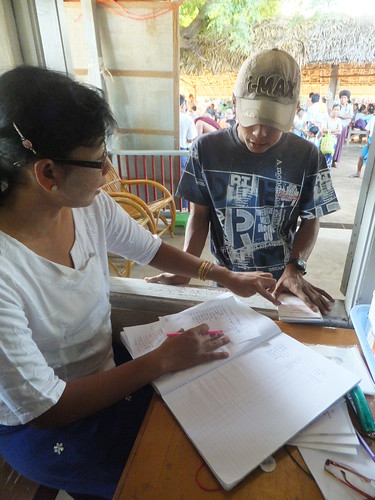
Early each day, the Clinic starts making bookings for the day through a window marked 'Registration'. Existing patients will have a record book with details written by the doctor which the patient looks after and brings back for any further treatment. New patients are issued with a record book as necessary. As the pile of record books for waiting patients grows during registration, brief patient details are entered in a 'Daybook'.

Patient Registration at the Bagan Medical Clinic.

Normally, patients are dealt with in the order in which they register but serious conditions or other factors are used to assign a medical priority as well. On the day I visited, the pressure of patient numbers was not so high, probably because many of the country people would have been involved in bringing their harvest in. With only two doctors present to start the consulations (Doctor Hla Tun would not be able to carry out consultations until the afternoon) the day's 'List' was stopped at 270. Unsuccessful patients would either have to overnight or make a second journey on a later date.

Before the Clinic started, Linda and Ruth (two Guests on the ship and also Donors) arrived to be involved in the distribution of spectacles. The elderly in Myanmar suffer the same age-related defects of vision as we do. In the absence of an eyesight test chart, a number of out-of-date newspapers were provided, so the queue of elderly which had formed as if by magic, were issued with a pair of spectacles and a section of newsprint to check the improvement. Alternative spectacles were then tried until the best effect was achieved. A number of photographs were taken to record the event.

Spectacles being selected for issue to the waiting patients.

As the spectacle selection process continued outside the Clinic, the Doctors started their consultations and the function of the 'Announcement monk' became clear. To make sure that the right patient appears, a small public address system has been fitted and the monk with the microphone declaims the next patient. Certain monks are used to broadcasting readings from the Buddhist Scriptures using a similar Public Address system in the Monastery on special days and these monks develop a very effective speaking voice.

When I was there, two doctors shared one small consulting room and the second room, with two unpadded examination couches was allocated to the third doctor and the assistant giving injections. In addition, two chairs had been set up on the front verandah so that two of the assistants could measure and record blood pressure before the patient saw a doctor, making better use of the doctors' time.

Two Health Assistants checking the blood pressure of two monks who have travelled from a remote monastery to be seen by a doctor.

Doctor Hla Tun had arranged for us to visit two schools during the day, Htee Pu and Nga Minn May and so, at around 9.30 a.m., he had to leave the consultations to the other two Doctors and we walked to the nearby monastery to load the stationery to be distributed at the schools into the monastery car which had been hired for our transport. The visit to Htee Pu is described here and to Nga Minn May here.

Doctor Hla Tun resumes consultations in the afternoon, after our road trip.

It was late afternoon before we were back at the Bagan Medical Clinic and there were still lots of waiting patients. Doctor Hla Tun immediately returned to giving consultations and I was invited to observe.

Assistants at work in the dispensary/office area.

After an hour or two, I'm afraid I was so exhausted that I decided to return to the ship, leaving the Doctor and his colleagues (who are clearly made of 'sterner stuff') to complete the day's work.

Photographs:

Life at Bagan Medical Clinic.

[Revised 19-Oct-2012, 17-Nov-2012]

Saturday, 22 September 2012

Bagan

Events of Friday, 21th September 2012

I got up at 5.30 a.m., knowing that the Captain would be sure to leave Shwe Kyet Yet River Station before the announced time of 6.30 a.m. I've commented to the Captain before that he's only happy when his ship is moving. Sure enough, shortly after six o'clock we quietly slipped away from our moorings, gently moved astern to get clear of all the barges and tugs moored upstream of us and slowly turned to starboard to face downstream. It was a bright, clear morning promising to be a hot day.

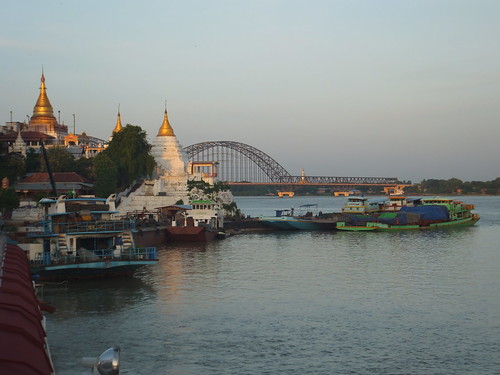
The 'Road to Mandalay' manoeuvres away from her berth at Shwe Kyet Yet before sailing downstream and passing under the new road bridge in the background.

We cleared the two bridges at Sagaing and made good speed, sailing with the current. There was time for a leisurely breakfast and a bit of 'blogging' before the Doctor gave an illustrated presentation on the 'RTM Social Initiative' in the Observation Lounge. This was very well received by an appreciative audience.

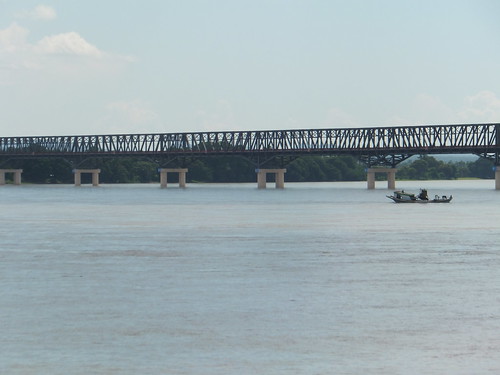
On the way to Bagan, we had another chance to admire the new long road and rail bridge that now spans the river. One of my new friends on the ship is a Civil Engineer and he commented that, with its conventional, rivetted steel truss design, the bridge looks like something built in the '30s, rather than something just completed.

Just part of the new long road and rail bridge across the Ayeyarwaddy north of Bagan.

I took buffet lunch in the quiet restaurant, although many Guests preferred to take the meal on the Top Deck under the awning. Before 3.0 p.m. we anchored midstream opposite the 'Road to Mandalay' Jetty at Bagan, ahead of schedule. Two local boats were ready to ferry the Guests ashore for an afternoon tour of Bagan.

There were just five of us in coach number 6 with our regular guide, the charming Nang. Shortly after leaving the parking area at the jetty, we passed the Bagan Medical Clinic. I'd arranged to visit the Doctor there on the way back from the tour, so we carried on to the famous Ananda Temple. Well, we got as far as looking at the outside when one of our group decided that a visit to a laquerware workshop was essential so Nang re-planned the afternoon and deferred going inside the Ananda Temple until the next day. Instead, we took some dusty by-roads and stopped next at a smaller temple I'd not previously seen.

I've now visited the Bagan Plain a number of times but I still experience a sense of awe at the sight of hundreds upon hundred of pagodas seemingly scattered at random.

A group of pagodas on the Bagan Plain.

We visited a number of groups of small pagodas, some with wonderful wall paintings, in addition to spending time at the 'Everstand' laquerware factory (where some of the staff remembered me from previous visits).

The 'Everstand' Laquerware Factory.

We finished at the 'Sunset Pagoda' where hundreds of tourists had gathered on the fifth level (the climb was even tougher than I remembered) to watch the sunset effects.

The 'Sunset Pagoda'.

By the time we arrived at the Clinic it was almost dark and I was shattered. The Doctor had a further ten patients to see so I decided to return to the ship since I would see the Clinic in daylight the following day. A quick shower, dinner with Arun, watch a traditional marionette performance in the Observation Lounge and, eventually, to bed.

The following day, Saturday, would be my last full day on the ship and all Sunday would be spent travelling, so I'm not sure when my next post will be.

Photographs:

Shwe Kyet Yet to Bagan, downstream.
Incomparable Bagan.
'Everstand' Laquerware.
Sunset in Bagan.
Marionette Show on 'Road to Mandalay'.